







You type a prompt into ChatGPT asking for the top software in your industry. Your competitor gets recommended instantly. Meanwhile, your site sits comfortably at position two on traditional search engines, but you receive zero conversational traffic from the query.
That frustrating gap is why generative engine optimization has become the most urgent focus for modern marketers. Users increasingly skip traditional blue links to read synthesized AI answers instead.
In this guide, you will learn how large language models choose sources, what current research shows about AI citations, and how to adapt your workflow.
Quick Summary
Quick Answer: Generative engine optimization (GEO) is the process of optimizing content to increase visibility and brand mentions within AI-generated responses. Unlike traditional SEO, which targets rank positions in web engines, GEO focuses on getting cited by platforms like ChatGPT, Gemini, Perplexity, Claude, and Google AI Overviews using clear, factual, and authoritative data.
GEO at a Glance
| Factor | Details |
| Goal | Get cited, referenced, or recommended directly inside AI-generated answers |
| Main platforms | ChatGPT, Google AI Overviews, Perplexity, Gemini, Claude |
| Core tactic | Structuring content with explicit facts, cited data, clear definitions, and verified entity references |
| Main metric | AI citation rate and referral traffic from generative engines |
Key Takeaways
-
Generative engine optimization adapts traditional web content strategies to gain visibility within AI-synthesized responses.
-
SEO targets ranking positions in web browsers, whereas GEO focuses on securing direct citations inside conversational platforms.
-
Ahrefs found Google AI Overviews reduce average top-page click-through rates by about 34.5% when present.
-
Research by Aggarwal et al. (2023) showed adding quotes and statistics boosted experimental AI visibility by 30-40%.
-
Structuring data with clear entity references, facts, and authoritative citations serves as the single best optimization practice.
-
Tracking generative engine visibility requires monitoring brand citations and AI referral traffic across multiple large language models.
What Is Generative Engine Optimization (GEO)?
Generative engine optimization (GEO) is a digital marketing methodology aimed at optimizing online content so large language models select, cite, and recommend it within synthesized answers. Instead of competing for traditional organic search rankings, GEO focuses on becoming a trusted source for conversational AI platforms.
What Is GEO in Digital Marketing?
In modern digital marketing, GEO sits right at the intersection of SEO, content strategy, digital PR, and brand management. While traditional search engines focus on matching keywords to web pages, generative engines retrieve contextually relevant information from multiple sources to construct a single answer. Your goal shifts from earning a click on a blue link to being summarized, credited, and recommended inside the response itself.
This shift means brand awareness is no longer tied solely to site visits. If an AI platform relies on your published statistics, authoritative guides, or industry frameworks to formulate its answers, your brand maintains high visibility even when zero-click searches rise. We are effectively moving from managing search visibility to managing language model perception.
-
Perplexity citations: A user asks for the best project management frameworks for remote teams, and Perplexity highlights your methodology with an inline footnote link.
-
ChatGPT recommendations: A shopper asks for top-rated eco-friendly footwear brands, and ChatGPT lists your company alongside key value propositions.
-
Google AI Overviews: A developer searches for API integration steps, and Google displays a synthesized step-by-step answer featuring direct links to your technical documentation.
The term gained industry recognition following foundational research by Princeton, Georgia Tech, and Allen Institute for AI researchers (GEO: Generative Engine Optimization, Aggarwal et al., 2023). Their experiments demonstrated that specific content optimizations significantly impact how language models retrieve and attribute information.
Why Generative Engine Optimization Matters in 2026
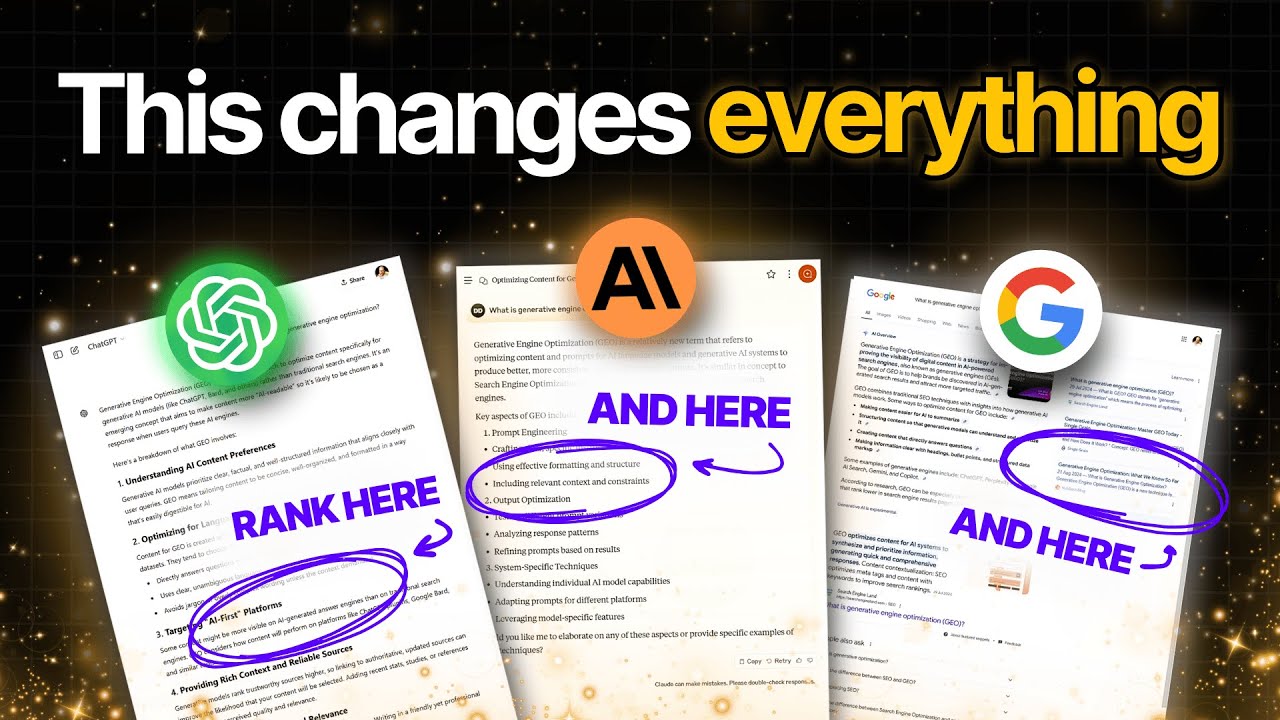
Generative engine optimization matters because consumer search habits have fundamentally shifted toward AI-driven answers. When generative engines answer user queries directly, traditional web click-through rates decline sharply, making direct AI citations essential for maintaining online brand authority and customer acquisition.
The Shift in User Search Behavior
Traditional organic search relies on users scanning ten blue links, evaluating titles, and clicking through to individual websites. Generative platforms eliminate these intermediate steps by reading, aggregating, and summarizing content into a single cohesive response.
This transition has accelerated at an unprecedented rate. The Guardian reported that ChatGPT reached 100 million active users in about two months after its late-2022 launch, making it the fastest-growing consumer app in history. Millions of users now treat AI assistants as their primary search interface for product research, technical guidance, and direct vendor comparisons.
The impact on traditional search engines is equally pronounced. A landmark study by Ahrefs revealed that when a Google AI Overview appears in search results, the average click-through rate for the top-ranking page drops by approximately 34.5% compared to queries without an overview. Ranking number one on Google no longer guarantees the organic traffic volume it once delivered.
Business Impact of GEO
-
Brand visibility without direct clicks: Being explicitly named in an AI synthesis builds top-of-mind awareness even when a user never visits your site.
-
Shortlist influence during product evaluation: When buyers ask ChatGPT or Perplexity to compare options, appearing in that AI-generated shortlist directly impacts purchasing decisions.
-
Enhanced trust through authoritative citations: Users view cited sources within generative engines as vetted, credible experts in their niche.
-
Future-proofing organic acquisition: Optimizing for large language models protects your brand against ongoing drops in traditional organic SERP traffic.
While AI answers can still send highly targeted referral traffic, referral patterns are less predictable than traditional keyword rankings, making continuous measurement essential.
How AI Search Engines Pick What to Cite
Improving your AI search visibility requires understanding the technical pipeline generative platforms use to gather and present information. Rather than relying solely on pre-trained memory, modern AI engines use Retrieval-Augmented Generation (RAG) to query the web in real time.
-
Query understanding: The system translates user prompts into search queries using semantic expansion.
-
Retrieval (RAG): AI crawlers search their live index or web API to pull candidate document chunks.
-
Source ranking: Algorithms filter candidate pages by semantic similarity, authority, and content structure.
-
Synthesis and citation: The language model writes the final response, generating footnote citations for extracted facts.
Signals That Seem to Matter
Generative engine developers rarely publish exact ranking formulas. Based on industry testing across ChatGPT, Gemini, and Perplexity, several consistent retrieval patterns emerge:
-
Clear, direct answers: Pages featuring explicit definitions and standalone factual statements get retrieved and synthesized far more reliably.
-
Brand authority and co-mentions: Frequent mentions across reputable third-party publications validate entity trust before an AI engine.
-
Freshness and current data: Timely updates give language models accurate context, reducing hallucination risks.
-
Structured, crawlable pages: Clean HTML, semantic heading hierarchies, and standard schema markup aid accurate RAG extraction.
-
Third-party validation: Independent reviews, forum discussions, and peer mentions act as corroborating evidence during synthesis.
GEO vs SEO vs AEO: What’s the Difference?
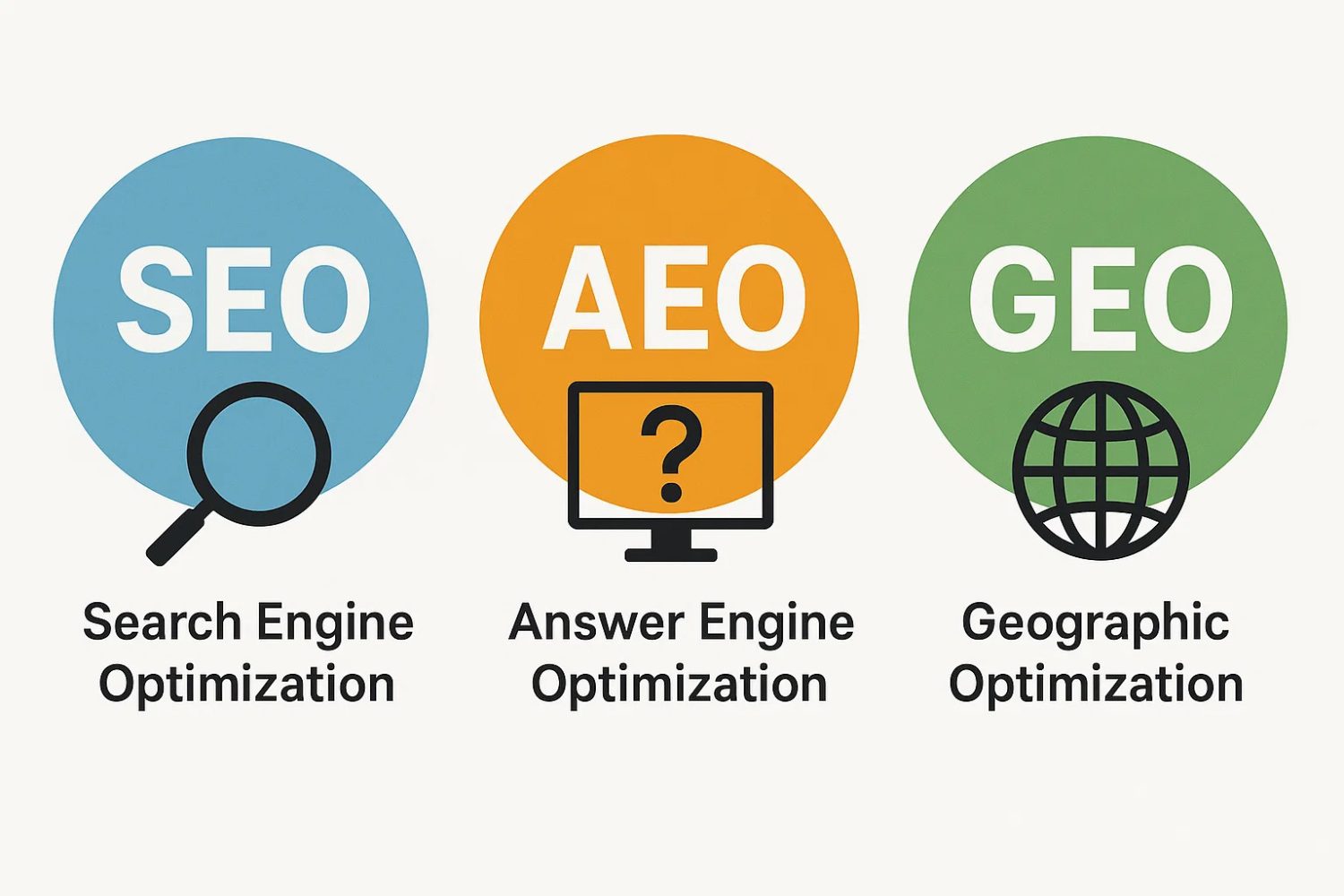
While search engine optimization, answer engine optimization, and generative engine optimization share common roots, each discipline targets a distinct layer of digital discovery.
| Factor | SEO (Search Engine Optimization) | AEO (Answer Engine Optimization) | GEO (Generative Engine Optimization) |
| Goal | Rank web pages in organic search results to drive clicks | Win featured snippets and voice search direct answers | Get cited, referenced, or summarized inside AI responses |
| Where it shows up | Google SERPs, Bing, standard search engines | Featured snippets, Google Knowledge Panels, voice assistants | ChatGPT, Google AI Overviews, Perplexity, Gemini, Claude |
| Key tactics | Technical SEO, keyword targeting, backlink acquisition | Schema markup, Q&A formatting, clear definition sentences | Fact density, entity building, digital PR, cited statistics |
| Main metric | Organic traffic, keyword positions, CTR | Featured snippet coverage, voice query impressions | AI citation rate, referral traffic, brand share of voice |
-
Where they overlap: All three disciplines require technical crawlability, fast page speeds, and high-quality, trustworthy content that answers user intent.
-
Where they differ: SEO prioritizes rank positions for web pages, AEO focuses on extracted short-form answers, and GEO emphasizes deep entity recognition and synthesis across multiple trusted sources.
The Verdict: Generative engine optimization builds on established SEO fundamentals rather than replacing them. For a deeper breakdown of these paradigms, check out our guide on GEO vs. AIO vs. SEO.
GEO Best Practices That Actually Help in 2026
These recommended GEO best practices reflect observed patterns from our live tests across major generative platforms rather than hard, guaranteed ranking rules.
1. Answer First, Explain Later
Structure key headings as explicit questions and open immediately with a clear, direct answer before providing deeper context. Large language models retrieve these concise answer blocks when extracting factual statements for user prompts.
-
How to do it: Place a 40–55 word direct summary right below an H2 or H3 heading, then unpack the nuance in subsequent paragraphs.
2. Add Original Data, Quotes, and Cited Statistics
Generative engines favor pages rich in verified facts, proprietary numbers, and attributed quotes over generic commentary. Aggarwal et al. (2023) demonstrated that adding citations and statistics boosted visibility in AI model responses by 30% to 40% in experimental tests.
-
How to do it: Include primary data points, quote industry specialists, and link directly to foundational research sources within your body text. [ADD YOUR OWN TEST RESULT HERE]
3. Match Conversational, Long-Tail Queries
Users interact with generative platforms using full, natural-language prompts rather than fragmented short-tail keywords. Optimizing for conversational intent helps your content align with how users frame complex questions.
-
How to do it: Research the full multi-turn questions buyers ask during product research and integrate those specific phrases into subheadings and FAQ blocks.
4. Strengthen Entity Clarity
Language models rely on recognized entities and clear relationship maps to evaluate brand authority. Maintaining clear, uniform company metadata makes it easier for algorithms to map your organization correctly across the web.
-
How to do it: Align your exact brand name, leadership bios, and About page details with structured
OrganizationandPersonschema markup across all digital touchpoints.
5. Earn Brand Mentions and Citations Beyond Your Site
Generative engines evaluate third-party sentiment, unlinked mentions, and community discussions across external platforms to validate your credibility before recommending your brand.
-
How to do it: Focus on digital PR, guest expert commentary, industry podcasts, and active discussions on platforms like Reddit and YouTube where AI search engines routinely scrape user sentiment.
6. Keep Content Fresh
AI crawlers actively prioritize fresh information to minimize hallucinations and deliver up-to-date guidance. Stale pages naturally lose visibility when competing against regularly updated competitors.
-
How to do it: Implement a systematic refresh cycle for core assets, display visible updated dates clearly, and revise statistics annually. [ADD YOUR OWN TEST RESULT HERE]
7. Make Pages Crawlable for AI Search Visibility
Your content cannot be cited if generative retrieval agents cannot access or render it correctly. Server-side rendering and clean HTML ensure retrieval bots process every sentence accurately.
-
How to do it: Serve static HTML or server-rendered pages, submit clear XML sitemaps, and audit your
robots.txtfile to avoid accidentally blocking retrieval agents likeOAI-SearchBotorPerplexityBot. Note that crawler names and policies evolve rapidly, so check each platform’s developer documentation regularly.
8. Use Structured Formats for Maximum Extraction
Generative systems parse structured formatting far more efficiently than long walls of unstructured body text. Clear visual organization increases the likelihood of full paragraph extraction.
-
How to do it: Use comparison tables, bullet lists, bolded key terms, short paragraphs, and relevant
FAQPageschema to make factual content easily extractable.
A 30-Day GEO Action Plan
Rolling out generative engine optimization does not require completely rebuilding your digital marketing strategy. You can execute this practical 30-day framework step by step to improve your site’s AI search visibility.
| Week | Focus | Action Items |
| Week 1 | Audit & Baselines |
• Test key industry prompts across ChatGPT, Perplexity, Gemini, and Google AI Overviews to record current citation baselines.
• Inspect your
• Identify your top 10 highest-traffic organic URLs to prioritize for structural GEO updates. |
| Week 2 | On-Page Restructuring |
• Insert 40–55 word direct answer blocks immediately under primary question headings.
• Add clear comparison tables, bulleted lists, and FAQ sections to make data easily extractable.
• Implement |
| Week 3 | Authority & Citation Building |
• Insert primary data points, expert quotes, and attributed original statistics into prioritized guides.
• Pitch digital PR commentary to reputable trade publications to gain third-party brand co-mentions.
• Engage in community discussions on platforms like Reddit and industry forums to establish non-website entity validation. |
| Week 4 | Measurement & Iteration |
• Re-run your prompt library across major engines to track changes in brand mentions and footnote links.
• Set up custom referral traffic segments in Google Analytics for AI search engines (e.g.,
• Refine non-performing answer blocks based on competitor sources currently cited by the models. |
Practical Advice for Small Teams
If you lack the time or resources to update dozens of pages at once, pick your single most valuable product or service page and execute the Week 2 and Week 3 steps on that URL alone. Optimizing just one high-intent asset often yields early citation test data, allowing you to refine your workflow before expanding across your entire site.
How to Measure AI Search Visibility
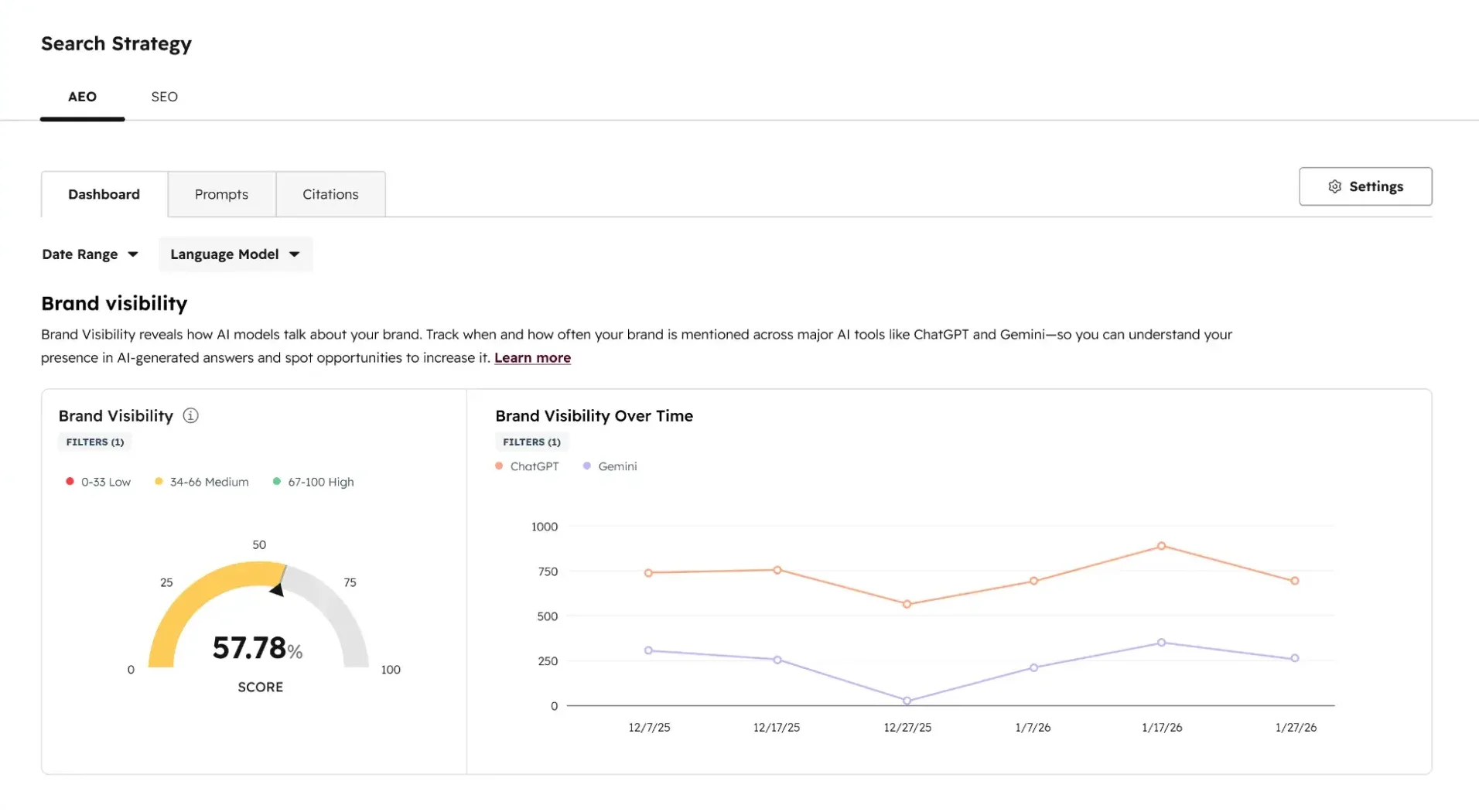
Measuring AI search visibility requires tracking how frequently conversational platforms reference, cite, or recommend your brand across target user prompts. Unlike traditional rank tracking, GEO measurement focuses on direct citations, share of voice, and referral traffic generated from generative answers.
Core GEO Metrics to Track
| Metric | What It Tells You | How to Track It |
| AI Brand Mentions | How often an engine names your company or products in synthesized answers. | Prompt sampling across platforms or dedicated tracking tools. |
| AI Citations & Links | Whether the engine links back to your website as a cited primary source. | Manual footnote inspection or automated RAG extraction analysis. |
| Share of Voice (SoV) | The percentage of industry prompts where your brand appears relative to top competitors. | Fixed prompt set tracking scored on a recurring monthly schedule. |
| AI Referral Traffic | The volume of users arriving at your site directly from generative platforms. | Custom referral tracking segments in Google Analytics 4 (chatgpt.com, perplexity.ai). |
| Brand Sentiment | How AI engines position your brand (e.g., “industry leader” vs. “budget option”). | Prompt output evaluations analyzing descriptive language surrounding your entity. |
A Practical Manual Tracking Method
If you do not want to invest in specialized software immediately, you can establish a lean manual framework:
-
Build a core prompt set: Assemble 20 to 30 high-intent questions your ideal buyers ask when evaluating software, services, or frameworks.
-
Establish a testing cadence: Run these prompts through ChatGPT, Perplexity, Gemini, and Google AI Overviews once per month in a fresh or incognito session.
-
Log responses in a spreadsheet: Record whether your brand is mentioned, if your domain is linked, which competitors appeared, and the overall context of the answer.
Automated Tool Categories
Several platforms offer automated tracking suited for generative engines. Specialized options like the Semrush AI Visibility Toolkit or SE Ranking track brand mentions across prompts, benchmark share of voice against competitors, and monitor referral performance. In addition, Google Search Console provides visibility data for standard AI features where impressions are available.
Be sure to audit individual tool feature sets and platform coverage before purchasing, as AI tracking features evolve rapidly.
How E-E-A-T Supports Generative Engine Optimization
Experience, Expertise, Authoritativeness, and Trustworthiness (E-E-A-T) serve as critical filters for generative engines choosing what to cite. Because retrieval-augmented generation (RAG) models are designed to minimize hallucinations, they prioritize content backed by verifiable entities, structured credentials, clear source attribution, and strong third-party consensus.
How AI Systems Read E-E-A-T Signals
| E-E-A-T Element | What AI Systems Can “See” | What to Do on Your Site |
| Experience | First-person terminology, original screenshots, process logs, and primary quantitative test observations. | Include first-hand testing data, workflow steps, and unedited images that demonstrate real-world application. |
| Expertise | Precise technical jargon (e.g., RAG, LLM, vector embeddings), semantic entity nodes, and complete author schema markup. | Add comprehensive author bios with linked social profiles, published credentials, and Person JSON-LD markup. |
| Authoritativeness | Inbound citations, brand co-mentions across web indexes, and references in industry publications or digital PR. | Earn unlinked and linked brand mentions across authoritative niche sites, podcasts, and recognized news outlets. |
| Trust | Transparent editorial guidelines, updated publishing dates, HTTPS security, and accessible contact information. | Maintain clear About, Contact, and Privacy pages while citing external primary research for every statistic used. |
A Practical Trust Checklist
-
Named author profiles: Assign every article to a real subject-matter expert with a detailed bio, verifiable title, and links to professional profiles.
-
Inline source citations: Attribute every statistic, percentage, or formal claim to a primary research paper, survey, or official report.
-
Original visual assets and test data: Embed unique screenshots, custom tables, or raw experimental data rather than generic stock imagery.
-
Clear editorial and update stamps: Display explicit “Last Reviewed” or “Updated On” dates to confirm content accuracy.
-
Essential trust pages: Ensure your domain features easily accessible About Us, Editorial Policy, Contact, and Privacy Policy pages.
-
Consistent off-site entity profiles: Align your brand name, address, leadership, and description across LinkedIn, X, YouTube, Crunchbase, and industry directories.
How We Researched This Guide
At Digi Mastreys, our editorial team reviewed foundational research studies including the original GEO paper by Aggarwal et al. (KDD 2024) alongside public technical documentation from OpenAI, Google, and Perplexity.
We supplemented this literature review by running structured prompt tests across major engines to analyze live citation patterns [ADD YOUR OWN TEST DETAILS HERE]. Because generative algorithms, crawler behaviors, and retrieval rules change continuously, we strongly encourage readers to test and verify prompt behaviors across platforms regularly.
Common GEO Mistakes and Risks
While pursuing AI search visibility is crucial for modern growth, executing tactics without strategic oversight can undermine your brand authority.
-
Writing purely for AI engines and ignoring human readers: Over-optimizing text into dry, robotic data points destroys your conversion rates. The Fix: Maintain a conversational, human voice that serves the site visitor first, ensuring extracted facts flow naturally.
-
Stuffing stats and quotes without adding real value: Dumping irrelevant statistics into body text confuses language models and alienates users. The Fix: Include only verified, highly contextual data points that directly validate the topic under discussion.
-
Ignoring technical crawler access in your server settings: Blocking retrieval agents like
OAI-SearchBotor serving unrendered JavaScript prevents content parsing. The Fix: Verify yourrobots.txtconfiguration regularly and deliver server-side rendered HTML. -
Expecting instant citations right after publishing: Generative retrieval systems rely on web indexes and re-crawling schedules that take time to update. The Fix: Track citation performance over monthly and quarterly intervals rather than expecting immediate overnight results.
-
Abandoning foundational SEO and technical best practices: Focusing exclusively on AI prompts while neglecting site speed, mobile usability, and clean architecture destroys total organic reach. The Fix: Treat generative engine optimization as an essential expansion layer built directly on top of sound SEO fundamentals.
-
Publishing unverified claims or unvetted facts: Large language models double-check information across web indexes and will penalize inconsistent domain entities. The Fix: Fact-check every statistic, feature claim, and quote through primary sources before hitting publish.
Because generative engines continuously update their retrieval algorithms, AI brand visibility can fluctuate rapidly, and systems may occasionally misrepresent your product details or present outdated facts. Routinely monitoring model outputs allows you to spot inaccuracies early and update your on-page data before errors spread across the web.
Generative Engine Optimization FAQs
1. What is generative engine optimization?
Generative engine optimization (GEO) is the process of structuring and refining online content so large language models select, cite, and recommend it within AI-generated responses. Unlike traditional SEO focused on web rankings, GEO targets direct citations across AI engines.
2. What is GEO in digital marketing?
In digital marketing, GEO represents the strategic framework used to maintain brand visibility inside conversational AI tools. It connects content creation, PR, and technical publishing to ensure AI assistants cite your brand during product research and recommendations.
3. Is GEO replacing SEO?
No, GEO is not replacing SEO; it builds directly on established organic search practices. Traditional SEO ensures search engines crawl and rank your web pages, providing the essential indexable foundation that generative retrieval models rely on for citations.
4. What are the best GEO best practices for beginners?
Beginners should focus on clear answer structures, verified statistics, and strong schema markup. Lead headings with 40–55 word direct definitions, cite primary research data, use structured tables, and ensure AI search crawlers can fully access your HTML.
5. How can I improve my AI search visibility?
You can improve your AI search visibility by earning unlinked brand mentions across trusted third-party sites, optimizing for conversational queries, and refreshing published statistics regularly. AI models favor verified, frequently referenced entities across the web.
6. Does GEO work for small websites and new blogs?
Yes, GEO creates opportunities for smaller websites because AI retrieval models synthesize authoritative facts rather than relying solely on domain age or backlink volume. Unique data, original quotes, and precise answers can earn citations regardless of site size.
7. How long does it take to see GEO results?
Seeing measurable GEO citations typically takes between four and twelve weeks. Generative platforms must crawl your updated pages, process the new semantic data during index refreshes, and synthesize your entity into prompt outputs.
8. How do I track whether ChatGPT or Perplexity cites my site?
You can track citations manually by testing a recurring prompt set monthly or automatically using specialized tracking software. Additionally, create custom referral segments in Google Analytics to monitor incoming web traffic from AI engine domains.
Final Thoughts on Generative Engine Optimization
Adapting to generative engine optimization is essential as conversational search expands. GEO does not replace core search engine optimization; it expands upon it by requiring higher fact density, clear entity signals, and multi-platform presence.
Success relies on three core principles: building site trust, presenting data clearly, and establishing recognized brand mentions across the web. Regularly measuring your AI search visibility helps protect your reach.
Start by auditing your top five organic pages this week to insert direct answer blocks and verified citations. Explore our AI Search section on digimastreys for more field-tested guides.

Surbhi Thapa is an SEO specialist focused on SEO strategy and content optimization.