






Search is no longer just a list of ten blue links on a Google results page. Today, users rely heavily on Google AI Overviews, ChatGPT, Perplexity, and Gemini to get instant, synthesized answers to their questions.
This dramatic shift leaves many marketers confused about GEO vs AIO vs SEO and how these distinct search disciplines interact.
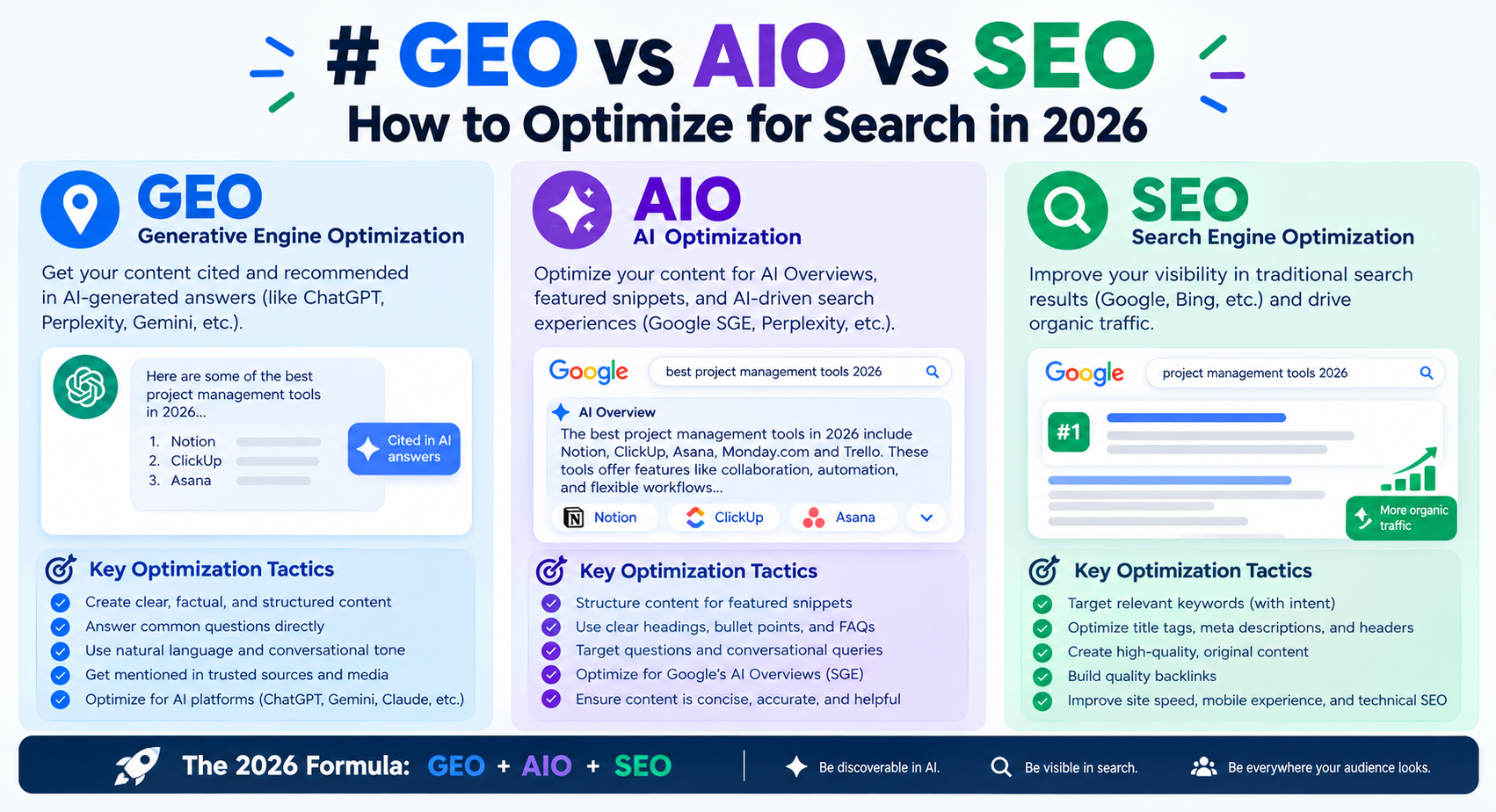
While traditional search engine optimization (SEO) still drives valuable organic traffic, Generative Engine Optimization (GEO) and AI Overview Optimization (AIO) which focuses specifically on Google AI Overviews have completely rewritten the rules of digital visibility.
In this guide, you will learn the exact differences between these three paradigms, how AI models discover content, and how to build a unified strategy for 2026. Let’s start by breaking down what each term actually means.
What Are SEO, GEO and AIO?
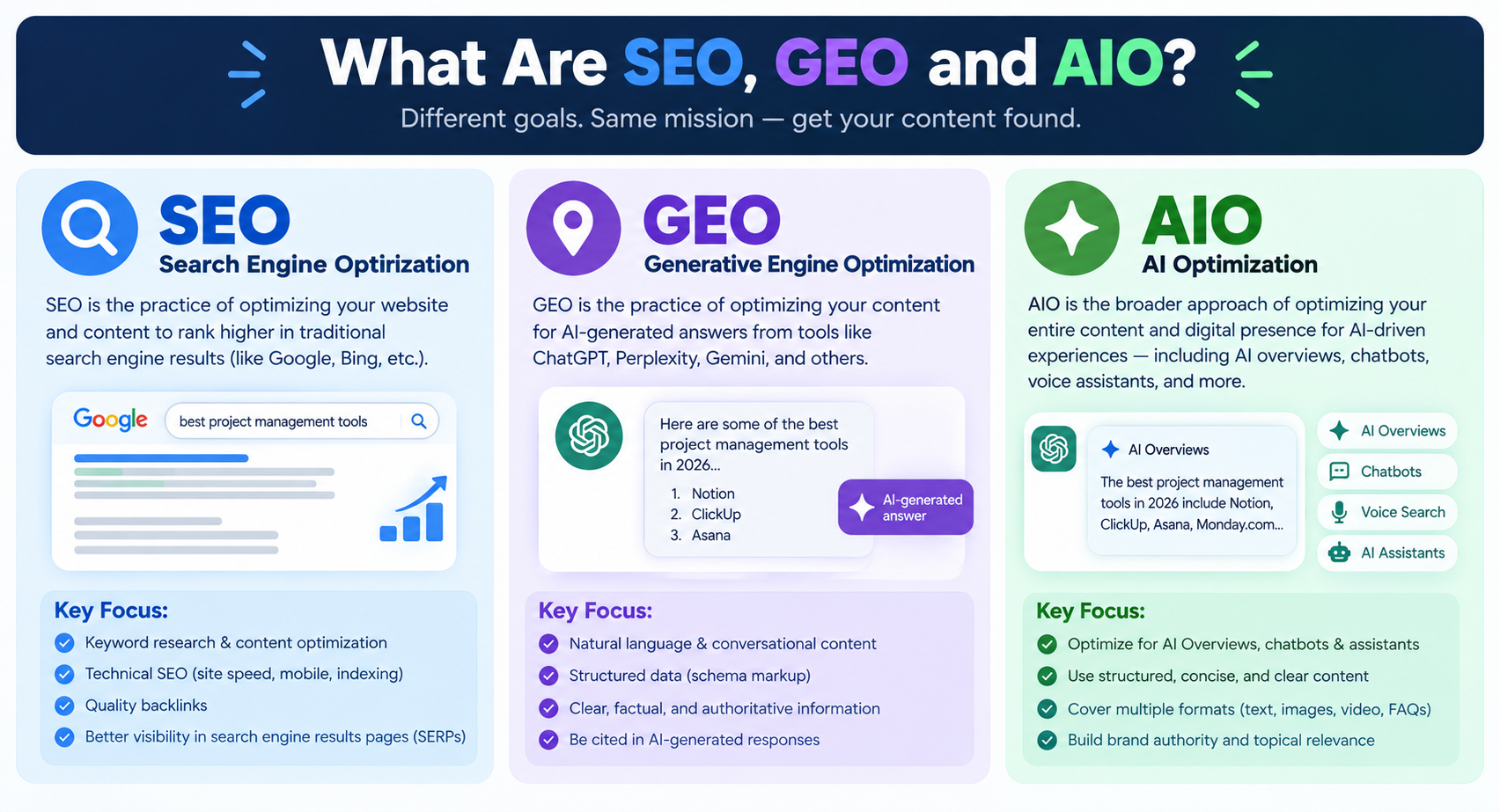
Understanding the distinct roles of traditional search and AI discovery is essential for building a modern visibility strategy. While they share similar goals, each discipline targets different algorithms, user behaviors, and search formats.
What Is Search Engine Optimization (SEO)?
Traditional SEO is the practice of optimizing content and technical infrastructure to rank higher on standard search engine results pages (SERPs). It relies on keyword targeting, backlink acquisition, and technical health to drive organic clicks to your website.
What Is Generative Engine Optimization (GEO)?
Generative Engine Optimization is the process of optimizing web content to be cited as a trusted source within AI-generated responses across platforms like ChatGPT, Perplexity, Gemini, and Claude. GEO focuses on clear entity relationships, direct factual answers, and authoritative formatting rather than just ranking position.
What Is AI Overview Optimization (AIO)?
AI Overview Optimization (AIO) focuses specifically on qualifying for inclusion within Google’s native AI Overviews. It bridges classic Google ranking factors with conversational AI extraction, aiming to get your website featured in the synthesized answer box at the top of Google SERPs.
In short: SEO helps you rank in standard results, AIO gets you featured in Google’s AI summary, and GEO ensures you are cited across all AI engines.
GEO vs SEO: Key Differences
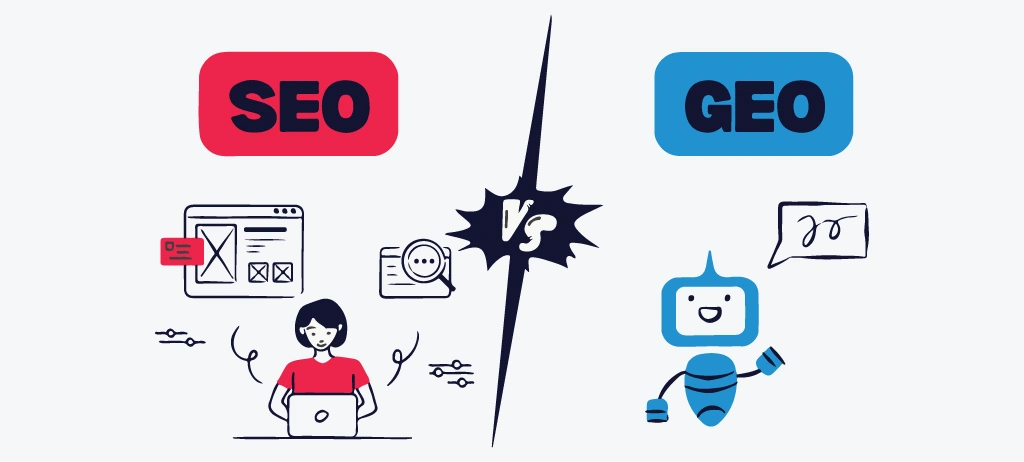
While traditional search optimization focuses on capturing search engine clicks, generative engine optimization targets inclusion inside AI-synthesized responses. When evaluating GEO vs SEO, the fundamental difference lies in how algorithms process your content: standard search engines rank web pages in a list, whereas generative AI models parse, extract, and cite specific information.
In SEO, success depends heavily on keyword density, backlink profiles, and technical site architecture to drive direct traffic. In contrast, GEO prioritizes semantic depth, original data, clear entity relationships, and structural clarity so Large Language Models (LLMs) can easily read and quote your insights.
According to research from Gartner, traditional search engine volume is projected to drop by 25% by 2026 as user behavior shifts toward conversational AI answer engines.
| Dimension | Traditional SEO | GEO (Generative Engine Optimization) |
| Primary Goal | Rank on SERPs to earn website clicks. | Earn citations and brand recommendations in AI answers. |
| Ranking/Citation Signals | Backlinks, target keywords, user behavior signals, technical health. | Factual density, expert attribution, schema, entity clarity, structured formatting. |
| Content Style | Comprehensive, keyword-targeted, structured for human scannability. | Answer-first, fact-dense, conversational, highly structured for LLM parsing. |
| Measurement & KPIs | Keyword rankings, organic sessions, CTR, bounce rate. | AI citation frequency, brand mention sentiment, share of voice in prompts. |
AIO vs SEO: How AI Overview Optimization Fits In
AI Overview Optimization builds directly on top of traditional SEO fundamentals while adapting to Google’s AI-driven search results. When looking at AIO vs SEO, traditional search optimization builds the base, while AI Overview optimization focuses on formatting your content so Google’s AI selects it for the top summary box.
To earn an AI Overview spot, your web page must first satisfy basic SEO rules, such as good search rankings, fast speed, and strong site authority. However, AIO requires you to format your information even more clearly. Google looks for direct, simple answers placed right under relevant headings, helpful FAQ sections, and clean schema markup that helps the AI read your data quickly.
This change also brings the challenge of zero-click searches. Studies indicate that zero-click searches account for up to 60% of Google queries as AI-generated summaries answer questions directly on the SERP. A smart strategy provides quick, direct answers to earn the AI citation while offering deeper insights that encourage users to visit your site for the full story.
GEO vs AIO: What’s the Difference?
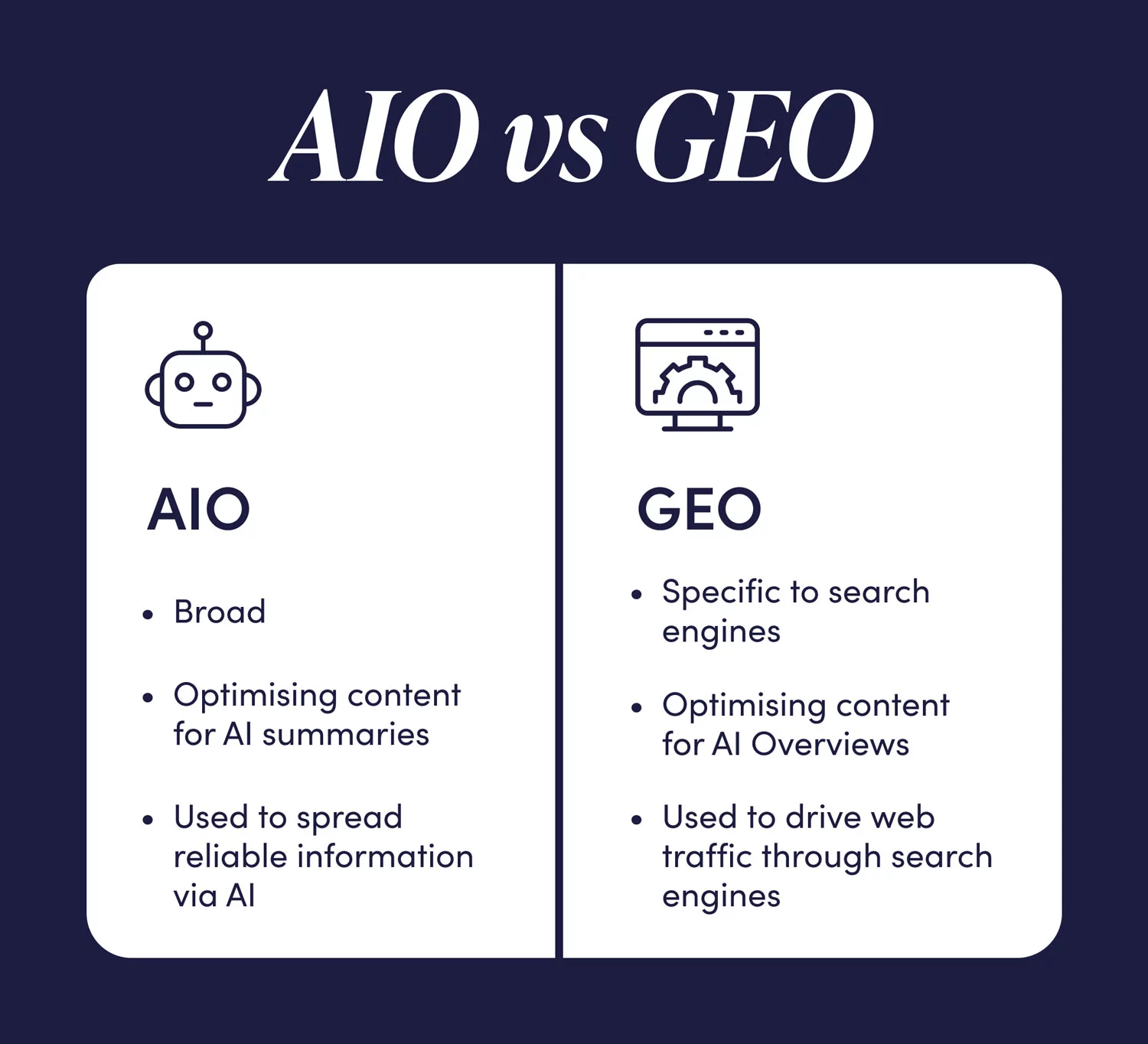
The main difference lies in scope and ecosystem targeting. While Generative Engine Optimization spans multiple platforms including ChatGPT, Perplexity, Gemini, and Claude AI Overview Optimization focuses specifically on securing visibility within Google’s native AI search summaries.
Generative Engine Optimization relies heavily on how your brand is cited and recognized across the entire web. AI search tools evaluate off-page mentions, forum discussions, brand co-citations, and authoritative third-party reviews to determine which sources to recommend.
In contrast, AIO depends heavily on your direct web pages, utilizing traditional Google index signals, exact heading structures, and schema markup to pass Google’s specific extraction standards.
| Factor | GEO (Generative Engine Optimization) | AIO (AI Overview Optimization) |
| Platform Scope | Multi-platform (ChatGPT, Perplexity, Claude, Gemini). | Google Search platform only. |
| Primary Focus | Entity authority, cross-web brand mentions, and cited recommendations. | Direct content extraction, top-page SERP features, and Google indexing. |
| Key Optimization Tactics | Digital PR, third-party reviews, unstructured data, clear entity alignment. | Structured schema, concise answer blocks, clear heading tags, strong organic rank. |
AI Search vs Traditional SEO: What Has Changed in 2026
The shift from standard search engines to AI discovery has fundamentally changed how users find information. The dynamic of AI search vs traditional SEO is no longer about matching exact keyword strings, but about satisfying multi-step, conversational user intent.
In modern search optimization in 2026, users search using complete, conversational sentences rather than fragmented terms. For example, instead of searching for “best coffee machine,” users ask, “What is the best quiet coffee machine for a small apartment under $200?”
Industry data shows that long-tail, conversational queries (11–15 words) generate AI Overviews up to 89% of the time, compared to just 64% for short two-word queries. AI search models evaluate the entire topic to synthesize an answer, shifting the goal from keyword density to entity authority and clear contextual formatting.
Despite these shifts, core foundational practices remain unchanged:
- Technical Site Health: AI engines and search crawlers still require fast, indexable, and well-structured web pages to discover content.
- E-E-A-T Signals: Experience, Expertise, Authoritativeness, and Trustworthiness are vital, as AI tools prioritize cited sources with proven real-world authority.
- High-Quality Content: Clear, accurate, and original information remains the fundamental requirement for both traditional ranking algorithms and generative answer models.
SEO GEO AIO Strategy: A 7-Step Framework for 2026
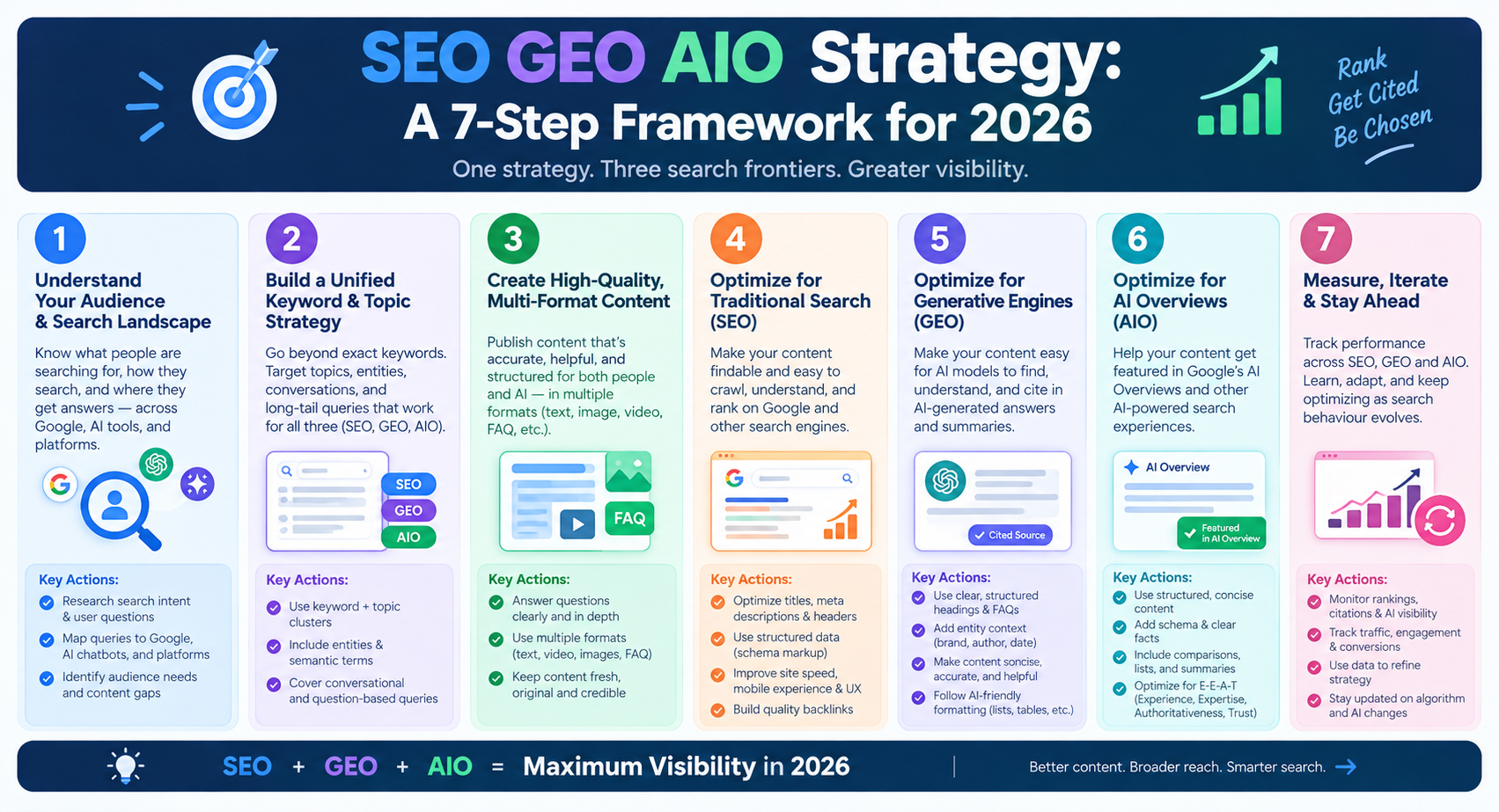
To maximize modern digital visibility, you must integrate traditional search standards with AI-first discovery tactics. This 7-step framework balances classic search performance with advanced AI search optimization strategies.
1. Build a Rock-Solid Technical SEO Foundation
Ensure your website is fast, secure, mobile-friendly, and easily crawlable by both traditional search bots and AI web scrapers. Clean site architecture and quick load times remain prerequisite conditions for getting indexed and cited.
2. Shift to Answer-First, Direct Content
Place concise, clear 40–60 word direct answers immediately under your primary heading tags before expanding into details. Front-loading factual conclusions allows AI models to easily extract concise passages for top-of-page summaries.
3. Implement Structural Hierarchy and Schema Markup
Use descriptive H2 and H3 headings alongside clear tables, bulleted lists, and structured data. Adding JSON-LD schema such as Article, FAQPage, or Product gives AI engines unambiguous machine-readable context.
4. Upgrade E-E-A-T and Factual Specificity
Demonstrate hands-on experience, expert authorship, and clear factual backing throughout your content. Landmark research from Princeton University demonstrates that adding statistics and authoritative citations can lift AI visibility and citation rates by up to 40% in generative engine responses.
5. Expand Entity Authority and Brand Citations
Build off-page brand visibility across third-party publications, industry directories, and active community forums. AI models rely heavily on cross-web entity co-citations to evaluate brand trust and inclusion in AI answers.
6. Diversify Across Multi-Platform Channels
Optimize your digital presence for third-party discovery platforms like Perplexity, ChatGPT, YouTube, and specialized directories. An effective SEO for AI search strategy ensures your brand is recommended wherever users ask conversational questions.
7. Track Unified AI Visibility Metrics
Monitor AI Overview appearances, ChatGPT recommendations, and Perplexity brand citations alongside traditional organic keyword ranks. Tracking referral traffic from conversational platforms helps you refine your strategy based on where your high-intent audience converts best.
Common Mistakes to Avoid
Avoiding strategic pitfalls ensures your content remains indexable for traditional search while qualifying for generative citations:
- Keyword Stuffing: Overloading text with target phrases degrades natural language processing and causes LLMs to ignore your content.
- Ignoring Schema Markup: Omitting structured data makes it harder for AI crawlers to parse key entities and factual relationships accurately.
- Burying the Direct Answer: Hiding direct answers deep within long introductory paragraphs reduces your chances of earning an AI Overview snippet.
- Relying Solely on On-Page SEO: Neglecting off-page brand citations, digital PR, and forum discussions limits your overall Generative Engine Optimization reach.
- Publishing Vague, Thin Content: AI engines prioritize factual density, verified data, and clear attribution over fluff-filled, generic copy.
How to Measure SEO, GEO and AIO Performance
Tracking search performance in 2026 requires monitoring both direct web traffic and off-site AI mentions. Splitting your KPIs ensures full visibility across all search layers.
Traditional SEO Metrics
Evaluate technical health, organic reach, and standard search result engagements:
- Organic Keyword Rankings (SERP Positions)
- Organic Sessions and Click-Through Rate (CTR)
- Technical Crawlability and Indexation Status
AI Visibility Metrics (GEO & AIO)
Measure how frequently AI models select, reference, and quote your brand inside synthesized answers:
- Google AI Overview Appearance Frequency & Citation Share
- Share of Voice and Brand Mentions across ChatGPT, Perplexity, and Gemini
- Referral Traffic from Conversational AI Engines & Post-Click Conversions
Traditional search optimization, AI Overview optimization, and Generative Engine Optimization are not competing strategies they are complementary layers of modern digital visibility. Achieving organic dominance in 2026 requires a unified approach to GEO vs AIO vs SEO that satisfies traditional crawler requirements while positioning your content for AI synthesis across platforms.
Frequently Asked Questions
Will GEO replace SEO?
No, GEO will not replace SEO. Instead, it expands upon traditional search practices. While GEO targets AI-generated citations and answer inclusions, classic SEO remains essential for driving technical site health, indexability, high-intent transactional traffic, and deep-dive user engagement.
Is AIO the same as GEO?
No. AIO specifically targets placement within Google’s native AI Overviews on Google SERPs. GEO is a broader, multi-platform discipline focused on earning citations across all generative engines, including ChatGPT, Perplexity, Gemini, and Claude.
Do I still need SEO in 2026?
Yes, SEO remains the core foundation of modern digital marketing. AI models rely on search engine crawlers and web indexes to discover and evaluate content. Without strong technical SEO, clear site architecture, and authoritative content, AI engines cannot index or trust your pages.
How quickly do AI engines update their citations?
AI engines update citations dynamically based on web crawling frequency, real-time search integration, and platform model updates. Google AI Overviews refresh alongside live search indexing, whereas standalone LLMs update citations as they re-crawl web sources or access real-time web search APIs.
What is the most important factor for ranking in AI search?
Entity authority and direct factual clarity are the most critical factors. AI engines prioritize structured content that delivers immediate, authoritative answers backed by strong brand mentions, verified external references, and clear schema markup.

Vikas Verma is an SEO specialist and web designer focused on SEO strategy, website design, and digital experiences.