





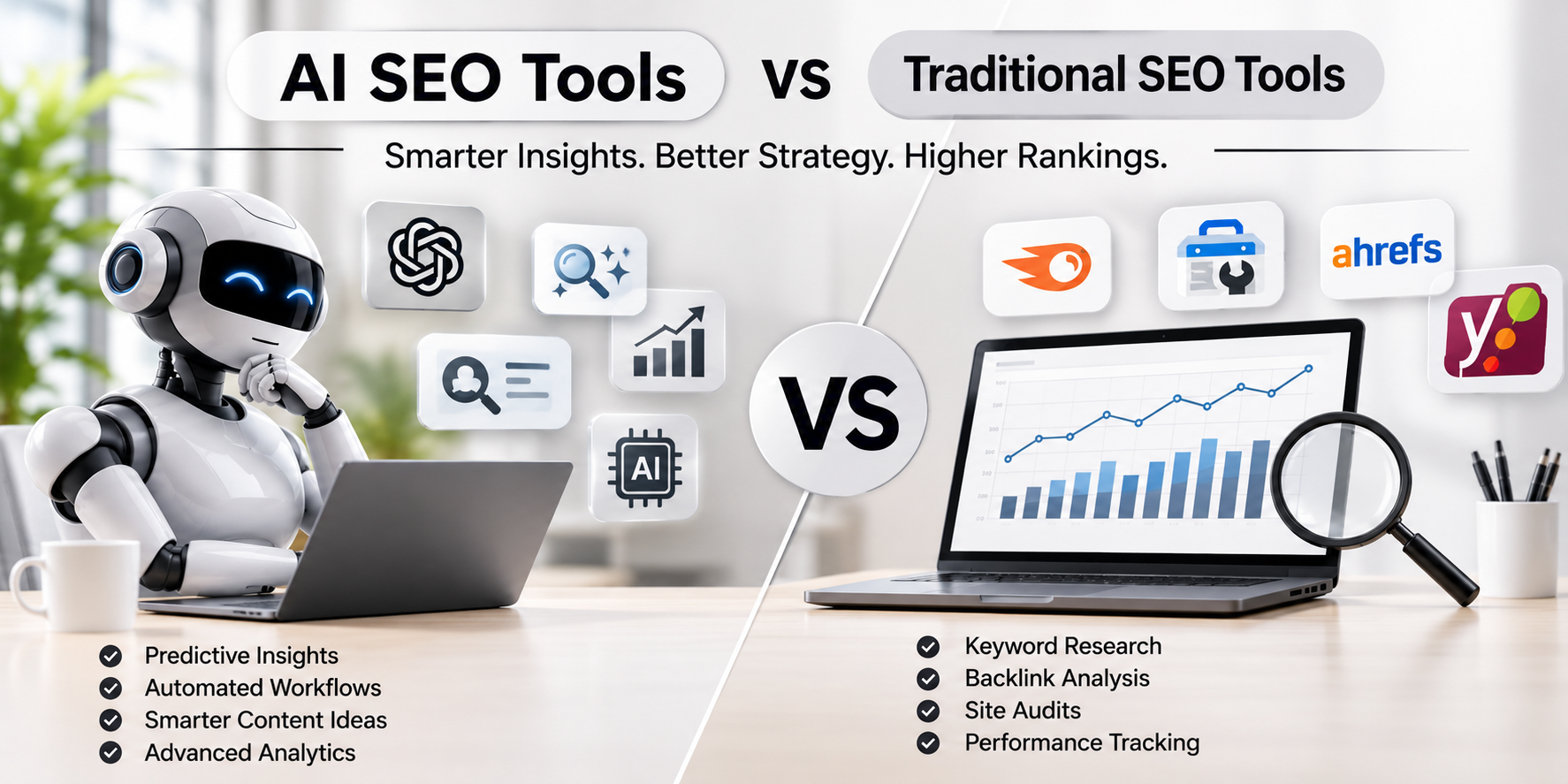
The search results page has moved past simple keyword matching and meta tags. With Google AI Overviews, ChatGPT search integrations, and conversational engines changing how people discover products, digital marketing teams face a new reality. Traditional SEO tools were built to track blue links, keywords, and backlink profiles.
AI SEO and generative search tools focus on tracking brand citations, measuring share of voice inside LLM prompts, and streamlining content writing. Deciding how to balance them dictates whether your brand captures high-intent traffic or gets bypassed by AI answers.
This guide breaks down the core differences between both software types, shares the top 5 tools in each category with pricing and free or paid breakdowns, reviews current search displacement data, and outlines a practical way to build your search stack.
What Are Traditional SEO Tools?
Traditional SEO tools rely on index-based search mechanics: crawling pages, measuring backlink equity, tracking keyword positions, and running technical site checks. Platforms like Semrush, Ahrefs, and Screaming Frog form the core of this group.
These tools evaluate how well a website matches ranking algorithms by checking on-page elements, internal links, page speed, and referring domain authority. They answer structural questions about where your pages rank, your organic traffic volume, and your site’s technical health. To review the foundational elements required for structural integrity, check out our technical SEO checklist 2026.
Top 5 Traditional SEO Tools (With Pricing & Details)
When you need deep indexing, backlink data, and reliable rank tracking, these five platforms lead the market:
1. Semrush
-
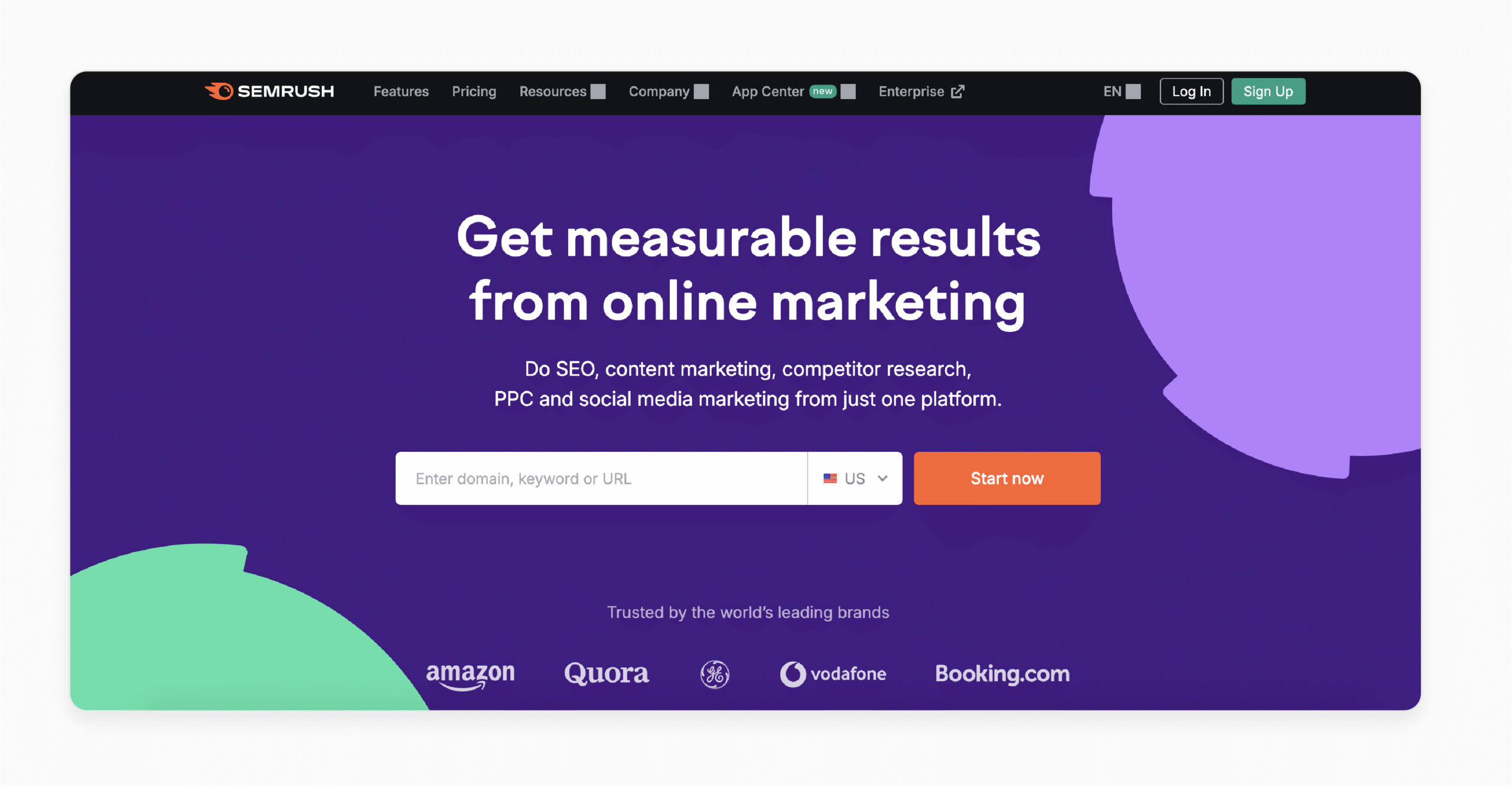
What it does: An all-in-one suite for keyword research, technical site checks, competitor analysis, and global rank tracking.
-
Pricing: Paid plans start at around $139.95 per month.
-
Free vs. Paid: A limited free account is available with daily search caps. The full feature set requires a paid plan, though a free trial is offered.
-
Best for: Agencies and marketers who need comprehensive data across multiple channels.
2. Ahrefs
-
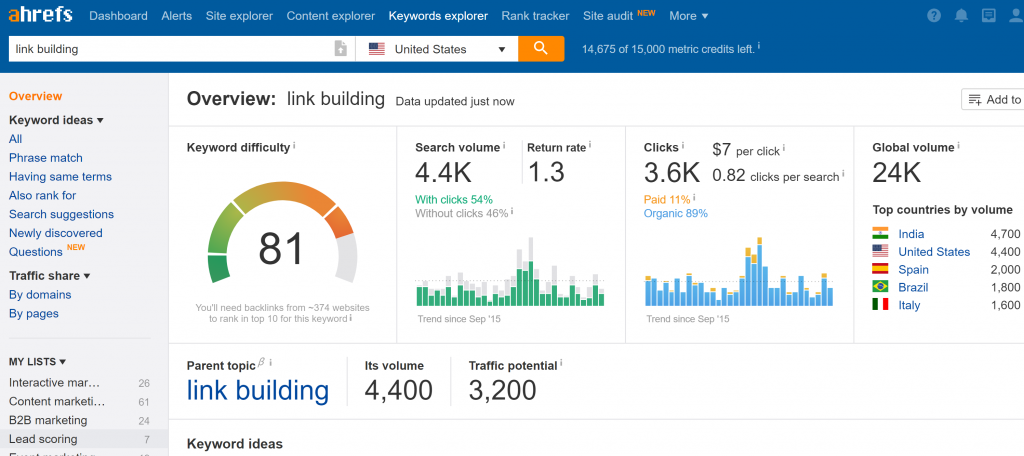
What it does: An industry leader for backlink intelligence, link-building outreach, site exploration, and organic search data.
-
Pricing: Paid plans start at around $129 per month.
-
Free vs. Paid: Offers Ahrefs Webmaster Tools for free if you verify ownership of your site. Core competitor research features require a paid subscription.
-
Best for: Deep backlink analysis and competitive link prospecting.
3. Moz Pro
-
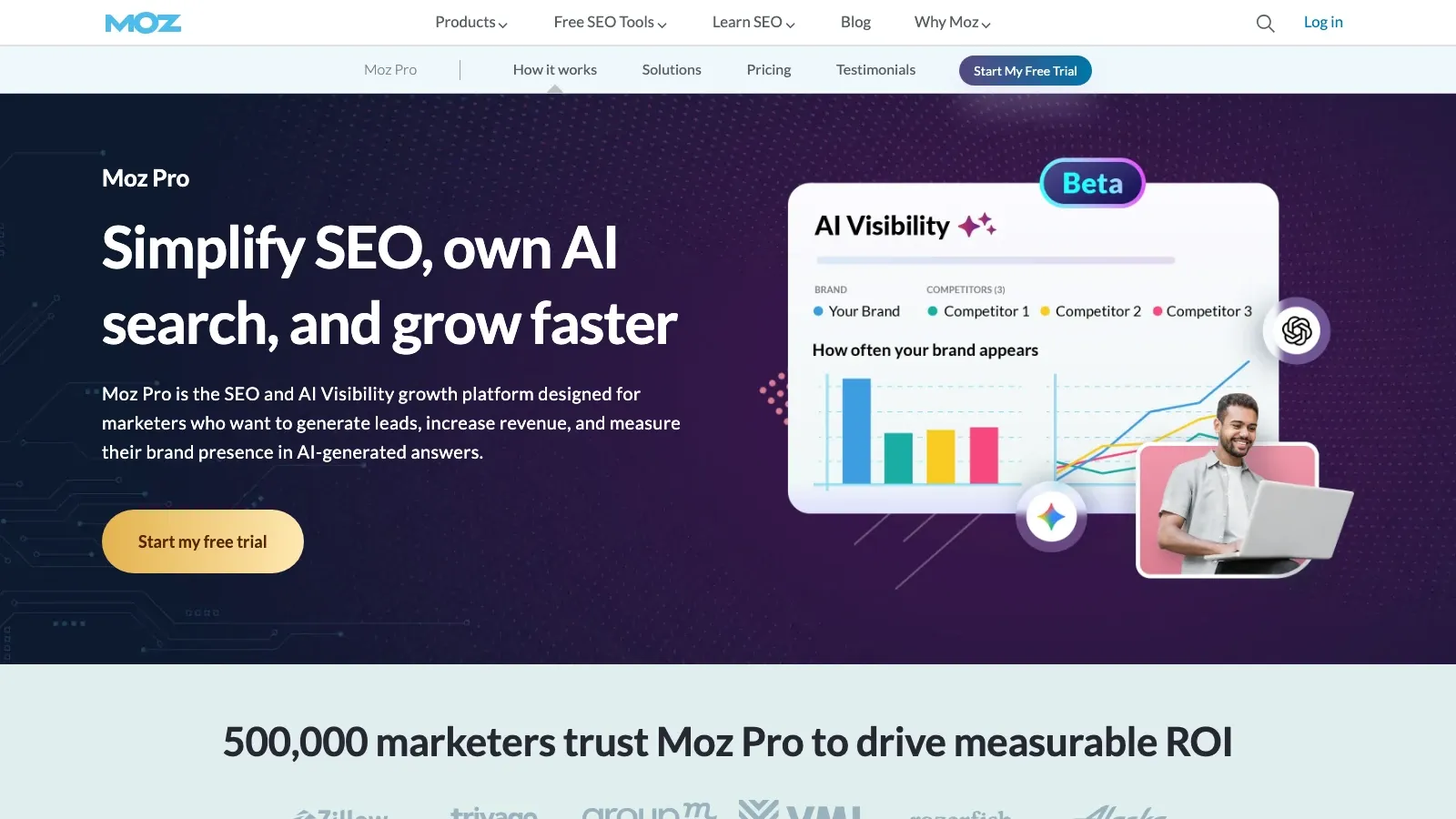
What it does: A veteran SEO platform well-regarded for its proprietary Domain Authority metric and straightforward on-page optimization tips.
-
Pricing: Plans start at around $99 per month.
-
Free vs. Paid: A free browser extension and limited free keyword tools are available. Full site auditing and tracking require a paid plan.
-
Best for: Beginners and small businesses looking for guided SEO recommendations.
4. Screaming Frog SEO Spider
-
What it does: A desktop-based crawler that performs deep technical site checks to uncover broken links, redirect loops, and missing metadata.
-
Pricing: A free version is available, while the paid license costs approximately $259 per year.
-
Free vs. Paid: The free version crawls up to 500 URLs with basic checks. The paid license unlocks unlimited crawling, custom data extraction, and configuration options.
-
Best for: Technical site audits and fixing structural website errors.
5. Google Search Console (GSC)
-
What it does: Google’s direct first-party platform for monitoring exact search queries, impression counts, index status, and core web vitals.
-
Pricing: Completely free.
-
Free vs. Paid: 100% free for any verified website owner.
-
Best for: Monitoring actual Google organic performance, clicks, and indexing status.
What Are AI SEO Tools?
AI SEO tools fall into two distinct groups: AI content and optimization tools and AI visibility and generative search tools.
1. AI Content & Optimization Tools
Platforms like Surfer SEO and Frase analyze top-ranking document structures using natural language processing to generate content briefs, optimize keyword usage, and scale writing workflows.
2. AI Visibility & Generative Search Tools
Platforms like Profound, Peec AI, and Otterly monitor how artificial intelligence engines such as ChatGPT, Google Gemini, and Perplexity perceive, cite, and reference your brand. Instead of tracking traditional rank positions, these tools track your brand’s mention frequency and sentiment inside conversational LLM outputs. To explore how these modern tactics compare to legacy strategies, read our breakdown on GEO vs SEO key differences in AI search.
Top 5 AI SEO & Visibility Tools (With Pricing & Details)
To track how your brand appears inside generative AI summaries and conversational LLM engines, these five specialized tools stand out:
1. Profound

-
What it does: An enterprise-grade generative engine optimization platform built specifically to track brand mentions, citations, and visibility across major LLM interfaces.
-
Pricing: Custom enterprise pricing, typically estimated between $499 and $2,000+ per month.
-
Free vs. Paid: Paid only (custom demo available upon request).
-
Best for: Large enterprise brands tracking generative AI market share.
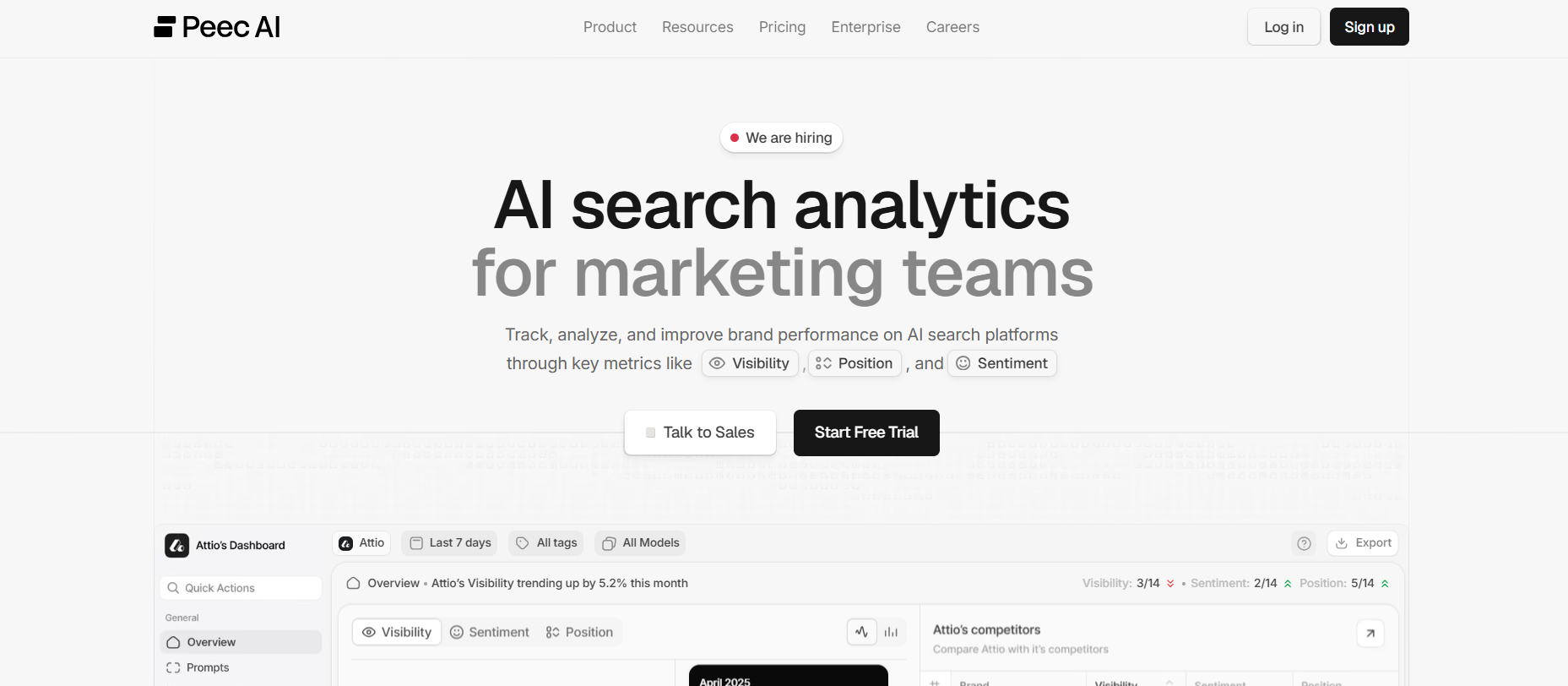
2. Peec AI
-
What it does: A tracking tool built for marketing agencies to monitor multi-client brand presence inside AI Overviews and chat answers.
-
Pricing: Starts around $95 per month (with annual discounts reducing effective costs).
-
Free vs. Paid: Paid platform with trial options.
-
Best for: Digital marketing agencies managing multiple client brands in AI search.
3. Otterly.ai

-
What it does: An accessible, budget-friendly AI tracking tool designed to help smaller teams monitor LLM share of voice.
-
Pricing: Starts around $29 per month.
-
Free vs. Paid: Entry-level paid tier with limited trial access.
-
Best for: Small businesses and lean teams starting out with AI visibility tracking.
4. Semrush AI Visibility Toolkit

-
What it does: Semrush’s dedicated module that connects traditional keyword rankings with generative engine presence and prompt visibility.
-
Pricing: Integrated into Semrush plans or available as an add-on starting around $99 per month for prompt monitoring modules.
-
Free vs. Paid: Paid add-on module.
-
Best for: Existing Semrush subscribers wanting unified traditional and AI tracking.
5. Surfer SEO

-
What it does: An AI-driven content optimization and planning platform that builds data-driven content briefs based on top-ranking NLP patterns.
-
Pricing: Plans start around $89 per month.
-
Free vs. Paid: Paid platform with limited trial capabilities.
-
Best for: Content writers and SEOs optimizing on-page copy for semantic relevance.
Key Differences: Traditional vs. AI SEO Tools
| Factor | Traditional SEO Tools | AI SEO Tools |
| Primary Goal | Rank pages, earn clicks, and drive organic traffic | Get cited, recommended, or mentioned in AI-generated answers |
| Core Metrics | Rankings, organic traffic, backlink velocity, click-through rate | Share of voice, citation frequency, mention rate, sentiment |
| Industry Examples | Semrush, Ahrefs, Moz, Screaming Frog, GSC | Profound, Peec AI, Otterly, Semrush AI Toolkit, Surfer SEO |
| Best Suited For | Technical site audits, backlink profiling, keyword research | Monitoring brand visibility inside ChatGPT, Gemini, and Perplexity |
| Cost Range | Free to mid-high tiers ($99 to $400+/mo) | Low entry tiers ($29/mo) to custom enterprise pricing |
Why This Matters Now: The Data Behind Search Changes
Search habits have shifted as zero-click interfaces and AI summaries become common. Reviewing the underlying data helps put this shift into perspective:
-
Click Loss: An Ahrefs study of 300,000 keywords showed that the click-through rate for a #1 ranking position dropped significantly when AI Overviews were present, reflecting a 58% decrease compared to standard listings. Note: This link highlights click drops, but does not prove direct causation in every niche.
-
Pew Research Findings: Research noted that traditional search results paired with an AI Overview yielded an average CTR of roughly 8%, compared to 15% on standard search pages without AI blocks.
-
Field Experiments: A randomized field test published as a working draft on SSRN indicated that AI summaries reduced organic inbound clicks by 39.8%. Treat this percentage as an un-peer-reviewed directional indicator rather than an absolute rule.
-
AI Overview Presence: Generative search features appeared across roughly 13% of total commercial and informational queries.
-
Conversion Quality: Data cited by Page One Power indicates that visitors arriving via conversational AI search engines convert at rates up to 4.4x higher than standard organic search traffic, capturing high-intent buyers further down the funnel.
-
Market Share Shifts: Google’s search market share dipped below 90% (landing around 89.34%), marking a structural shift as users try out dedicated AI chat apps.
-
The Citation Disconnect: An independent analysis by Something Inc. found that 28.3% of the domains most frequently cited within ChatGPT answers had zero traditional Google organic visibility, proving that AI citation mechanics operate differently than keyword rankings.
-
Google’s AI Content Stance: Google does not penalize content simply because it is generated by artificial intelligence. However, publishing mass volumes of low-quality pages without unique value violates spam and content guidelines. Industry audits show top-ranking editorial pages consist of less than 5.3% unedited AI text.
Where Traditional Tools Still Win
Despite the industry focus on artificial intelligence, traditional SEO software remains necessary for fundamental site health and accuracy:
-
Backlink Analysis: Evaluating anchor text distribution, toxic link profiles, and referring domain authority requires deep web crawlers that AI visibility tools simply do not provide.
-
Technical Site Checks: Finding broken links, redirect loops, and missing metadata requires reliable crawlers like Screaming Frog and Semrush.
-
Commercial Keyword Research: Understanding high-volume search intent, transactional variations, and historical keyword difficulty metrics prevents teams from targeting zero-volume terms.
-
Stable Measurement: Traditional metrics provide reliable baseline reporting for stakeholders without adjustments for prompt volatility.
Where AI Tools Win
AI-driven platforms excel where static, index-based software falls short:
-
Conversational Visibility Tracking: Monitoring whether your brand appears inside a generative response when a user asks ChatGPT or Perplexity for software recommendations.
-
Content Brief Speed: Pulling together semantic sub-topics in minutes rather than hours of manual Google search review.
-
Scale and Personalization: Automating content research while keeping human editing guidelines in place to protect brand voice.
Risks of AI Tools
Deploying AI tools without supervision introduces distinct hazards to your digital marketing efforts:
-
Scaled Content Abuse: Publishing hundreds of unedited AI articles triggers automated quality filters, resulting in sudden index drops during core search updates.
-
Metric Noise: AI visibility tools frequently report fluctuating brand mention data based on minor variations in user prompts, creating false alarms.
-
Over-Automation: Relying entirely on automated tools strips content of authentic brand voice, original case studies, and real expertise that separate market leaders from low-quality sites.
Which Should You Choose? A Practical Way to Decide
Building your search stack depends on your business model, budget, and team size:
-
Freelancer or Small Local Business: Stick with Google Search Console (Free) and a mid-tier traditional platform like Semrush or SE Ranking. Add a lightweight AI monitoring tool like Otterly ($29/mo) only if local conversational search visibility is critical.
-
Content-Heavy Blog or SaaS Brand: Invest in a traditional suite combined with Peec AI or the Semrush AI Toolkit, paired with an AI optimization assistant like Surfer SEO for drafting, provided every article undergoes strict human review.
-
Digital Marketing Agency: Implement a robust traditional suite paired with Peec AI for multi-client seat management, unified reporting dashboards, and client-facing AI visibility audits.
-
Enterprise Organization: Deploy enterprise-tier suites such as Semrush Enterprise or Profound alongside Ahrefs, ensuring robust data reporting, data exports, and compliance tracking.
The Golden Rule: For most businesses, the correct answer is not choosing one over the other—it is establishing traditional SEO as your baseline infrastructure, with AI SEO tools layered directly on top.
How to Measure Both Traditional and AI Search Performance
Accurate performance measurement requires tracking two distinct funnels simultaneously:
-
Traditional Funnel (GA4 & Search Console): Monitor organic clicks, impressions, average position, click-through rates, and landing page conversions within Google Search Console. Connect these metrics to Google Analytics 4 (GA4) to track user engagement, session duration, and assisted conversions.
-
AI Search Funnel (GEO Tools): Track your brand’s share of voice across LLMs, measure the frequency of direct brand citations in generative answers, and check sentiment scores within conversational query outputs. Correlate upward trends in AI brand mentions with inbound organic brand-name search volume in Search Console to validate multi-channel impact.

SURBHI THAPA
Surbhi Thapa is an SEO specialist focused on SEO strategy and content optimization.
Surbhi Thapa is an SEO specialist focused on SEO strategy and content optimization.