








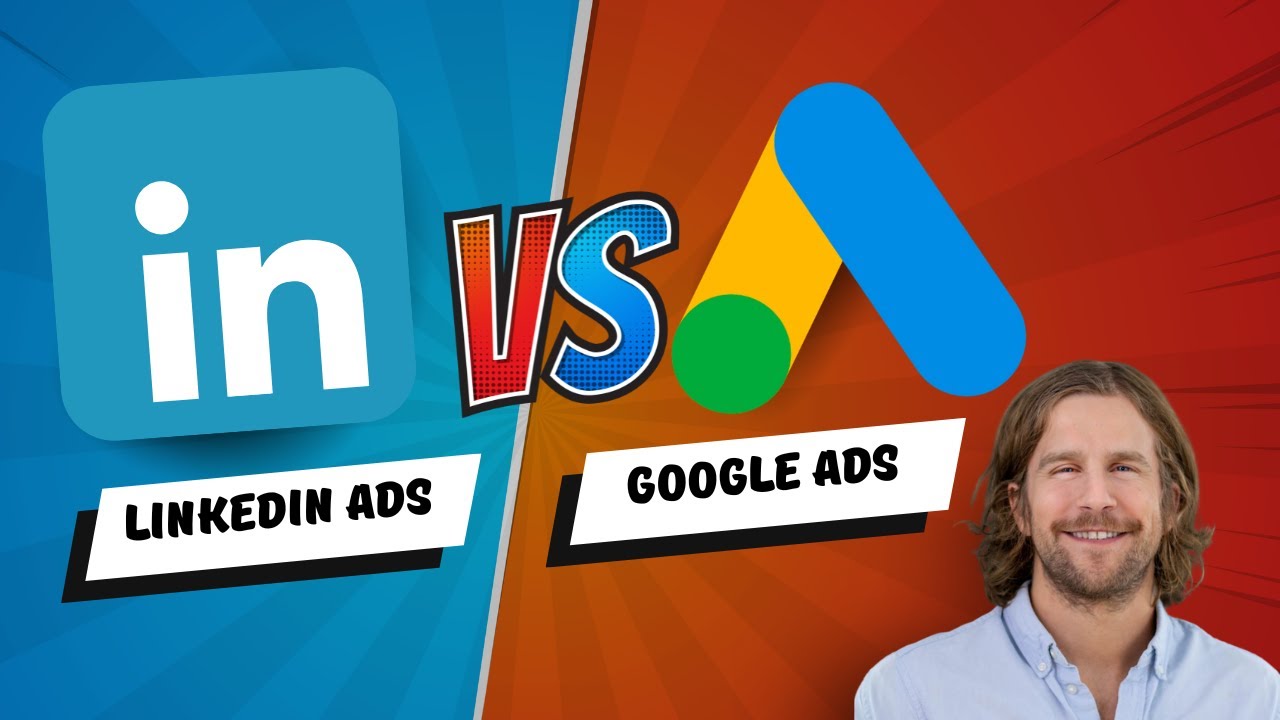
Google Ads captures existing demand from buyers actively searching for a solution, while LinkedIn Ads creates demand by putting your brand in front of specific decision-makers before they ever search. Google works best when your product has established search volume and you need leads fast on a modest budget. LinkedIn wins for high-ticket, complex B2B sales where reaching the right job title matters more than immediate click volume.
Choosing between these two platforms isn’t about which ad network has a better interface. It comes down to timing and intent. Are you trying to intercept a buyer who already knows what they want, or are you trying to educate a VP who doesn’t realize they have a problem yet?
Quick Comparison: LinkedIn Ads vs. Google Ads
| Feature | Google Ads (B2B) | LinkedIn Ads |
| Core Objective | Demand capture (active search intent) | Demand generation (proactive awareness) |
| Targeting Mechanism | Keywords, search queries, and in-market signals | Job titles, seniority, company size, and industry |
| Sales Cycle Fit | Short to medium sales cycles | Long, multi-stakeholder enterprise cycles |
| Average CPC (2026) | $2 – $10 | $6 – $15 |
| Average CPL (2026) | $50 – $200 | $100 – $350 |
| Recommended Min. Budget | ~$1,500 / month | ~$3,000 / month |
| Lead Quality | Mixed; requires strict negative keyword filtering | High ICP accuracy (often 80%+ fit) |
The Core Difference: Intent vs. Identity
The easiest way to separate these platforms is to look at the “what” versus the “who.”
Google Ads is built around the “what.” You bid on specific phrases people type into the search bar like “enterprise payroll software” or “cloud security compliance audit.” You don’t always know the exact job title of the person searching, and you could get clicks from students, competitors, or junior researchers. However, the commercial intent is undeniable. According to Google Ads documentation on search intent, matching ad copy directly to high-intent queries remains one of the fastest ways to drive bottom-of-funnel conversions.
LinkedIn Ads is built around the “who.” Nobody logs onto LinkedIn typing “buy accounting software” into the feed. Instead, they scroll for industry news and peer updates. LinkedIn lets you hand-pick your audience using verified first-party profile data targeting CFOs at SaaS companies with 200 to 1,000 employees. You trade immediate buying intent for surgical demographic precision.
When Google Ads Makes More Sense for B2B
Google Search should be your starting line if your market already knows your product category exists.
-
Established Search Vocabulary: If buyers actively search for your service every month, Google puts your offer directly in their path at the exact moment they are ready to compare vendors. Solid B2B keyword research will quickly tell you if enough commercial volume exists to sustain a campaign.
-
Faster Pipeline Velocity: Because prospects are already problem-aware and solution-aware, sales cycles from Google Search leads tend to close faster than cold social traffic.
-
Tighter Starting Budgets: You can test a tightly focused Search campaign with $1,500 a month using exact-match keywords and still gather enough conversion data to optimize.
The Catch: Google has a hard ceiling monthly search volume. If you sell a brand-new software category that nobody knows how to search for yet, Google Ads will starve for impressions. Furthermore, because B2B clicks are expensive, sending traffic to a slow or confusing page burns cash immediately. Your landing pages must align tightly with user intent and search experience optimization principles we cover in our breakdown of AIO, GEO, AEO, and SXO.
Why LinkedIn Ads Dominate High-Ticket B2B
When your average contract value (ACV) exceeds $15,000 and requires sign-off from three different department heads, Google Search alone won’t cut it.
-
Account-Based Marketing (ABM) Precision: You can upload a CSV list of 500 target accounts and serve ads exclusively to the Directors and VPs inside those specific companies. As outlined in LinkedIn Marketing Solutions, matched audiences allow B2B teams to align ad spend directly with outbound sales lists.
-
Thought Leader Ads: Traditional corporate banner ads often get ignored in the feed. LinkedIn’s Thought Leader Ads let you sponsor organic posts directly from your CEO, founder, or subject-matter experts. Putting a real human face on technical insights builds trust far faster than a generic product demo pitch.
-
Superior ICP Fit: While your Cost Per Lead (CPL) will look higher in your ad dashboard, your sales team wastes far less time disqualifying bad leads. A $250 lead from a Director of Operations beats five $60 leads from interns who have zero purchasing power.
Pair your paid LinkedIn efforts with a broader B2B content marketing strategy so that when prospects click through to your profile or website, they find deep, authoritative resources that validate your expertise.
Real-World Costs: Looking Beyond the Click
Marketers often abandon LinkedIn after two weeks because the Cost Per Click (CPC) is double or triple what they see on Google. Looking at CPC in isolation is a mistake.
On Google, you might pay $8 per click, convert 5% of visitors into leads ($160 CPL), and close 10% of those into customers making your Customer Acquisition Cost (CAC) $1,600.
On LinkedIn, you might pay $14 per click and $280 per lead. Because every single lead matches your Ideal Customer Profile (ICP), your sales team closes 25% of them bringing your actual CAC down to $1,120. Always measure pipeline generated and closed-won revenue, not surface-level ad platform metrics.
How to Combine Google and LinkedIn in One Funnel
Once your monthly paid media budget crosses the $5,000 threshold, running both channels together creates a compounding loop across the buyer journey:
-
Educate on LinkedIn (Top & Middle of Funnel): Run Thought Leader Ads, industry benchmarks, and short video breakdowns to your exact ICP list. Don’t ask for a demo yet focus on getting them to recognize your brand and understand the problem you solve.
-
Retarget Across Both Platforms: Install both the LinkedIn Insight Tag and Google Ads tag on your site. Anyone who visits your pricing or product pages from LinkedIn can be retargeted with customer case studies on LinkedIn and Google Display/YouTube.
-
Capture on Google Search (Bottom of Funnel): Weeks later, when that VP finally gets budget approval and searches Google for your category or types your brand name directly your Search ads are waiting at the top of the page to close the deal.
If you are weighing other paid social networks alongside LinkedIn for top-of-funnel reach, check out our guide on social media marketing for businesses to see how different platforms stack up for commercial reach.
Which Platform Should You Choose?
-
Start with Google Ads if: You have a budget under $3,000/month, buyers are actively searching for your solution today, and you need immediate sales calls to hit quarterly targets.
-
Start with LinkedIn Ads if: You sell an enterprise or high-ticket product, your niche is too new for high search volume, and you need to influence specific decision-makers inside target accounts.
-
Run both if: You have $5,000+/month to invest and want to build brand authority early while capturing high-intent buyers when they are ready to sign.
Frequently Asked Questions
What is the main difference between LinkedIn Ads and Google Ads?
Google Ads captures existing demand by showing ads to people actively searching for specific keywords. LinkedIn Ads generates new demand by targeting professionals based on their job title, seniority, industry, and company size before they start searching.
Is LinkedIn Ads more expensive than Google Ads?
Yes, LinkedIn Ads typically have a higher cost per click ($6–$15) and cost per lead ($100–$350) compared to Google Ads. However, LinkedIn frequently delivers a lower overall customer acquisition cost for high-ticket B2B products because lead quality and ICP accuracy are much higher.
When should a B2B company choose Google Ads first?
B2B companies should prioritize Google Ads when they have a limited starting budget, their product category already has steady monthly search volume, and they need bottom-of-funnel leads quickly.
Can you run LinkedIn Ads and Google Ads at the same time?
Yes. Combining both platforms is ideal once your monthly ad budget reaches $5,000 or more. Use LinkedIn to educate decision-makers at the top of the funnel, and use Google Search to capture those same buyers when they actively search for a vendor.

SURBHI THAPA
Surbhi Thapa is an SEO specialist focused on SEO strategy and content optimization.
Surbhi Thapa is an SEO specialist focused on SEO strategy and content optimization.