







Remember when ranking #1 on Google was simple? You picked a high-volume keyword, sprinkled it across your page, built a handful of backlinks, and waited for the organic traffic to roll in.
If you are still relying solely on that decade-old playbook, your website is likely losing visibility.
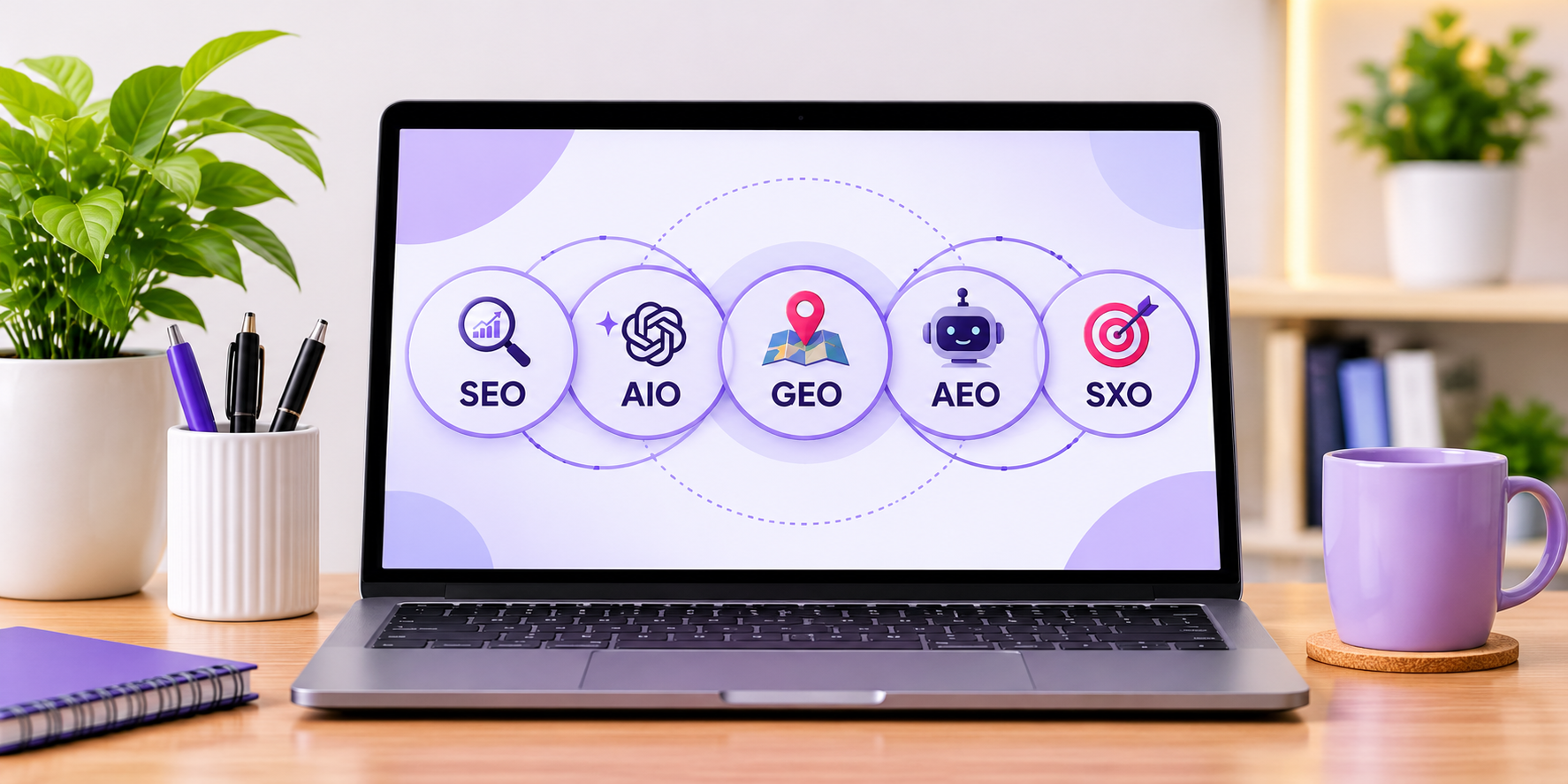
Search engines have evolved into direct answer machines powered by artificial intelligence, conversational models, and predictive user experiences. Marketers are no longer just optimizing for traditional blue links they are navigating a complex landscape made up of SEO, AIO, GEO, AEO, and SXO.
If these acronyms sound like an overwhelming alphabet soup, take a breath. In this comprehensive guide, we will break down what each strategy actually means, why it matters for your brand, and how to seamlessly integrate them into a unified content strategy.
1. SEO (Search Engine Optimization): The Unshakable Foundation
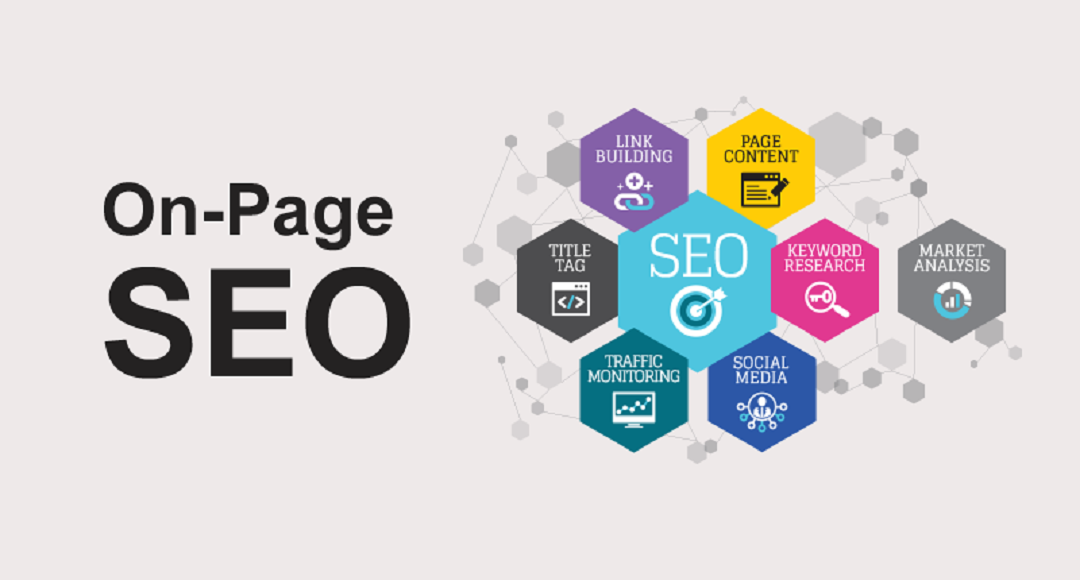
While new frameworks keep emerging, SEO is far from dead. It remains the foundational bedrock upon which every modern digital strategy is built.
What It Really Means
SEO focuses on improving your website’s technical architecture, authority, and content relevance so search engines like Google and Bing can discover, crawl, index, and rank your pages.
Without a solid SEO structure, your content will fail to gain traction—no matter how optimized it is for AI or user experience.
Key Pillars of Modern SEO:
-
Technical Health: Ensuring fast load speeds, mobile responsiveness, and clean site architecture. Review our Technical SEO Checklist 2026 to audit your website’s health.
-
Crawlability & Indexing: Resolving technical roadblocks like Google 404 Errors and monitoring index status in Google Search Console.
-
Authority Building: Earning high-quality, contextual backlinks from trusted domains. (Curious if link building has changed? Read Do Backlinks Still Matter for SEO?).
Pro Tip: Never treat SEO as a one-time setup. Run routine audits using top industry tools to stay ahead of algorithm updates—check out our breakdown of the Best SEO Audit Tools.
2. AIO (AI Optimization): Formatting Content for Machine Readers
With the explosion of Large Language Models (LLMs) like ChatGPT, Claude, and Google Gemini, content is no longer read only by human eyes and simple web crawlers. AI Optimization (AIO) is the practice of structuring your content so LLMs can process, interpret, and cite your information accurately.
What It Really Means
AIO isn’t about generating spammy content using AI tools. Instead, it is about making your content easily digestible for machine intelligence. When an AI chatbot processes a prompt, AIO ensures your brand’s data, definitions, and insights are retrieved as authoritative facts.
How to Optimize for AIO:
-
Clear Structure: Use bullet points, concise tables, and short paragraphs. Avoid fluffy introductions and overly poetic language.
-
Direct Statements: Use clear subject-verb structures (e.g., “AIO stands for…” or “The three steps to execute this are…”).
-
Factual Rigor: Back up your statements with structured data.
For a deeper dive into optimizing your digital footprint for conversational LLMs, check out our guide on how to Optimize Your Website for ChatGPT & Perplexity AI Search.
3. GEO (Generative Engine Optimization): Dominating AI Search Summaries
If AIO is about formatting for machine readability, GEO is about strategic positioning inside generative engines such as Google’s AI Overviews, Perplexity, and Bing Copilot.
What It Really Means
Generative Engine Optimization focuses on content depth, semantic context, and brand authority. Generative search engines synthesize answers from multiple sources across the web to answer complex multi-part queries. GEO ensures your content is cited as a key source within those AI-generated summaries.
Strategic Tactics for GEO:
-
Semantic Content Hubs: Group related topics together instead of relying on isolated keywords. Learn more about the core principles in our guide on Generative Engine Optimization.
-
Schema Markup: Implement structured data from Schema.org so generative bots instantly understand your page entity, product details, or articles.
-
Citation Engineering: Include expert quotes, original research, and stats. Generative engines favor sources that demonstrate clear E-E-A-T (Experience, Expertise, Authoritativeness, and Trustworthiness).
If you want to understand how GEO directly compares to traditional search methods, read our comprehensive breakdown of GEO vs SEO: Key Differences in AI Search.
4. AEO (Answer Engine Optimization): Becoming the Zero-Click Solution
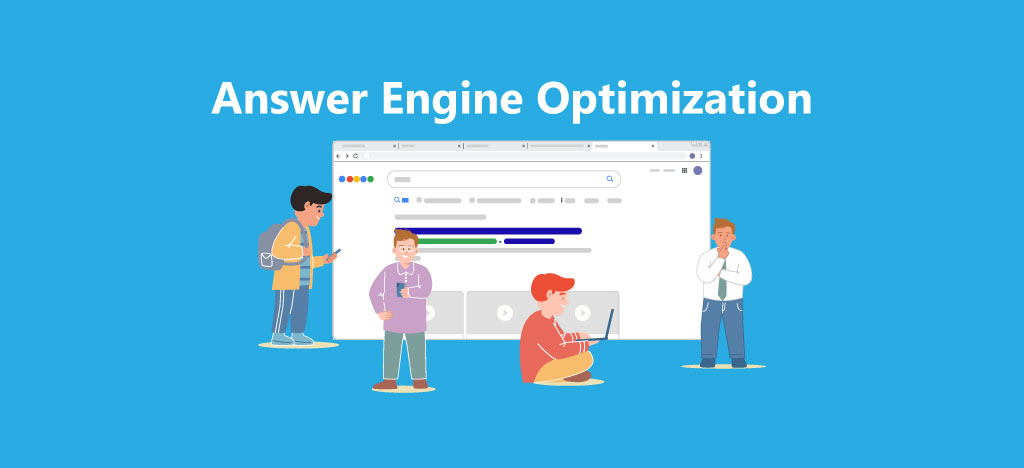
As voice-activated assistants (like Amazon Alexa and Apple Siri) and featured answer boxes dominate search result pages, AEO has become essential for capturing zero-click searches.
What It Really Means
Answer Engine Optimization focuses on positioning your content to be direct, conversational, and instantly actionable. When a user asks a specific question via voice or typed search, AEO ensures your website provides the definitive answer selected for Featured Snippets or voice playback.
How to Implement AEO:
-
Adopt Q&A Formats: Structure subheadings as direct questions (e.g., “What is AEO?”) followed immediately by a 40 to 50-word answer.
-
Conversational Phrasing: Target natural language and long-tail conversational phrases.
-
FAQ Schema: Use structured FAQ markup to signal to search engines like Google Search Central that your content directly answers user queries.
Discover how small businesses can leverage direct answer strategies in our feature on Why Small Businesses Must Focus on AEO for Google Visibility.
5. SXO (Search Experience Optimization): Converting Clicks into Connection
Getting visitors to click on your link is only half the battle. If they arrive at your page and immediately bounce back to search results due to slow load times, invasive pop-ups, or poor navigation, search algorithms will downgrade your rankings.
SXO merges SEO with User Experience (UX) design.
What It Really Means
SXO ensures that once a user lands on your site, their journey is seamless, intuitive, and satisfying. It shifts the primary metric from rankings to user satisfaction and conversion.
Key SXO Factors to Audit:
-
Core Web Vitals: Optimize site speed, visual stability, and interactivity.
-
Intent-Driven Layouts: Deliver the key answer above the fold without making users scroll through irrelevancies.
-
Clear Call-to-Actions (CTAs): Guide visitors smoothly to their next logical step whether that’s reading a related article, subscribing, or purchasing.
If you are working on your broader content distribution, explore our complete Social Media Content Calendar Guide to align your site content with off-page engagement.
Comparing the 5 Pillars: At a Glance
To simplify how these strategies fit together, here is a breakdown of their primary focus, goals, and core tactics:
| Strategy | Primary Focus | Main Goal | Key Tactics |
| SEO | Traditional Search Engines | High Rankings & Organic Traffic | Keyword research, backlink building, technical fixes |
| AIO | AI & Machine Processing | Machine Readability & Citation | Structured formatting, concise facts, clean data |
| GEO | Generative Search Engines | Inclusions in AI Summaries | Topic hubs, semantic depth, entity schema |
| AEO | Answer Engines & Voice Assistants | Winning Snippets & Direct Answers | Q&A formatting, direct short answers, natural language |
| SXO | User Experience & Intent | Conversion & Low Bounce Rates | Page speed, intuitive UX, clear CTAs, intent match |
The Holistic Framework: How They Work Together
None of these concepts exist in a silo. Rather than viewing them as competing tactics, think of them as an interconnected ecosystem:
-
SEO builds the entrance path so your site can be crawled and discovered.
-
AIO ensures AI algorithms can read and digest your material easily.
-
GEO positioning gets your site quoted inside synthesized AI summaries.
-
AEO snags the direct answer slot and voice search queries.
-
SXO keeps visitors engaged on your page so they convert into customers.
How to Audit Your Website Today
Ready to modernize your strategy? Take one of your high-value pages and evaluate it using these five questions:
-
SEO Check: Is the page technically sound, fast, and targeting clear user intent?
-
AIO Check: Is the content logically structured with clear headers, lists, and factual summaries?
-
GEO Check: Does the piece explore the topic in-depth with semantic detail, quotes, or schema?
-
AEO Check: Does it directly answer a specific core question within the first few sentences?
-
SXO Check: Does the page load effortlessly on mobile and offer an engaging experience?
Need Help Elevating Your Digital Strategy?
Navigating the shift to generative search doesn’t have to be overwhelming. At DigiMastreys, we specialize in cutting-edge digital marketing, SEO, and AI search strategies designed for modern business growth.
Explore our latest insights on The Future of Digital Marketing & AI Transformation or reach out to see how we can help upgrade your search presence today!

SURBHI THAPA
Surbhi Thapa is an SEO specialist focused on SEO strategy and content optimization.
Surbhi Thapa is an SEO specialist focused on SEO strategy and content optimization.