









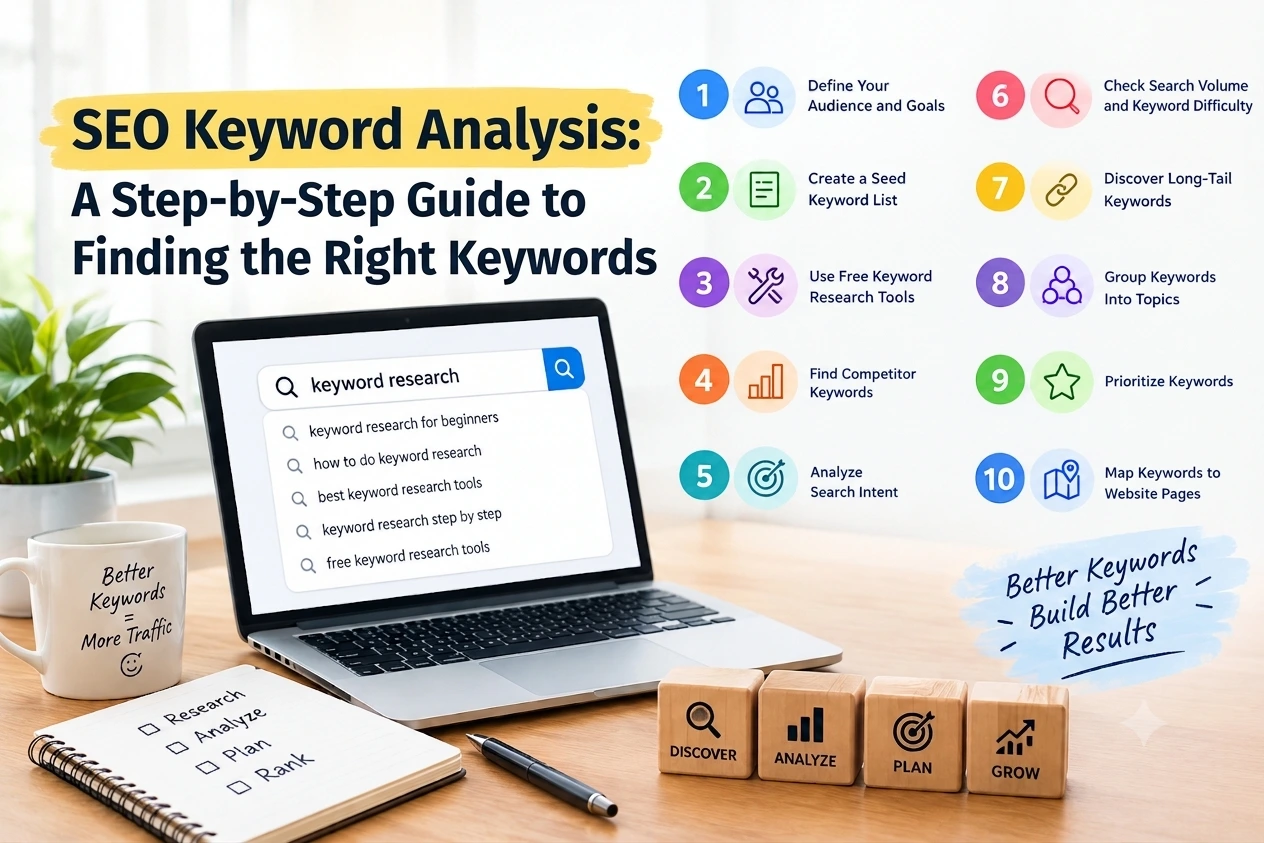
Ever published a great blog post only to watch it sit at zero traffic, week after week? You are definitely not alone in this frustration. In fact, a massive study by Ahrefs of over one billion pages revealed that 90.63% of pages get zero organic traffic from Google, mostly because they target topics no one is actually searching for. To fix this, you need SEO keyword analysis: the smart process of checking search terms by volume, difficulty, intent, competition, and business value to pick the exact keywords your site can actually win.
By the end of this guide, you will know the exact 8-step process, free tools, a simple scoring formula, and how to analyse keywords for AI search. At Digimastreys, we use this exact same process to help websites turn low traffic into consistent, high-converting organic growth.
SEO Keyword Analysis in Short: Quick Answer
SEO keyword analysis is the evaluation stage that follows keyword research, where you review search terms by monthly search volume, keyword difficulty, user intent, and business value to select terms your website can realistically rank for. While keyword research gathers a raw list of potential terms, keyword analysis filters that list to stop you from wasting time on high competition topics you cannot win. The process involves starting with broad seed terms, expanding them through tools, analyzing demand, checking ranking difficulty, aligning with searcher intent, reviewing live search engine results, and mapping each keyword to a unique page to drive qualified organic traffic.
Keypoints:
- Seed keywords: Brainstorm 10 to 15 broad topics tied directly to your core business or products.
- Tool expansion: Use keyword tools or Google Autocomplete to uncover long-chain variations and specific user questions.
- Search volume: Check monthly search demand to ensure enough people are looking for the topic.
- Keyword difficulty: Estimate how hard it is to reach page one based on existing competitor authority.
- Search intent: Categorize whether users want to learn, compare options, or make an immediate purchase.
- Live SERP review: Inspect actual search results to see what content formats and features currently dominate.
- Page mapping: Assign one primary keyword cluster to a single page to prevent internal competition and cannibalization.
What Is SEO Keyword Analysis? (And How It Differs From Keyword Research)
SEO keyword analysis is the evaluation process of scoring and filtering raw search terms to determine which ones deserve a dedicated page on your website. It looks closely at monthly search volume, ranking difficulty, search intent, and business value.
To put it simply, keyword research and keyword analysis are two different stages of the same journey. Keyword research finds the search terms your audience types into search engines, while keyword analysis decides which of those terms your website can actually win. Think of research as casting a wide net, and analysis as choosing the best fish to keep. Without analysis, you are left guessing which topics will bring actual results.
| Feature | Keyword Research | Keyword Analysis |
| Goal | Discover as many relevant search terms as possible | Filter and prioritize terms based on your site’s authority |
| Output | A raw, long list of seed, related, and long tail keywords | A scored, grouped list of target keywords mapped to specific pages |
| Question it answers | “What are people searching for?” | “Can we rank for this, and will it make money?” |
| Example | Finding 500 variations of “running shoes” | Deciding to target only “best running shoes for flat feet under 100” |
Why Keyword Analysis Matters for Traffic, Leads and AI Search
Keyword analysis is the backbone of any sustainable online visibility strategy because it protects you from wasting time on dead ends. Here is why taking the time to analyze your terms transforms your results:
- Better-quality traffic: Targets users whose exact intent matches your content, leading to higher engagement and more conversions.
- Finds competitor gaps: Uncovers profitable keywords that your competitors are currently ranking for while you are missing out.
- Saves time and budget: Prevents you from writing content for impossible-to-win keywords that drain your resources.
- Builds topical authority: Organizes your content into structured topic clusters that search engines recognize as true expertise.
- AI search visibility: Formats your answers so they can appear in featured snippets, People Also Ask boxes, and AI engines.
If you want to understand how AI search differs from classic SEO, read our guide on GEO vs AEO. Ahrefs notes that a top-ranking page often ranks for around a thousand related keywords, meaning a thorough analysis of just one target keyword can unlock traffic from hundreds of hidden search variations.
What Are People Really Searching? Real Situations Behind Keywords
Today, people describe their exact life situation instead of typing short, robotic keywords into a search box. Because of this, modern search engines and AI tools use query fan-out, meaning they instantly split one broad search into dozens of smaller, highly specific sub questions behind the scenes. Your keyword analysis must cover these real-world user situations.
| What the person types or asks | What they really want | Keyword type to target |
| “My new website has no traffic, which keywords should I target?” | Low-difficulty terms to get early traction | Long-tail keywords, KD under 30 |
| “I’m writing blogs but nothing ranks, what am I doing wrong?” | To understand why their content is failing | Informational queries + SERP check |
| “Which is the best free keyword tool for a small business?” | Recommendations on tools they can actually afford | Commercial comparison keywords |
| “Is Semrush worth it or should I use free tools?” | Honest guidance before spending money | Commercial investigation keywords |
| “My competitor ranks for keywords I never thought of” | A way to steal or find missing terms | Competitor keyword gaps |
| “How do I know if a keyword is worth the effort?” | A clear method to measure potential return | Metrics-focused research terms |
| “Which prompts should I rank for in ChatGPT?” | Visibility in AI chat assistants and answer engines | Conversational and question-based keywords |
How to Do SEO Keyword Analysis: 8 Simple Steps

Step 1: Start With Seed Keywords
Seed keywords are the broad, foundational terms that define your business, industry, or core products. If you sell coffee making equipment, your seed keywords could be coffee, cappuccino, french press, and espresso.
Before you open any keyword tool, aim to brainstorm 10 to 15 seed terms using natural customer language rather than internal corporate jargon. This ensures you start your analysis with terms your actual audience uses.
Here are the best places to find your initial seed ideas:
- Customer questions: Listen closely to the exact words clients use when describing their problems to your support team.
- Industry forums: Browse subreddits and niche communities where your target audience discusses their pain points.
- Google Search Console: Check existing queries your site already appears for to uncover terms you are halfway ranking for.
Step 2: Expand Your List With Free and Paid Tools
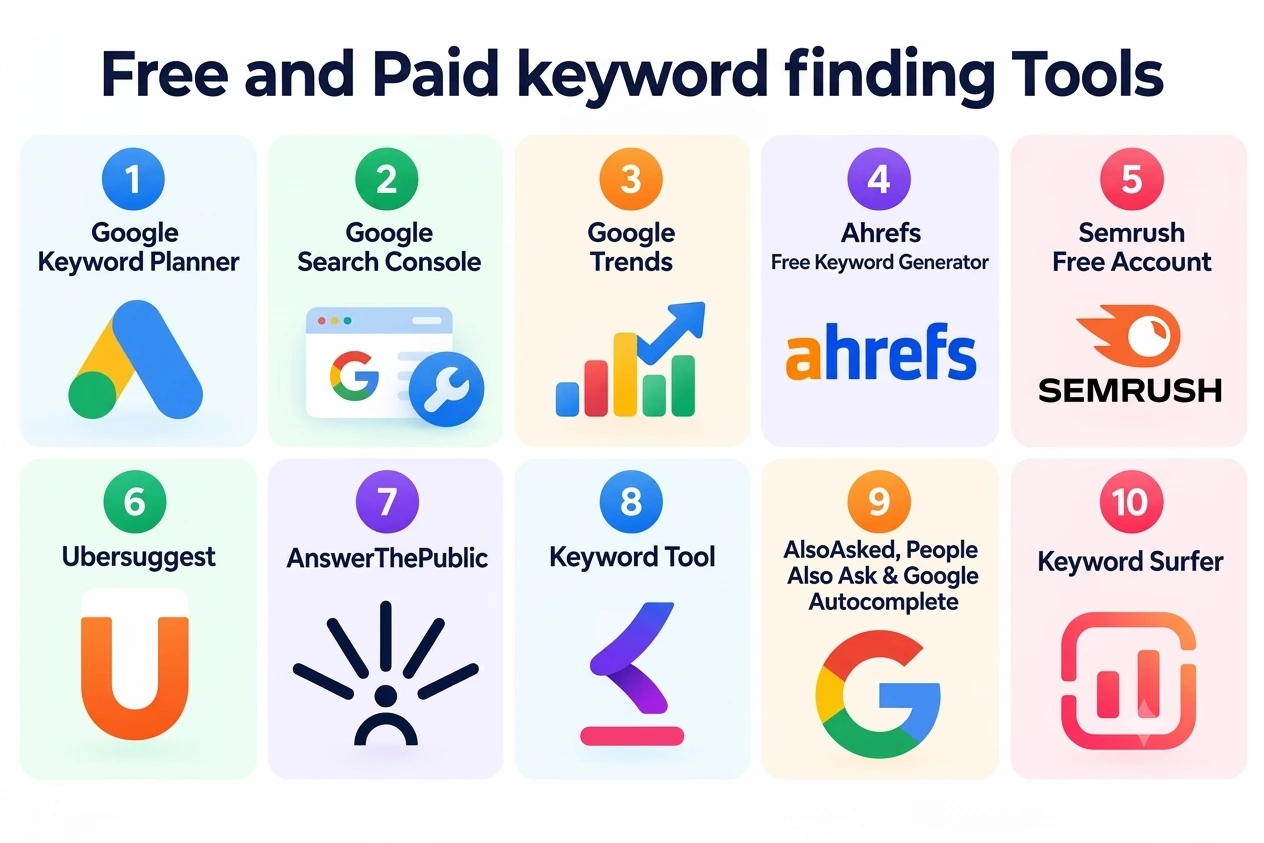
Keyword expansion tools take your initial seed phrases and multiply them into hundreds of relevant keyword variations and questions. To build a robust list, you can use a mix of free and paid options.
- Google Keyword Planner: A free platform that provides keyword ideas and traffic estimates (learn more through the Google Keyword Planner guide).
- Google Search Console: A free tool revealing the exact phrases your website already ranks for.
- Google Autocomplete & People Also Ask: Great for uncovering live, question-based user queries.
- Ahrefs Free Keyword Generator: Instantly yields 20 related keywords and 20 questions per seed.
- Semrush Keyword Magic Tool: Excellent for deep, large scale professional keyword discovery.
For niche-specific lists, see our guides on B2B keyword research and SaaS keyword research. At this stage, relevance matters more than volume.
Step 3: Check Search Volume the Right Way
Search volume measures the average monthly searches for a keyword, but you must interpret it correctly. Volume counts searches, not individual people, and it represents an annual monthly average that can hide seasonal spikes. Additionally, ranking #1 rarely captures more than about 30% of that total volume as traffic.
Do not ignore low volume keywords; when you publish many niche pages, those smaller figures add up. Newer websites should target terms in the 100 to 1,000 monthly search range. Use Google Trends to spot whether a topic is growing or seasonal.
Step 4: Judge Keyword Difficulty Against Your Site
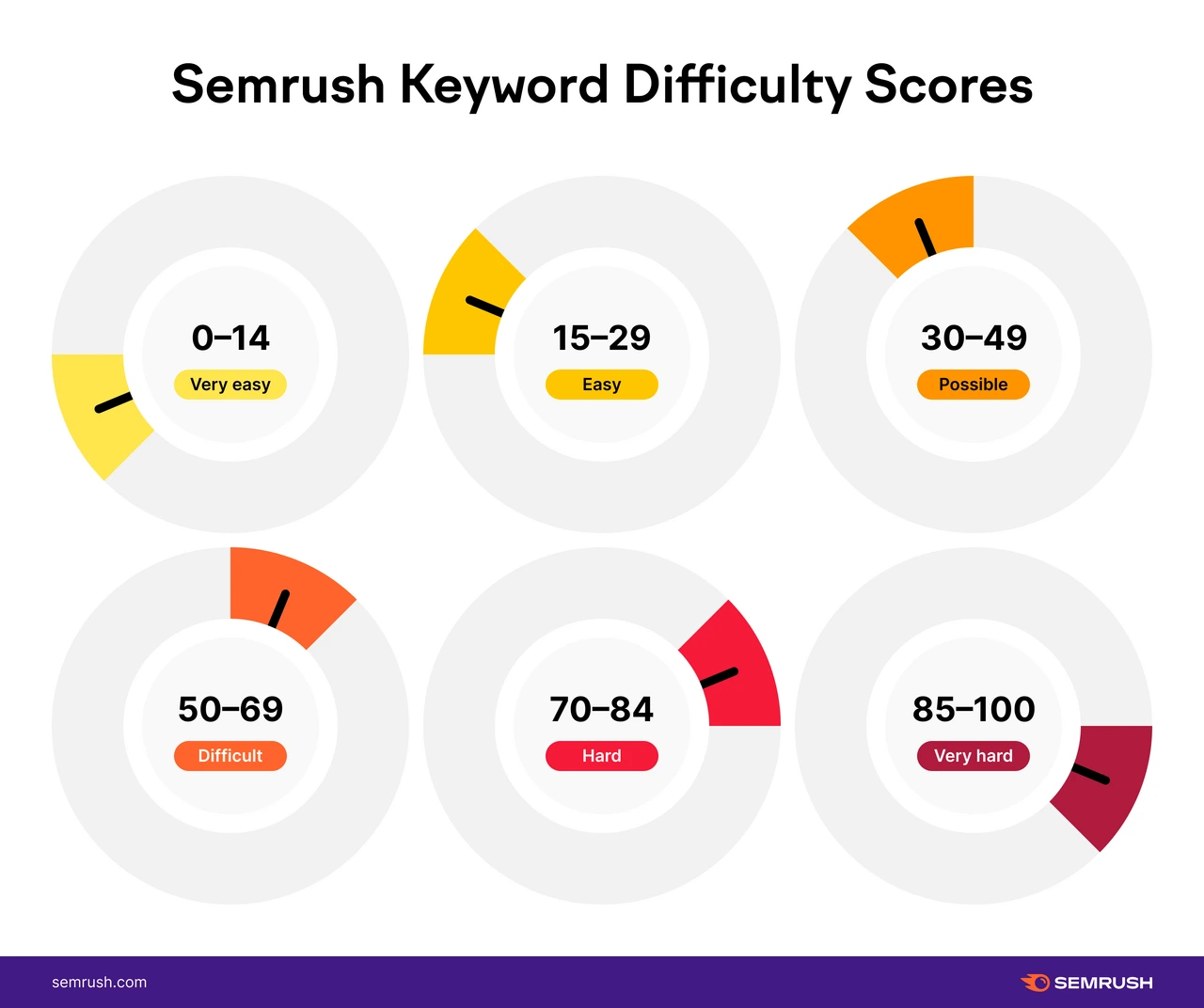
Keyword difficulty (KD) is a 0 to 100 metric estimating how hard it is to break onto page one of Google for a specific term.
| Site Stage | Recommended Target KD |
| New Site | KD under 30 |
| Growing Site | KD 30 to 45 |
| Established Site | KD 50+ (with strong backlinks) |
Scores above 80 are usually dominated by high authority brands. Because different tools calculate KD using varying algorithms, cross check scores across platforms and always inspect the live search results yourself.
Step 5: Match Search Intent
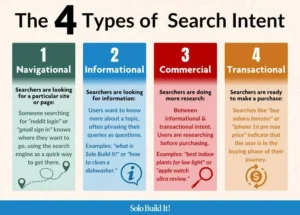
Search intent is the primary reason behind a user’s query, and matching it is Google’s top ranking factor.
| Intent | What the User Wants | Example Keyword |
| Informational | To learn or find an answer | what is keyword analysis |
| Navigational | To reach a specific site or brand | Semrush keyword magic tool |
| Commercial | To compare options before buying | best keyword analysis tool |
| Transactional | To take action or make a purchase | buy SEO services |
If Google shows how to guides on page one and you publish a direct sales page, your content will struggle to rank.
Step 6: Check the SERP Yourself
Never rely solely on software data, always search the keyword yourself in an incognito window to analyze the live search results. Inspecting the SERP helps you identify the exact content formats Google prefers, spot featured snippet opportunities, and discover gaps left by outdated top ranking pages.
Keep this quick checklist in mind while inspecting the live results:
- Content format: Check whether Google ranks long form blogs, product pages, videos, or free tools.
- SERP features: Note featured snippets, People Also Ask boxes, and AI Overviews.
- Competitor strength: See if top spots belong to massive brands or smaller blogs.
- Content age: Look for outdated publish dates that you can easily outperform with fresh info.
Step 7: Analyse Competitor Keywords and Find Gaps
A keyword gap analysis reveals valuable search terms your competitors already rank for but your website currently misses. You can instantly run this analysis using tools like Ahrefs Site Explorer Content Gap, Semrush Keyword Gap, or Seobility GAP Analysis.
Targeting keywords where competitors rank between positions 5 and 15 offers quick-win opportunities, as these pages often lack full optimization or depth. Not sure which analysis suite fits your workflow best? Read our detailed head-to-head comparison on Ahrefs vs Semrush.
Step 8: Prioritise and Map One Keyword to One Page
To select your final keywords, evaluate candidate search terms across five core criteria on a 1-to-5 scale:
| Criterion | Scoring Rule (1–5) |
| Relevance | How closely does the query align with your core topic? |
| Volume | Higher monthly demand yields a higher score. |
| Difficulty | Reverse scored: easier terms get higher points (e.g., KD < 30 = 5). |
| Intent Fit | Does the searcher’s goal match your target content type? |
| Business Value | Does this term attract prospective leads or buyers? |
Prioritize terms with total scores of 18 or higher out of 25. Group closely related terms into a single cluster under one primary page, similar to Ahrefs’ “Parent Topic” concept, to build depth while preventing keyword cannibalization.
Keyword Metrics Explained in Plain English
To make confident SEO decisions, you must understand the five primary keyword metrics that determine search potential.
| Metric | What It Means | Good Starting Point | Common Mistake |
| Search Volume | Estimated monthly searches for a keyword | 100 to 1,000 searches per month | Targeting massive volume you cannot realistically rank for |
| Keyword Difficulty | Score (0–100) measuring ranking competition | KD under 30 for newer sites | Trusting software KD blindly without inspecting live SERPs |
| CPC (Cost Per Click) | What advertisers pay per click in Google Ads | $3 or more signals high sales potential | Assuming zero-CPC keywords have no business value |
| Traffic Potential | Total organic traffic the top-ranking page receives | Matches or exceeds main keyword volume | Focusing only on single-keyword volume instead of topic total |
| Search Intent | The primary goal of the user’s search query | Matches your intended page type | Writing informational blog posts for commercial queries |
According to Ahrefs’ keyword research guide, Traffic Potential reveals a page’s true value by calculating all ranking keywords combined. Always evaluate these core metrics together as a complete picture, rather than relying on any single score in isolation.
Best Keyword Analysis Tools: Free vs Paid
Which keyword tool to pick depends heavily on your website stage, budget, and exact data needs.
| Tool | Free or Paid | Best for | Free Limit / Note |
| Google Keyword Planner | Free | Paid keyword ideas, volume ranges | Free, best with Google Ads account |
| Google Search Console | Free | Keywords you already rank for | Shows queries, no difficulty score |
| Ahrefs Free Keyword Generator | Free | Quick ideas | 20 keywords + 20 questions per seed |
| KWFinder | Free + Paid | Easy low-difficulty finds | 5 searches/day free |
| Semrush | Free + Paid | Advanced research | Free: 10 reports/day |
| Ubersuggest | Free + Paid | Beginners | 7-day trial |
Which tool should you use?
- Beginner / Solopreneur: Start with free native tools like Google Search Console and Ahrefs Free Keyword Generator to map quick low competition terms without spending a monthly budget.
- Growing Team: Use balanced entry platforms like Ubersuggest or KWFinder to speed up daily workflow, spot missing long tail gaps, and build consistent content calendars.
- Agency / Enterprise: Upgrade to comprehensive suites like Ahrefs or Semrush for deep competitive gaps, real time SERP tracking, and granular backlink profile checks.
For technical site diagnosis alongside search metrics, check out our list of the best SEO audit tools 2026. To compare user friendly options against enterprise data platforms, read our breakdown of Ubersuggest vs Ahrefs.
Worked Example: Analysing Keywords for a Real Blog
To understand how keyword analysis works in practice, consider this step-by-step decision framework for a new blog covering digital marketing for local businesses:
Example (illustrative)
| Keyword | Intent | Difficulty | Decision |
| SEO | Informational | High | Skip for now |
| SEO keyword analysis | Informational | Medium | Target with a strong guide |
| how to analyse keywords for SEO step by step | Informational | Low | Target first |
Keyword Analysis for AI Search, AI Overviews and ChatGPT

Because AI engines synthesize multi sentence prompts rather than short phrases, your keyword analysis must focus on the full conversational questions users ask.
To optimize your terms for generative engines, follow these foundational tactics:
- Collect question-style terms: Target natural, full sentence prompts starting with how, what, and why.
- Write answer-first blocks: Place a direct 40–60 word concise summary immediately below your primary headings.
- Use scannable structures: Organize key data using clear tables, bulleted lists, and bolded entities.
- Add a dedicated FAQ block: Address common follow-up queries using natural conversational language.
- Cite accurate facts: Back up key statements with credible sources and verified statistical data.
- Build topical clusters: Interlink closely related subtopics to signal deep authority to AI scrapers.
Learn the full approach in our Generative Engine Optimization guide.
7 Keyword Analysis Mistakes to Avoid

Even experienced marketers fall into simple keyword traps that waste time and lower rankings. Avoid these seven common pitfalls:
- Chasing volume only: Focus on relevant, high intent keywords rather than sheer monthly numbers.
- Ignoring search intent: Match page formats to what users actually want to see.
- Using one tool only: Cross check metrics across multiple platforms to verify difficulty and volume.
- Skipping competitor analysis: Audit existing SERP leaders to uncover proven terms and content gaps.
- Targeting overly difficult keywords: Pick low difficulty queries your website’s authority level can realistically rank for.
- Creating two pages for one keyword: Consolidate competing posts to prevent self cannibalization and split ranking signals.
- Never tracking keyword results: Monitor position changes in Google Search Console to update underperforming content.
How to Track Your Keywords After Publishing
Publishing your content is only the first step, you must track how your terms perform over time. Use Google Search Console as your primary free keyword tracker.
Key performance metrics to monitor include:
- Impressions and average position
- Click-through rate (CTR)
- Organic sessions and conversions
Review new content monthly and evaluate evergreen posts quarterly. Refresh pages whenever rankings slip, CTR drops, or underlying search intent shifts.
Bottom Line
SEO keyword analysis requires defining seed terms, expanding your list, evaluating volume and difficulty, matching search intent, reviewing live SERPs, finding competitor gaps, scoring metrics, and mapping topics to dedicated pages. The best keyword is never simply the term with the highest volume; it is the query your audience searches, your website can realistically rank for, and your business directly benefits from.
If you want help turning keyword analysis into content that ranks on Google and gets cited in AI answers, the team at Digimastreys can help. Pair your keyword strategy with our comprehensive Technical SEO Checklist 2026 to maximize your overall search visibility. Start small, stay consistent, and watch your organic growth compound over time.
Frequently Asked Questions
What is keyword analysis in SEO?
Keyword analysis is the process of evaluating search terms based on volume, competition, search intent, and business relevance. It helps you identify which phrases are worth targeting to drive qualified traffic to your website.
What is the difference between keyword research and keyword analysis?
Keyword research focuses on finding and expanding a list of prospective search terms. Keyword analysis takes those discovered terms and evaluates their difficulty, intent, and value to determine which ones to prioritize for your site.
How many keywords should I target per page?
Target one primary keyword per page along with three to five closely related secondary variations or subtopics. Grouping similar terms into a single cluster under one main topic prevents keyword cannibalization and strengthens topical authority.
What is a good keyword difficulty for a new website?
A good keyword difficulty for a new website is a score under 30. Terms in this lower competition range allow newer sites with limited domain authority to rank faster and start earning steady organic traffic.
How do I do keyword analysis for free?
You can perform keyword analysis using free tools like Google Search Console, Google Keyword Planner, Google Autocomplete, and Ahrefs Free Keyword Generator. Cross-check these free resources with live manual SERP reviews in an incognito browser window.
How often should I redo keyword analysis?
Review keyword performance for newly published content monthly and re-evaluate evergreen posts quarterly. Perform a comprehensive keyword refresh whenever page rankings slip, click-through rates decline, or search intent for a term noticeably shifts.

SNEHA PRAMAL
Sneha Pramal is a content writer focused on creating clear, engaging, and useful digital content.
Sneha Pramal is a content writer focused on creating clear, engaging, and useful digital content.