









If you’ve been watching Google’s search volatility lately, you know the drill: algorithmic updates roll out, high-volume informational blogs drop in traffic, and marketers panic trying to salvage vanity rankings.
Most traditional SEO advice still tells software companies to chase top-of-funnel search volume target a 50,000/month query, write a generic 3,000-word post, and hope for traffic.
In modern B2B SaaS, that approach is dead.
Driving 100,000 site visits means nothing if no one actually books a demo or signs up for a trial. SaaS keyword research isn’t about chasing broad traffic spikes it’s about capturing high-intent pipeline.
Here is how real SaaS search research works, why traditional tactics get wiped out by Google updates, and how to build a keyword strategy grounded in genuine buyer intent.
What Is SaaS Keyword Research (and Why Is It Different?)
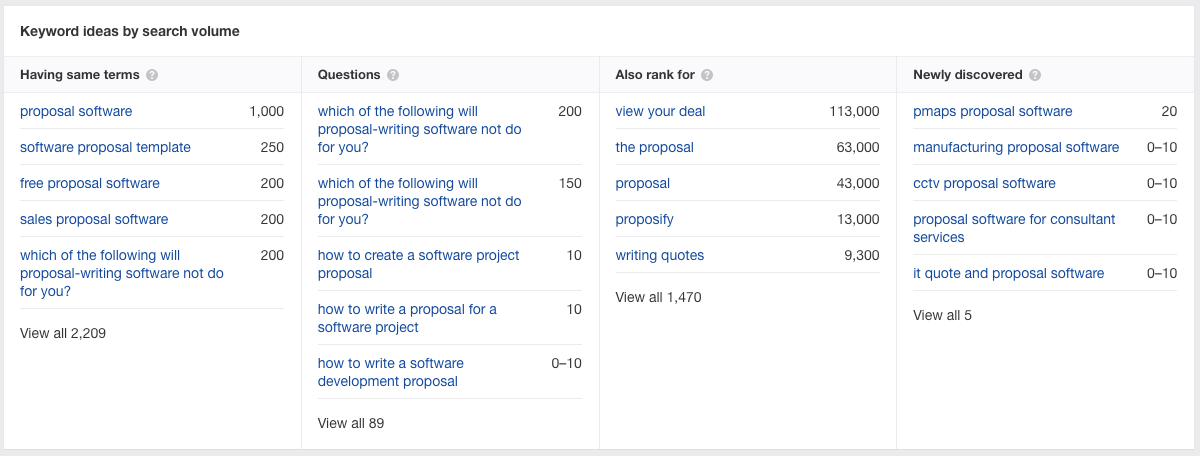
At its core, SaaS Keyword Research is about mapping the exact queries software buyers type into search tools across their entire evaluation journey from identifying a pain point to signing a contract.
Unlike standard e-commerce (where a customer searches, clicks, and buys in minutes), B2B software purchasing is non-linear and complex. Enterprise research shows software deals routinely involve 6 to 10 decision-makers conducting research across a 3-to-9-month evaluation window.
Here is how traditional keyword tactics compare against a dedicated SaaS strategy:
| Metric / Dimension | Traditional Keyword Research | SaaS Keyword Research |
| Primary Goal | Maximize total clicks & broad organic traffic | Maximize qualified demos, trials, & MRR |
| Target Audience | A single consumer making a fast purchase | A committee of buyers (CFO, CTO, managers, end-users) |
| Search Path | Direct: Problem $\rightarrow$ Product $\rightarrow$ Instant Buy | Non-Linear: Problem $\rightarrow$ Category $\rightarrow$ Comparison $\rightarrow$ Security $\rightarrow$ Trial |
| Keyword Types | High-volume general terms | Jobs-to-be-Done (JTBD), comparison terms, & competitor queries |
| Competitor Searches | Rarely targeted | Critical: Terms like [Competitor] alternatives carry immediate commercial intent |
| Success Metrics | Pageviews and keyword positions | Qualified pipeline, lower CAC, and demo conversion rates |
For a deeper dive into enterprise search structures, check out our complete breakdown of B2B Keyword Research Strategy.
The 3-Stage SaaS Keyword Funnel
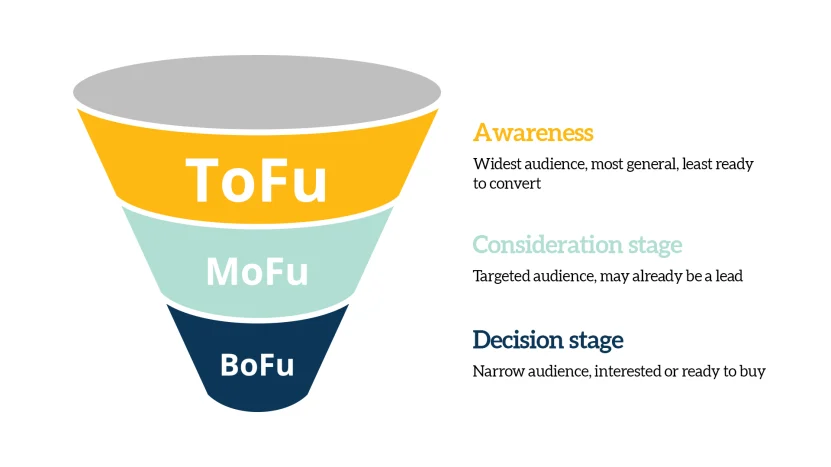
To build a keyword blueprint that survives search algorithm updates and drives revenue, map search terms to buyer intent across three key stages: Top of Funnel (TOFU), Middle of Funnel (MOFU), and Bottom of Funnel (BOFU).
1. TOFU (Top of Funnel) — Problem Awareness
At this stage, your prospective buyer realizes they have an operational bottleneck, but they don’t yet know what software category exists to fix it.
-
Jobs-to-be-Done (JTBD) Queries: Focus on specific tasks people are trying to figure out.
-
Examples: “How to automate client onboarding,” “How to reduce SaaS churn”
-
-
Benchmark & Industry Queries: People looking for data standards to justify budget.
-
Example: “SaaS net revenue retention benchmarks”
-
-
Troubleshooting Keywords: Searches made when manual work or spreadsheets fail.
-
Example: “Why is my inventory tracking spreadsheet failing”
-
The Goal: Build brand credibility early. To see how modern search engines handle these informational queries, explore our guide on Google AI Overviews Strategy.
2. MOFU (Middle of Funnel) Solution Evaluation
Here, the buyer understands what software category they need (e.g., a CRM, an HRIS, or a subscription billing platform). Now they are narrowing down feature sets and compatibility.
-
Category Keywords: Searches looking for tools within a niche.
-
Example: “Best CRM for SaaS startups”
-
-
Integration Keywords: Verifying if your tool plugs into their existing tech stack.
-
Example: “Project management software with native Slack integration”
-
-
Template Keywords: Quick-fix assets that give buyers a preview of your platform’s workflow.
-
Example: “SaaS financial model excel template”
-
The Goal: Show prospects how your software handles their exact workflow needs and guide them toward a trial.
3. BOFU (Bottom of Funnel) The Buying Decision
BOFU queries carry lower search volume, but their conversion rates are massively higher than anything else on your site. These buyers have budget approval and are choosing between 2 or 3 final software vendors.
-
Competitor Alternative Terms: Targeting users actively trying to leave another platform.
-
Example: “HubSpot alternatives for small teams”
-
-
Direct Comparison Pages (“Vs” Queries): Side-by-side feature and pricing evaluations.
-
Example: “Asana vs Monday for dev teams”
-
-
Pricing & Review Terms: Verification searches right before signing a contract.
-
Example: “[Software Name] pricing breakdown,” “[Software Name] enterprise security review”
-
Why You Should Build Your SEO Strategy Backwards
Standard SEO advice tells companies to start at the Top of the Funnel writing high-volume blog posts to get traffic first, then building product pages later.
For SaaS companies, this is a major misstep.
If you build TOFU content first, you draw thousands of visitors to a site that has nowhere to send them. Instead, flip the funnel upside down:
-
Start at BOFU: Build out honest comparison pages, alternative roundups, and transparent pricing calculators first. This signals to search engines exactly what your tool does.
-
Move to MOFU: Create feature pages, use-case landing pages, and integration directories that link directly into your comparison pages.
-
Finish with TOFU: Write your educational guides and problem-solving content last, using them to feed readers down into your conversion-focused assets.
Starting at the bottom ensures that even when your traffic numbers are growing, the visitors you do get actually turn into sales conversations.
Multi-Surface Search: Winning in the AI Era
Searching for software isn’t limited to traditional search results pages anymore. Modern software buyers conduct research across multiple touchpoints:
-
AI Recommendation Engines: Platforms like ChatGPT, Perplexity, and Claude are now frontline software recommendation engines. Learn how to optimize for LLM citations in our guide on Generative Engine Optimization (GEO).
-
Communities & Forums: Platforms like Reddit and LinkedIn host unvarnished user discussions where buyers ask, “What CRM is everyone actually using?”
-
Video Platforms: YouTube serves as a massive discovery tool for software teardowns, UI reviews, and setup guides.
A durable strategy ensures your product gets recommended whether a buyer searches on Google, prompts an AI model, or reads Reddit threads.
Simple Action Plan to Get Started
-
Map Your Core Value Props: List your product’s key features, integrations, and top 3 commercial competitors.
-
Find Competitor Gaps: Use competitive research tools to pinpoint high-intent commercial terms your competitors rank for. Read our guide on Ahrefs vs Semrush to choose the right toolkit.
-
Launch BOFU Assets First: Build your
[Your Brand] vs [Competitor]and[Competitor] Alternativeslanding pages immediately. -
Format for AI Clarity: Use clean tables, clear schemas, and straightforward language so AI engines can parse and cite your content. To review site structure standards, consult our Technical SEO Checklist.

SURBHI THAPA
Surbhi Thapa is an SEO specialist focused on SEO strategy and content optimization.
Surbhi Thapa is an SEO specialist focused on SEO strategy and content optimization.