









Search Engine Optimization is no longer about matching exact keywords or winning a single “position #1” blue link. As Google’s generative search features expand, visibility depends on how effectively search engines can retrieve, synthesize, and cite your content.
With years of testing across commercial and informational verticals, it’s clear: many traditional SEO tactics are turning into AI folklore, while core search mechanics remain deeply tied to Google’s standard ranking and quality algorithms.
How Google AI Overviews Actually Work in 2026
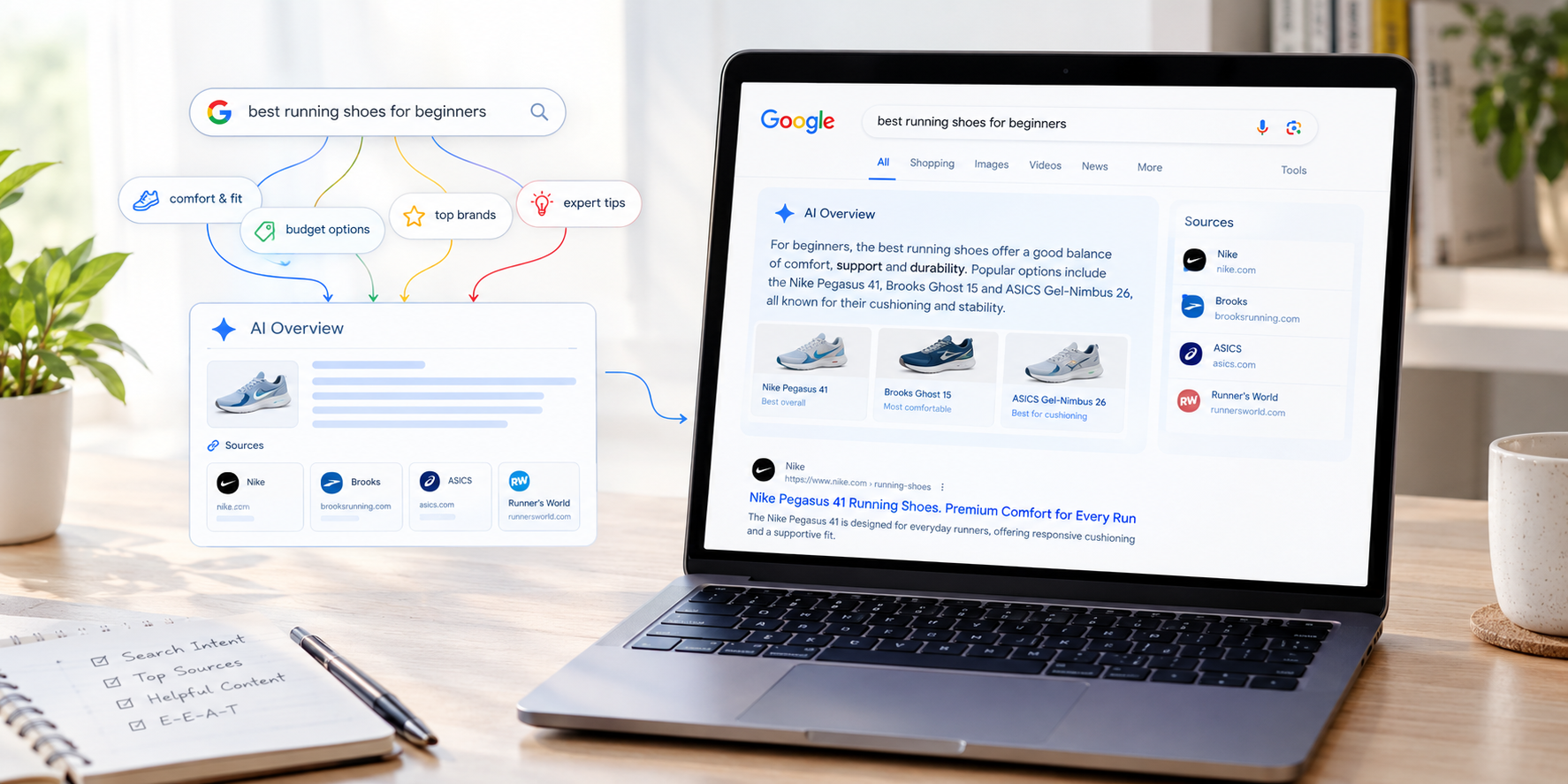
Google’s AI Overviews do not operate in a vacuum. Under the hood, they leverage Retrieval-Augmented Generation (RAG) combined with Query Fan-Out (internally referred to as query variant generation) to pull live data from the search index.
Original User Query ➔ Query Fan-Out (Sub-queries) ➔ RAG Retrieval ➔ Synthesis ➔ Cited AI Overview
1. When AI Overviews Trigger
AI Overviews trigger when systems detect that a query requires multi-source synthesis rather than a simple factual response. Industry research shows that:
-
Question-Based Queries: Over 85% generate an AI Overview.
-
Comparison Queries: Over 95% trigger generative answer blocks.
-
Commercial Intent: Over 70% of commercial consideration searches now trigger AI Overviews, shifting optimization deeper into buyer journey decision points.
2. The Power of Query Fan-Out
When a user types a multi-layered question, Google splits the prompt into multiple sub-queries behind the scenes. For instance, a search for “best workflow tools for marketing agencies” fans out into searches about pricing, integration capabilities, scalable frameworks, and team sizes.
This explains a critical phenomenon in modern search: Over 60% of cited sources in AI Overviews do not rank in the top 10 organic positions for the original target query. Pages that rank for both the primary query and its sub-queries (fan-out paths) are drastically more likely to be cited.
A Step-by-Step Blueprint to Earn AI Overview Citations
To build sustainable generative visibility, replace traditional keyword stuffing with a Dimensional Content Strategy.
Step 1: Map the True Information Need
Instead of targeting a single keyword phrase, outline the broader scope of what the user needs to decide or accomplish:
-
What primary concept needs explaining?
-
What trade-offs or comparisons will the user evaluate next?
-
What secondary questions arise immediately after the primary answer?
Step 2: Structure for Modular Retrieval
RAG systems retrieve passages and self-contained fragments, not just whole pages.
-
Structure headings as explicit questions.
-
Provide the direct answer in the first 1–2 sentences immediately following the sub-heading.
-
Avoid fluff or long introductions before answering.
Pro Tip: Aligning structured content with proper technical markup makes it seamless for generative crawlers to parse. Ensure your site adheres to a clean Technical SEO Checklist and optimized On-Page AI SEO principles.
Step 3: Integrate Uncopyable Brand Experience & Proof
Commodity content generic definitions and rephrased blog posts is skipped by AI synthesis engines. Focus on publishing unique organizational assets:
-
Firsthand data & testing benchmarks
-
In-house expert commentary & direct operational experience
-
Case study metrics, trade-offs, and failure analysis
Comparing Search Optimization Models
Understanding how search frameworks interact helps structure balanced digital campaigns:
| Strategy | Core Focus | Primary Metric | Primary Surface |
| Traditional SEO | Matching search intent & keyword volume | Rank Position (1–10) | Standard Organic Results |
| Generative Engine Optimization (GEO) | Passage retrieval & multi-angle coverage | Citation Share & Mentions | AI Overviews & AI Mode |
| Answer Engine Optimization (AEO) | Direct single-source answer fulfillment | Featured Snippets / Voice | Voice Assistants & Direct Answer Boxes |
To explore the deeper technical differences between these frameworks, check out our in-depth comparison on GEO vs. AIO vs. SEO Strategies and our complete guide on Generative Engine Optimization (GEO).
Measuring Real AI Overview Visibility
Measuring AI performance requires looking beyond standard organic position tracking:
-
First-Party Performance: Use Google Search Console’s dedicated Generative AI Performance Reporting to track overall impressions, page-level exposure, and geographic distribution over time.
-
Citation Tracking: Monitor whether your domain is cited, where the citation appears (carousel vs. inline note), and if your brand name is explicitly mentioned in the generated text.
-
Business Outcome Correlation: Track cited pages alongside CTR, conversions, and branded search volume. While organic CTRs on AI-heavy SERPs can decrease, pages cited directly inside AI Overviews convert and drive qualified traffic at a significantly higher rate.

VIKAS VERMA
Vikas Verma is an SEO specialist and web designer focused on SEO strategy, website design, and digital experiences.
Vikas Verma is an SEO specialist and web designer focused on SEO strategy, website design, and digital experiences.