








The days of guessing your way through search engine optimization are long gone. Between constant algorithm rollouts, evolving search results, and AI-driven answer engines, relying on manual SEO tactics simply won’t cut it anymore.
To stand out in competitive SERPs, you need tools that save time, eliminate guesswork, and give you actionable data.
Two of the most talked-about names in digital marketing are Ubersuggest and Ahrefs. While both promise to help you rank higher, find better keywords, and keep an eye on competitors, they are built for entirely different users, budgets, and business sizes.
Whether you’re running a solo blog or managing multiple client campaigns, this breakdown compares Ubersuggest vs. Ahrefs across features, data accuracy, ease of use, and overall value.
Key Takeaways
-
Core Focus: Ubersuggest centers on user-friendly keyword discovery and simple website health checks. Ahrefs is built around web-scale backlink analytics, competitive reverse-engineering, and deep market insights.
-
Ease of Use: Ubersuggest offers a clean, straightforward interface that anyone can pick up in minutes. Ahrefs features a powerful diagnostic platform that takes a bit of time to master.
-
AI Search & GEO Trackers: Modern SEO requires visibility across both traditional search engines and AI answer features. Ahrefs includes AI prompt tracking and specialized visibility add-ons, whereas Ubersuggest focuses on standard search workflows.
-
Pricing Snapshot: Ubersuggest is extremely affordable, starting around $12–$29 per month (with lifetime plan options available). Ahrefs is a premium investment, starting at $29/month for its Entry Starter tier and $129/month for the Lite plan.
-
Bottom Line: Ubersuggest is ideal for freelancers, local businesses, and small teams that need clear, stress-free SEO workflows. Ahrefs is better suited for dedicated SEO specialists, enterprise teams, and agencies handling competitive niches.
Ubersuggest vs. Ahrefs at a Glance
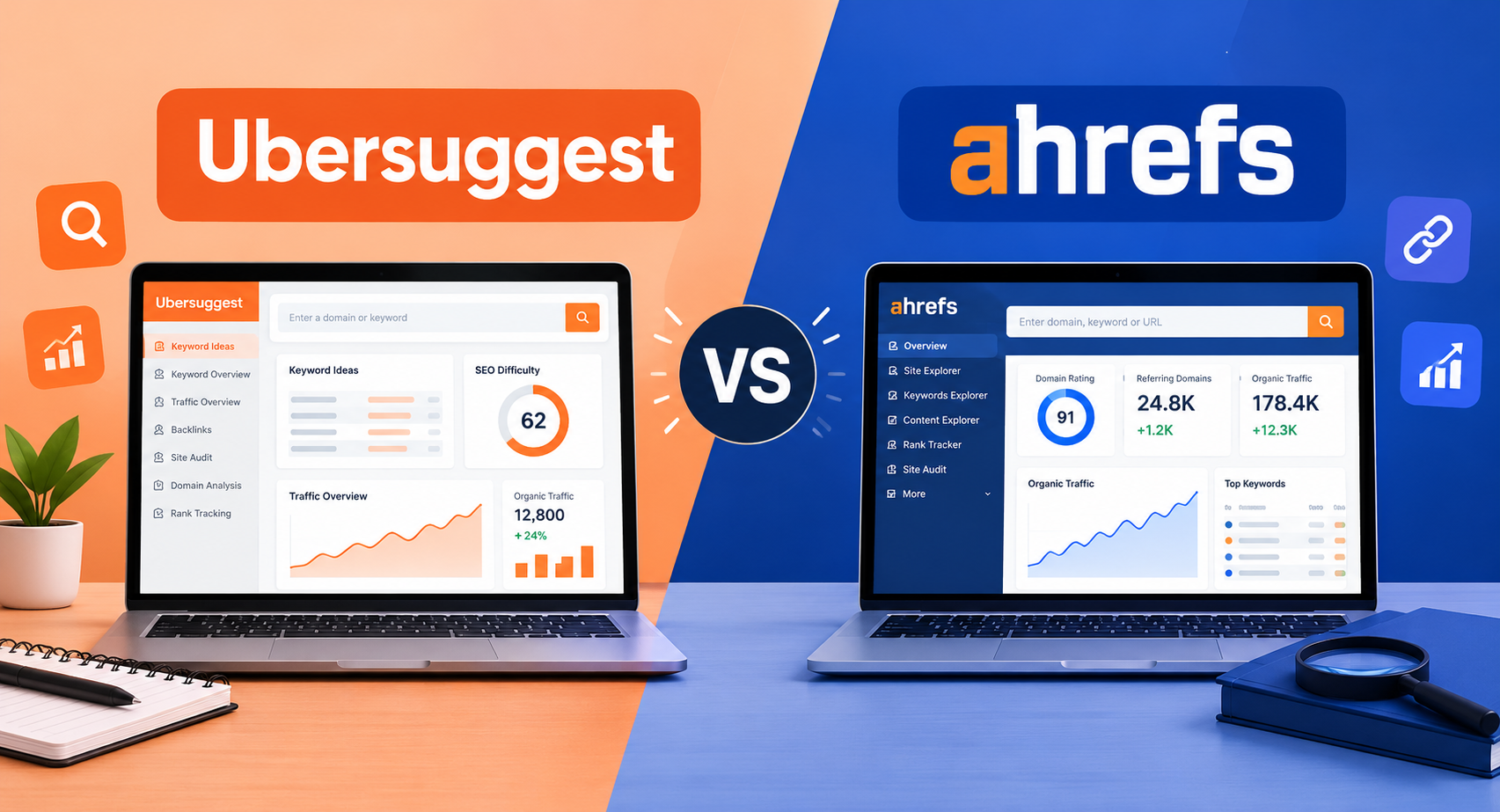
Before diving into specific features, here is a quick overview of how these two tools stack up side-by-side:
| Feature | Ubersuggest | Ahrefs |
| Best Used For | Fast keyword ideas, core site audits & beginner-friendly SEO | Advanced backlink audits, deep SERP research & competitor analysis |
| Starting Price (Monthly) | ~$12 – $29 / month | $29 / month (Starter) | $129 / month (Lite) |
| Lifetime Deal Option | Yes (Select tiers available) | No (Subscription only) |
| Backlink Index & Updates | Standard link monitoring & domain metrics | Industry-leading index with continuous updates |
| Keyword Research Data | Visual keyword maps, volume, CPC & content ideas | Global search volume, click metrics, SERP history & SERP features |
| Technical Site Audits | On-page issues, meta tag checks & site speed alerts | Granular error filtering, source code comparisons & architecture maps |
| AI Answer Tracking | AI content generator & basic topic expansion | AI Prompt Tracking & optional Brand Radar AI integrations |
| Ideal User Profile | Small business owners, freelancers, content writers | In-house SEO teams, agencies, technical strategists |
Direct Feature Comparison
1. Keyword Research & Intent Discovery
Finding the right search queries keeps your content strategy aligned with real user intent.
-
Ubersuggest: Built to make keyword discovery simple and fast. When you enter a target phrase or competitor URL, you immediately get monthly search volume, organic keyword difficulty, paid difficulty, and cost-per-click (CPC) data. The platform also features visual topic ideas and simple keyword lists, making content planning quick and easy.
-
Ahrefs Keywords Explorer: A data-heavy platform covering search networks like Google, YouTube, Amazon, and Bing. It provides search volumes and difficulty scores alongside detailed click metrics—showing you whether a keyword actually drives clicks or gets answered directly on the search results page.
Our Take: Ubersuggest is great for quickly generating content topics without getting overwhelmed. Ahrefs gives you deeper data on search behavior, historical SERP changes, and user intent.
2. Competitor Intelligence & Market Insights
Understanding what works for your competitors helps you identify valuable opportunities for your own site.
-
Ubersuggest: Lets you enter any competitor domain to reveal their estimated traffic, top-ranking pages, and overall keyword positions. Its Keyword Gap feature helps you quickly identify phrases your competitors rank for that you haven’t targeted yet.
-
Ahrefs Site Explorer: Offers a deep look into competitor websites. You can view historical organic traffic trends over time, evaluate estimated traffic value, analyze paid ad campaigns, and reverse-engineer site structures down to specific subfolders.
3. Site Auditing & Technical Health Checks
Technical issues like broken links, slow page load times, or missing meta tags can harm your search rankings.
-
Ubersuggest Site Audit: Runs quick automated checks on your website pages. It flags common issues like missing meta titles, low word counts, duplicate headings, and slow loading speeds, organizing fixes into a clear to-do list.
-
Ahrefs Site Audit: A comprehensive technical suite that organizes site issues into Errors, Warnings, and Notices. It effortlessly audits large websites, flagging complex issues like broken canonical tags, orphan pages, redirect loops, and crawl budget bottlenecks.
To systematically clean up crawl errors and maintain a healthy domain, check out our complete Technical SEO Audit Checklist.
4. Backlink Intelligence & Link Building
Backlinks remain a powerful factor for building authority and search engine trust.
-
Ubersuggest: Provides a clean overview of total backlinks, referring domains, domain authority metrics, and link growth over time. You can easily view new versus lost links and see where your competitors get their mentions.
-
Ahrefs Backlink Checker: Recognized across the digital marketing industry as a top backlink analysis platform. Powered by a massive web-crawling index, it helps you identify link prospects, disavow low-quality links, and run effective broken link-building campaigns.
To see how off-page authority fits into modern search strategies, read our detailed analysis on Do Backlinks Still Matter for SEO?.
5. Content Discovery & Generative Search Tracking
Good content needs to satisfy human readers while offering clear context for modern search engines and AI summaries.
-
Ubersuggest Content Ideas: Analyzes your target keywords and pulls up top-performing articles across the web. It displays estimated traffic, backlink counts, and social share metrics (Facebook, Pinterest, Reddit), helping you focus on topics that resonate with real audiences.
-
Ahrefs Content Explorer & AI Trackers: Crawls billions of pages to let you filter top articles by domain rating, organic visits, and publication date. It also includes prompt tracking features and optional tools like Brand Radar AI, helping brands monitor their visibility in AI answer summaries alongside standard search results.
For a closer look at optimizing your site for conversational AI models and generative engines, explore our full guide on What Is Generative Engine Optimization (GEO)? and see how it differs from traditional ranking in GEO vs SEO: Key Differences and How to Optimize for AI Search.
Pricing & Value Comparison
Pricing is often the deciding factor when choosing between these two platforms.
Ubersuggest Pricing
-
Individual Plan: ~$12–$29 per month. Ideal for solo creators, small business owners, and single-site operations who need core keyword tracking and daily search limits.
-
Business & Enterprise Plans: ~$20–$99 per month. Expands project limits, daily search caps, and tracking capacities for small agencies.
-
Lifetime Licensing: Offers select lifetime purchases, making it a great choice if you want to avoid recurring monthly software subscriptions.
Ahrefs Pricing
-
Starter Tiers: Starts at $29/month for basic data access, moving up to the Lite Plan at $129/month for foundational tracking, keyword tools, and site audits.
-
Standard & Advanced Tiers: Range from $249 to $449 per month, offering extended historical data, custom reporting tools, and higher crawl thresholds.
-
Enterprise Tier: Starts at $1,499 per month, tailored for large enterprise organizations needing API access and dedicated support.
Final Verdict: Which Tool Should You Pick?
Both platforms deliver strong features, but they serve different marketing budgets and strategy goals:
-
Go with Ubersuggest if: You want an affordable, easy-to-use platform that handles keyword research, basic site audits, and competitor tracking without a steep learning curve. It is ideal for freelancers, small business owners, and growing marketing teams.
-
Go with Ahrefs if: You run an agency, manage multiple high-traffic websites, or compete in hard-to-rank niches that require granular backlink analysis, real-time web indexing, and deep technical insights.
Helpful Resources on DigiMastreys
-
Ahrefs vs KWFinder: Features, Pricing & Keyword Research Compared
-
GEO vs AIO vs SEO: How to Optimize for Search
-
Why Small Businesses Must Focus on AEO for Google Visibility
-
How to Optimize Website for ChatGPT, Perplexity AI Search Visibility
Frequently Asked Questions
Is Ubersuggest good for beginners?
Yes. Ubersuggest features a simple layout and easy-to-read dashboards. Anyone can perform keyword research, run site health checks, and view competitor metrics without needing prior technical training.
Why does Ahrefs cost more than Ubersuggest?
Ahrefs operates a massive web-crawling system that continuously indexes backlink data across the web. Its higher price reflects deeper link databases, advanced filtering, multi-platform search data, and enterprise-grade reporting features.
Can I use both tools together?
Yes! Many marketers use Ubersuggest for daily content planning and quick keyword ideas while turning to Ahrefs for deep backlink audits and technical site reviews.
Which SEO software features matter most to your workflow right now? Let us know what you’re using or testing in your current strategy!

SURBHI THAPA
Surbhi Thapa is an SEO specialist focused on SEO strategy and content optimization.
Surbhi Thapa is an SEO specialist focused on SEO strategy and content optimization.