








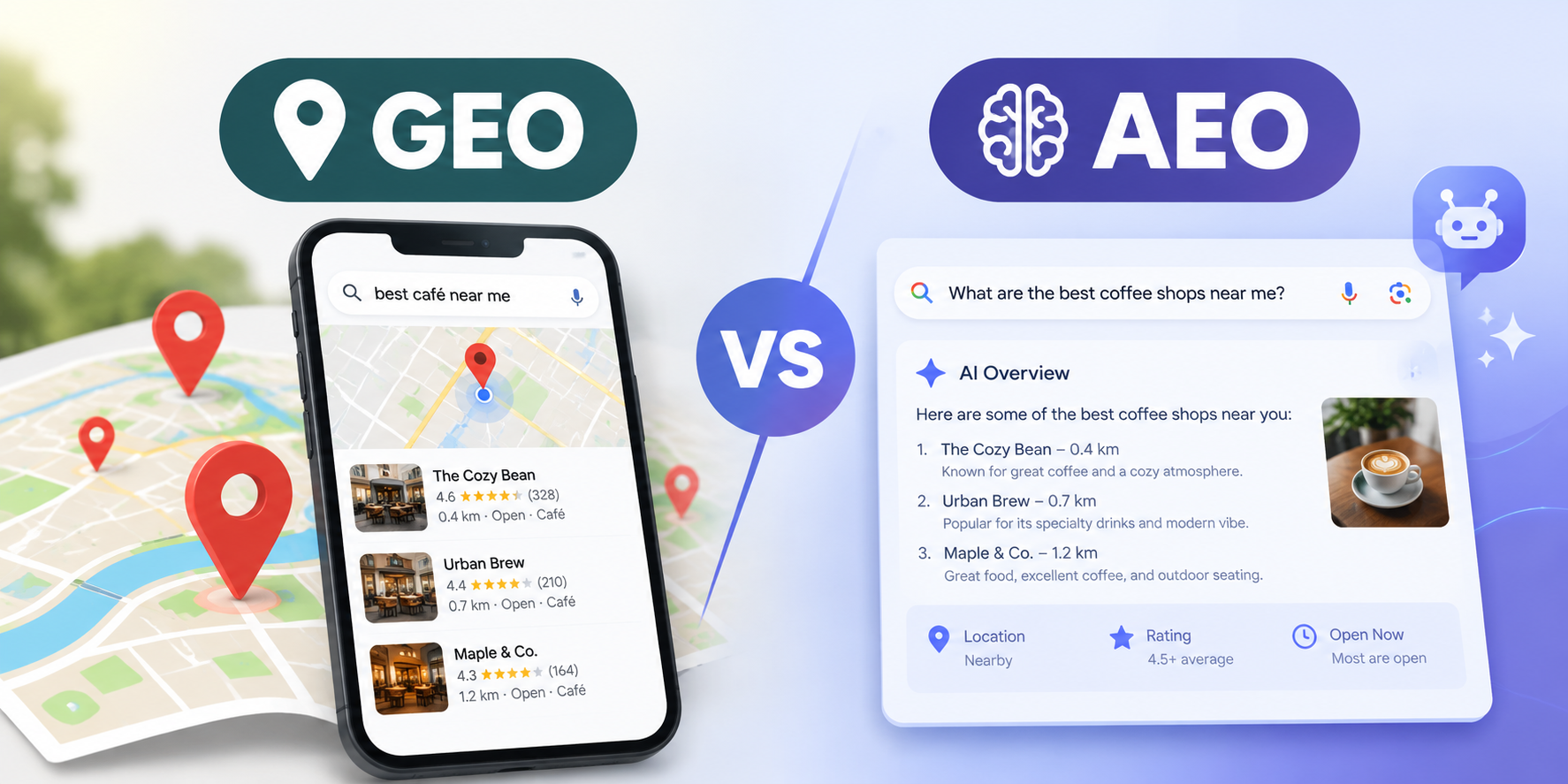
The search results page has changed. Traditional rankings driven entirely by a list of blue links are sharing space and often losing traffic to direct answers and synthesized summaries generated by artificial intelligence. When potential customers search today, they frequently get complete answers before ever clicking through to an organic website listing.
For content creators, marketers, and business owners, adapting to this environment requires mastering two distinct optimization strategies: Answer Engine Optimization (AEO) and Generative Engine Optimization (GEO). While both methods aim to secure visibility in modern search environments, they rely on different technical mechanisms, content formats, and ranking criteria.
1. Core Definitions
What is Answer Engine Optimization (AEO)?

Answer Engine Optimization is the practice of structuring web content so search engines can easily extract and display it as a direct answer to a user’s question.
-
Primary Objective: Capture high-intent queries that trigger zero-click features like Google Featured Snippets, People Also Ask (PAA) drop-downs, and voice assistant responses.
-
Core Mechanism: Extraction. Algorithms parse concise, clearly formatted text blocks from a page and present them directly on the search results page.
-
Best Practices: Using explicit question headings (H2 or H3), writing direct two-to-four-sentence answers immediately below those headings, and implementing structured data markup such as FAQ or HowTo schema.
What is Generative Engine Optimization (GEO)?
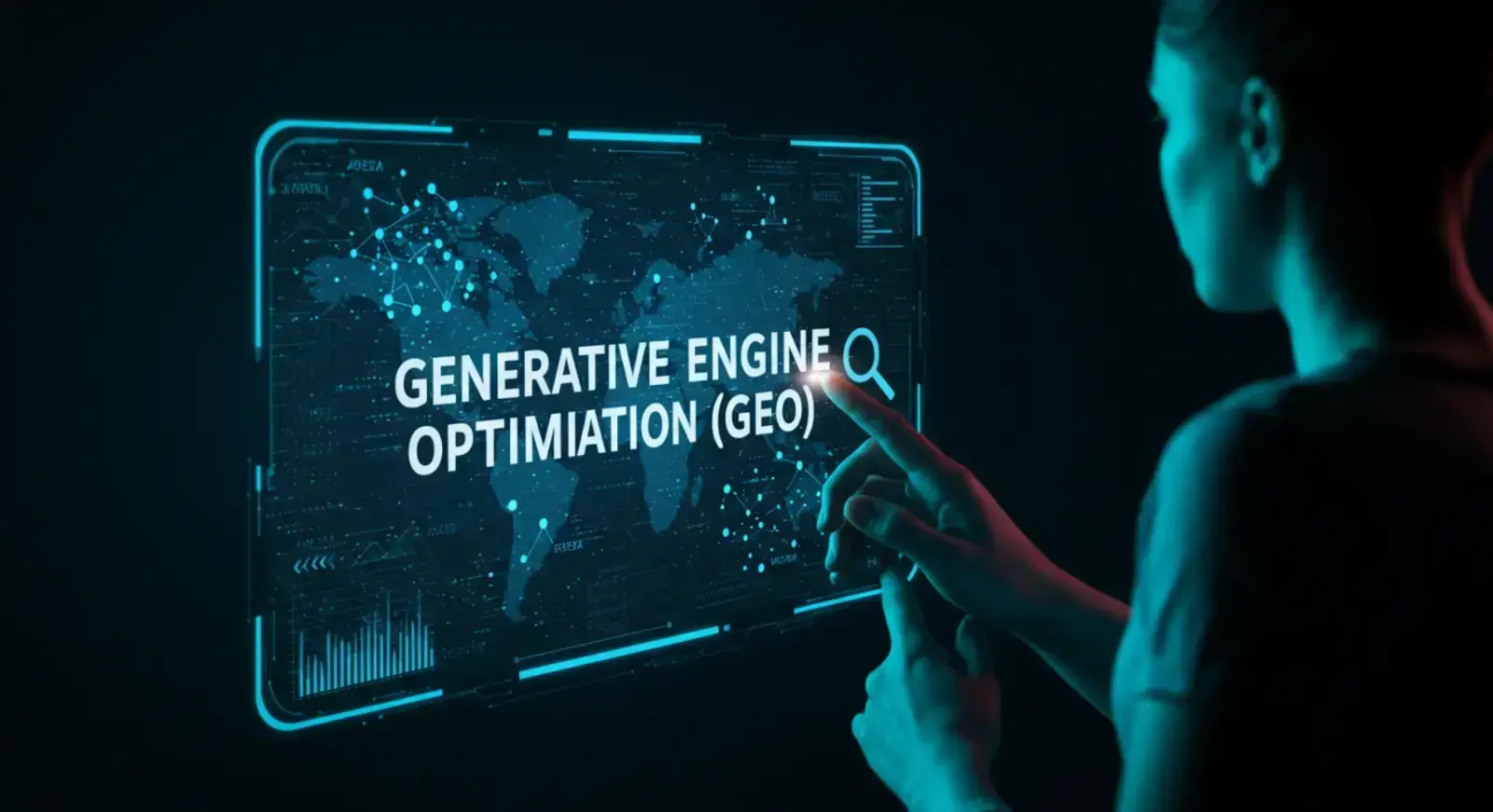
Generative Engine Optimization is the practice of shaping content so large language models (LLMs) and conversational AI tools such as Google AI Overviews, Microsoft Copilot, ChatGPT, and Perplexity will reference, synthesize, and cite your brand as an authoritative source.
-
Primary Objective: Earn citations and inclusion inside multi-source AI-generated summaries.
-
Core Mechanism: Synthesis and Attribution. AI models cross-reference information across multiple trusted publications, analyze data points, and generate a cohesive narrative complete with source citations.
-
Best Practices: Publishing thorough, long-form content backed by original research, firsthand industry experience, proprietary data, expert quotes, and adherence to search quality guidelines like Google’s E-E-A-T framework.
2. Key Differences Between AEO and GEO
To build an effective publishing workflow, it helps to compare how these two strategies diverge across critical performance dimensions:
| Strategic Dimension | Answer Engine Optimization (AEO) | Generative Engine Optimization (GEO) |
| Core Function | Directly extracts and displays information. | Interprets, synthesizes, and attributes data across multiple sources. |
| Target Search Surface | Traditional search features, featured snippets, and voice assistants. | AI-driven search overviews and conversational chat interfaces. |
| Content Architecture | Short, concise, highly structured, and answer-first formats. | Deep, long-form, insight-driven, and context-rich articles. |
| Primary Goal | Instant visibility and zero-click search result capture. | Inclusion as a trusted citation in AI-generated responses. |
| Success Metrics | Featured snippet capture rates and direct answer box ownership. | Citation frequency, brand mentions, and share of voice in AI summaries. |
For a broader look at how search models continue to evolve, explore our detailed guides on Generative Engine Optimization and Optimizing for ChatGPT and Perplexity Search.
3. How AEO and GEO Work Together
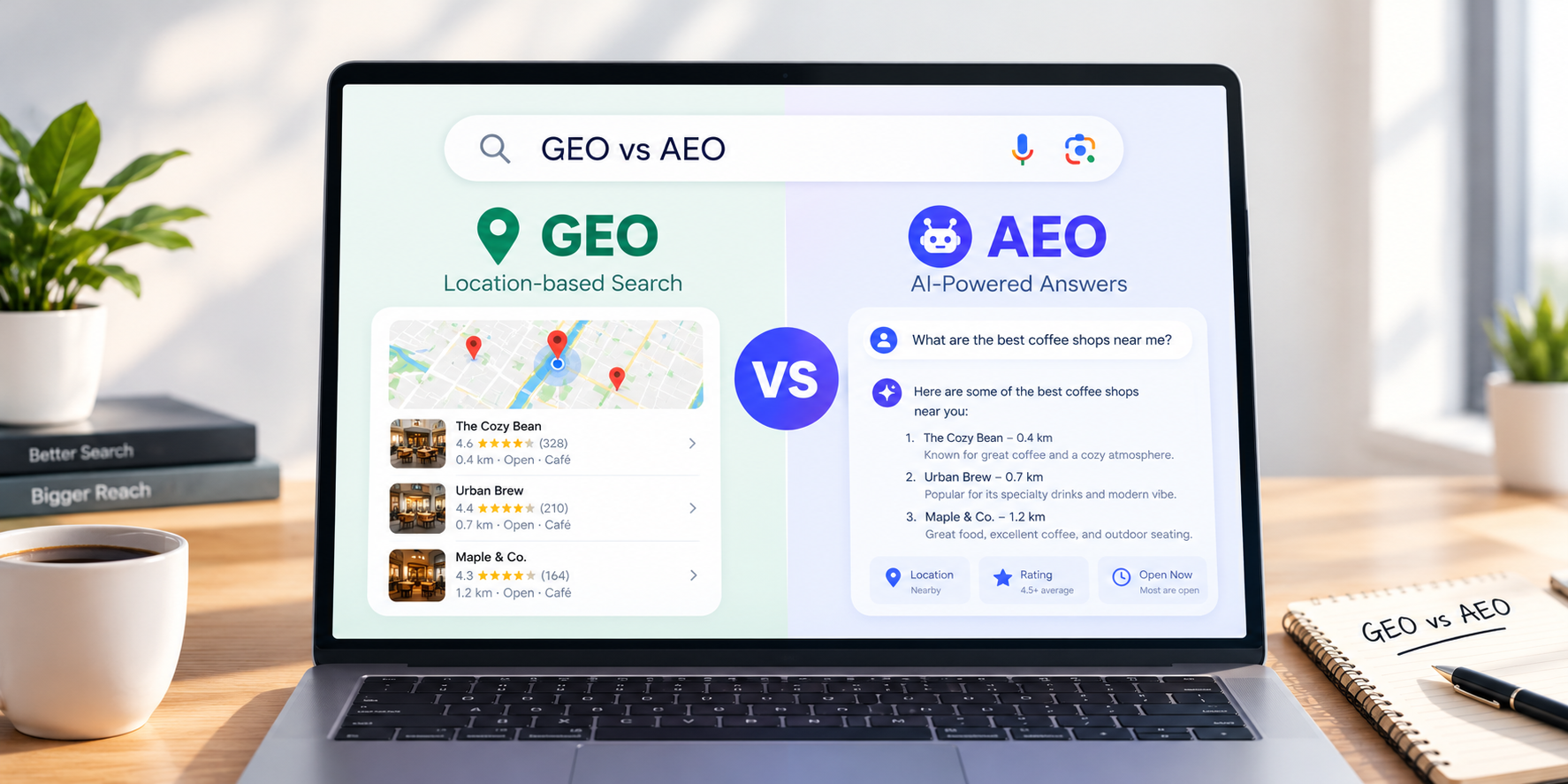
AEO and GEO are not opposing strategies; they function as complementary parts of a complete search strategy.
-
The Top-of-Page Hook (AEO): A well-optimized page should open with a clean, concise definition or direct answer block. This satisfies immediate user intent and gives search crawlers an easily digestible snippet for quick extraction.
-
The Depth and Authority Anchor (GEO): Once the immediate question is answered, the body of the article must expand into deep technical analysis, real-world use cases, expert commentary, and supporting evidence. This depth provides LLMs with the semantic context and credibility markers required to cite your brand in complex, multi-source answers.
Using both approaches allows a single piece of content to capture immediate zero-click visibility while simultaneously building long-term authority within AI conversational engines. To understand how recent algorithmic updates impact these efforts, review our analysis on the Google September Spam Update.
4. Practical Examples
Example 1: Capturing a Definition Query via AEO
An enterprise software brand wants to rank for high-intent definitional queries. They publish a dedicated guide that opens with a direct, single-paragraph definition right below the H1 title, followed by clear bullet points and structured schema markup.
-
Outcome: Search algorithms recognize the clean answer block, placing the brand in a prominent featured snippet or People Also Ask box, driving instant brand visibility even if the user does not click through to the site.
Example 2: Earning AI Citations via GEO
A B2B analytics platform publishes an exhaustive industry research report featuring proprietary data, transparent methodology, and practitioner insights.
-
Outcome: When a user asks an AI search engine a complex, multi-layered question about market trends, the LLM cross-references the data points and cites the report as a primary source, positioning the brand as an undeniable industry authority.
Example 3: The Hybrid Approach
A comprehensive enterprise guide opens with an AEO-friendly summary definition for quick extraction, followed by exhaustive implementation steps, expert interviews, and technical frameworks that satisfy GEO requirements. This dual-layer execution captures both rapid snippet wins and long-term AI citations.
5. Why E-E-A-T Matters for Both Strategies
Trust is the underlying currency of modern search visibility. Search engines and LLMs alike rely on quality signals to determine which content deserves to be displayed or cited.
-
For AEO: Clear author credentials and accurate context give algorithms the confidence to pull an excerpt into a high-visibility answer box.
-
For GEO: Strong trust markers such as verifiable author bios, first-party data, transparent methodologies, and consistent entity signals across platforms like the Google Knowledge Graph ensure that AI models recognize your domain as a primary source of truth.
To ensure your technical foundation supports these authority signals, check our comprehensive Technical SEO Checklist and insights on Local SEO and AI Search Strategies.
6. Actionable Implementation Checklist
To adapt your existing publishing workflow for both AEO and GEO, follow these steps:
-
Front-Load Direct Answers: Place a concise two-to-four-sentence answer block immediately beneath major H2 question headings.
-
Enhance Content Depth: Supplement short definitions with original data, case studies, and expert analysis to satisfy LLM citation criteria.
-
Refine Technical Architecture: Ensure fast page load speeds (focusing on Core Web Vitals like Largest Contentful Paint under 2.5 seconds), clean HTML hierarchy, and valid schema markup (
Article,TechArticle,Organization, andBreadcrumbList). -
Maintain Entity Consistency: Keep brand naming conventions, author bios, and product descriptions uniform across your site and trusted external profiles.
-
Establish Content Freshness: Set a recurring schedule to audit, update, and timestamp articles to align with algorithmic preferences for current information.
Conclusion
The shift from traditional keyword matching to intent-driven AI search means that visibility is no longer just about earning a click it is about being seen, understood, and cited precisely when customers form opinions and make decisions. By combining the rapid extraction benefits of Answer Engine Optimization with the deep authority-building power of Generative Engine Optimization, digital marketers can future-proof their content strategies for the modern search era.

SURBHI THAPA
Surbhi Thapa is an SEO specialist focused on SEO strategy and content optimization.
Surbhi Thapa is an SEO specialist focused on SEO strategy and content optimization.