








Every business eventually runs into the same wall. You build a solid product, set up your website, and start spending money on digital advertising. But after a few weeks, the results look flat. People view your ads, but nobody clicks through or buys anything.
Most of the time, the issue isn’t your product or your daily budget. It comes down to your ad copy.
Media buying platforms like Google and Meta can get your business onto someone’s screen. But the words you write decide whether that person ignores you or decides to take out their wallet.
What Is an Ad Copy? (Ad Copy Meaning Explained)
To put it in simple terms:
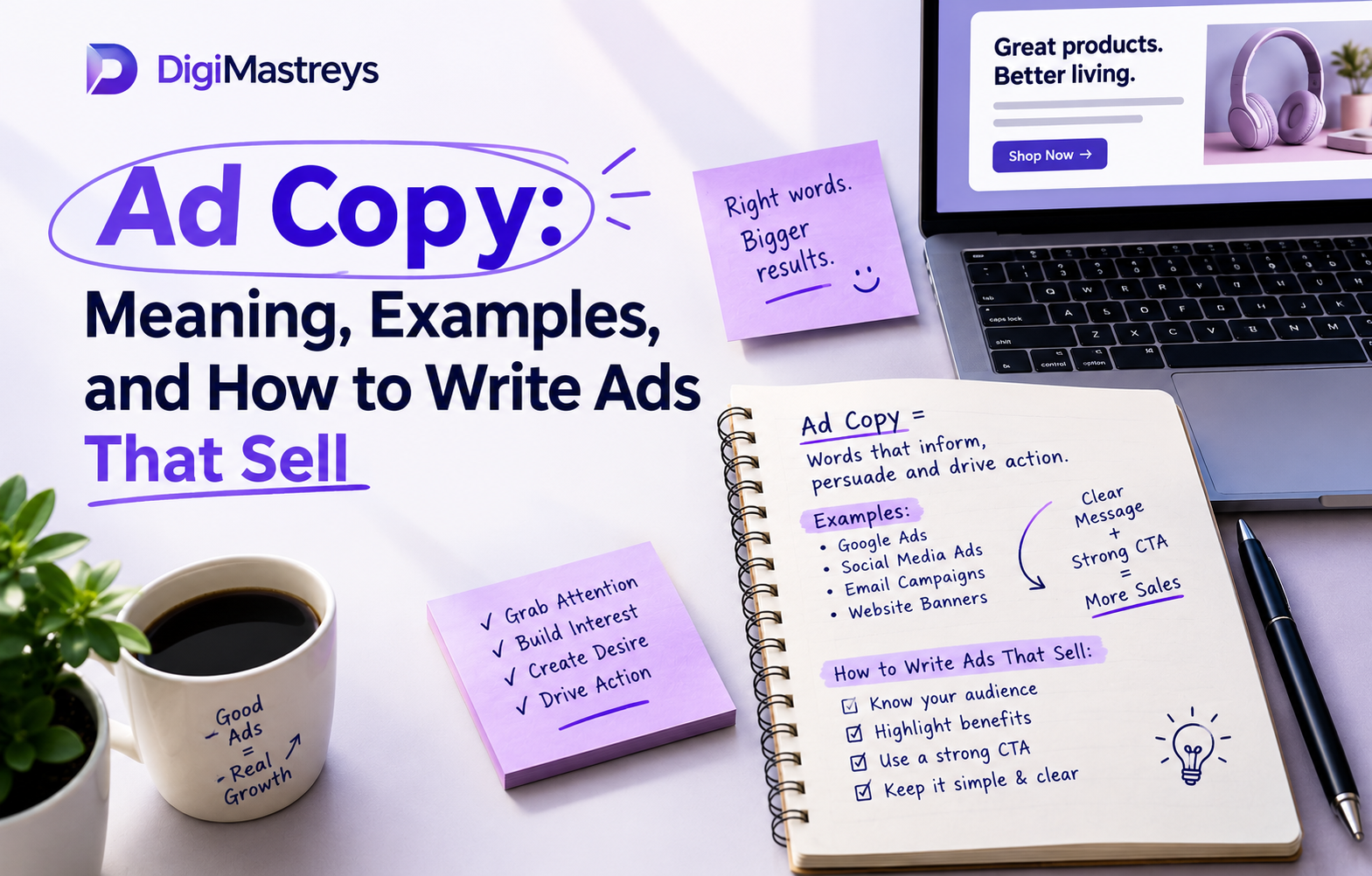
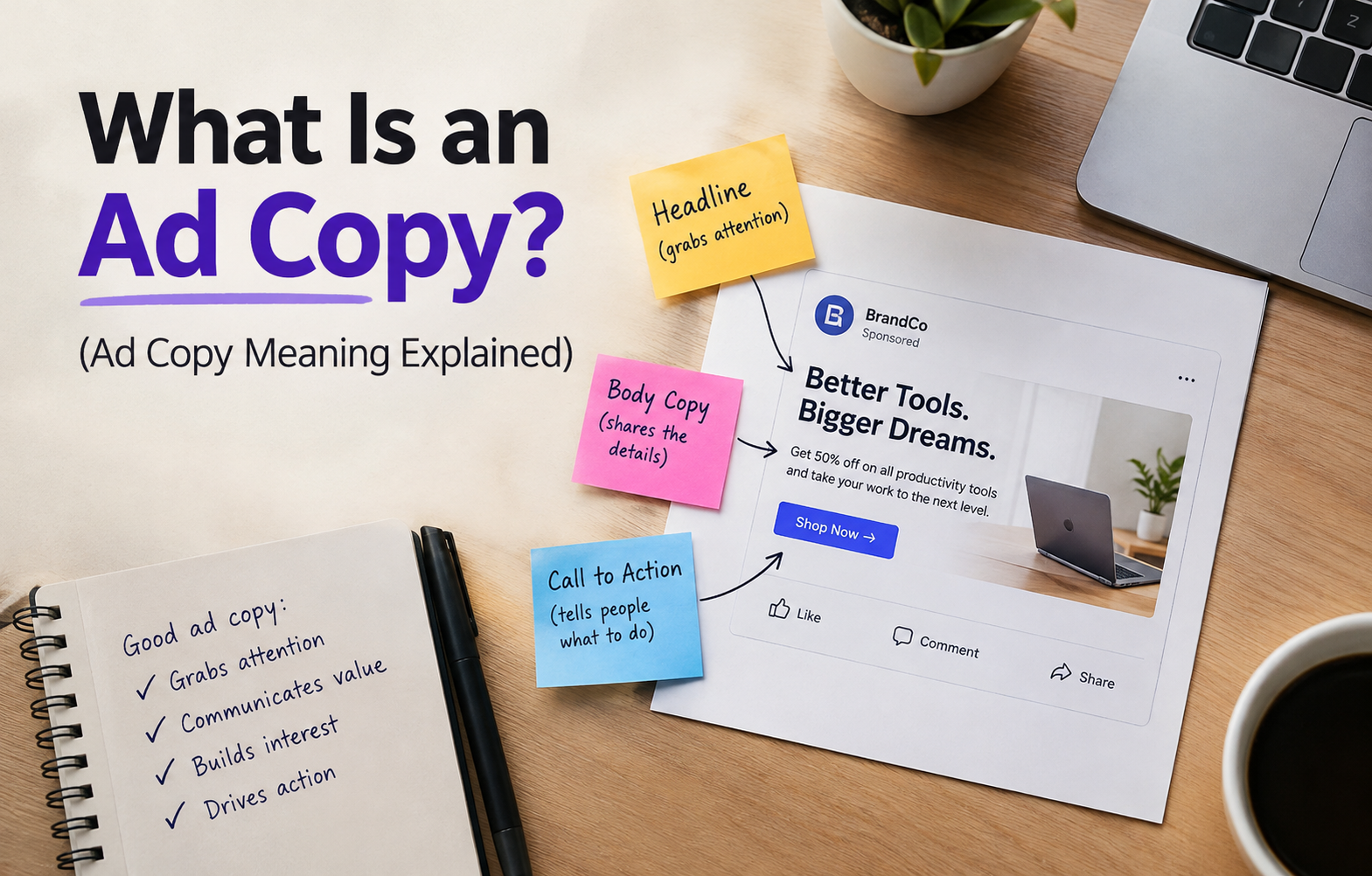
Ad copy meaning: Content on an advertisement that encourages visitors or readers to take action is known as ad copy. It is the text, headline, and call to action placed inside an ad to get someone to buy, sign up, or get in touch.
A lot of people confuse regular content writing with copywriting for ads.
Content writing like a long guide or an educational blog post exists to answer questions and inform readers over time. Many teams now explore AI content for on-page SEO to scale their informational reach. Advertising copy meaning, on the other hand, is built purely around driving immediate action. Every sentence, number, and button text is there to turn a casual reader into an active lead or customer.
Why Is Ad Copy So Important for Your Business?
When you launch an advertising campaign, you are putting real money on the line.
Let’s say you run a local tax consulting service. You decide to set up a search campaign and send people to a contact page.
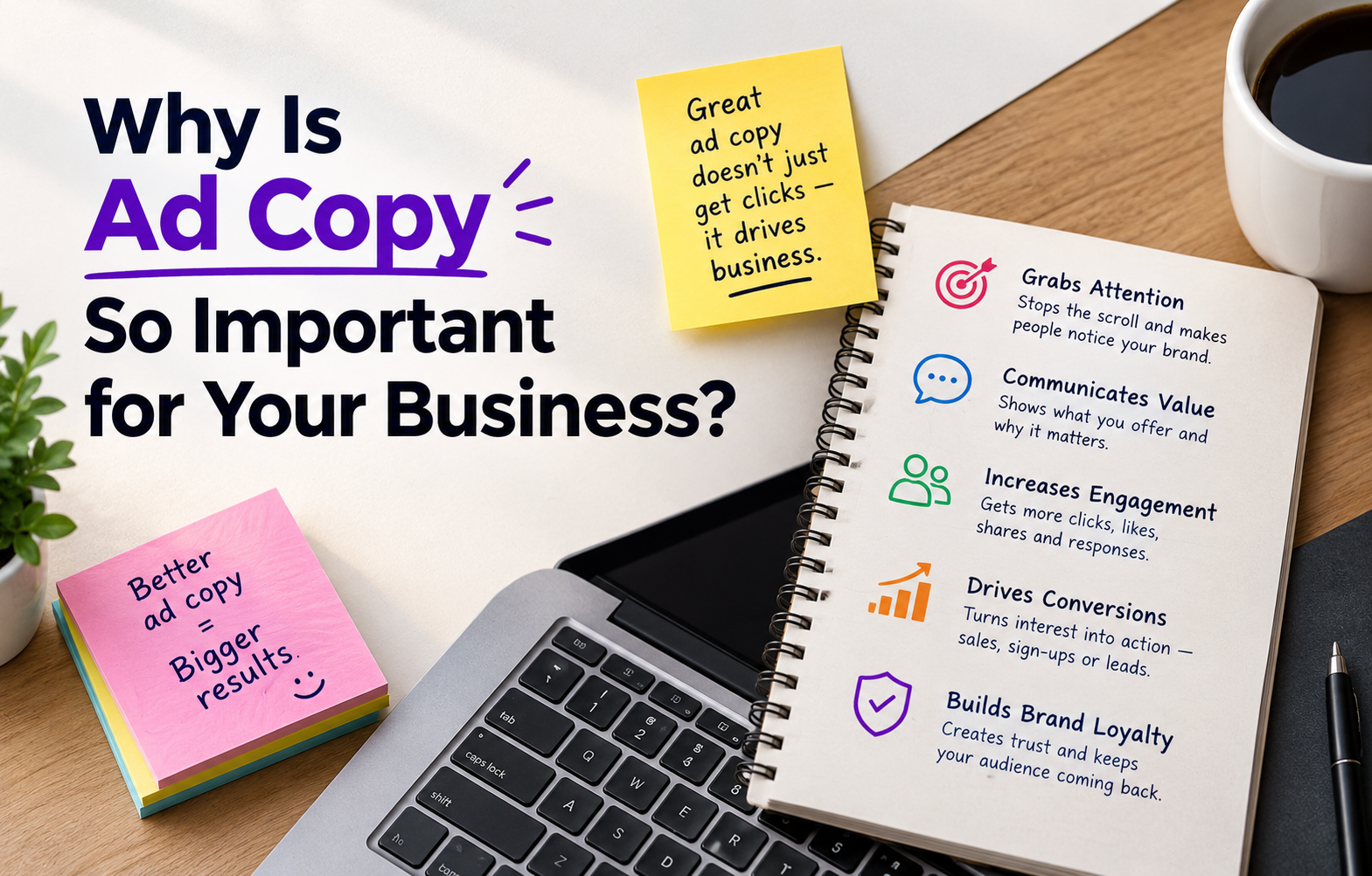
If your ad headline is boring or confusing, people will scroll past it to your competitor. And if the text on the landing page doesn’t clearly explain what you do and what it costs, the few people who do click will leave right away. In that scenario, your ad budget goes to waste.
Good ad copy helps your business by:
-
Lowering customer acquisition costs: When more people click your ad and fill out your form, your cost per lead drops.
-
Filtering out bad fits: Clear copy tells people exactly what you offer, so you don’t spend money on clicks from people looking for something else.
-
Creating a smooth path to purchase: It connects what someone searches for directly to what they see on your page, making it easy for them to say yes.
Short-Form vs. Long-Form Ad Copy
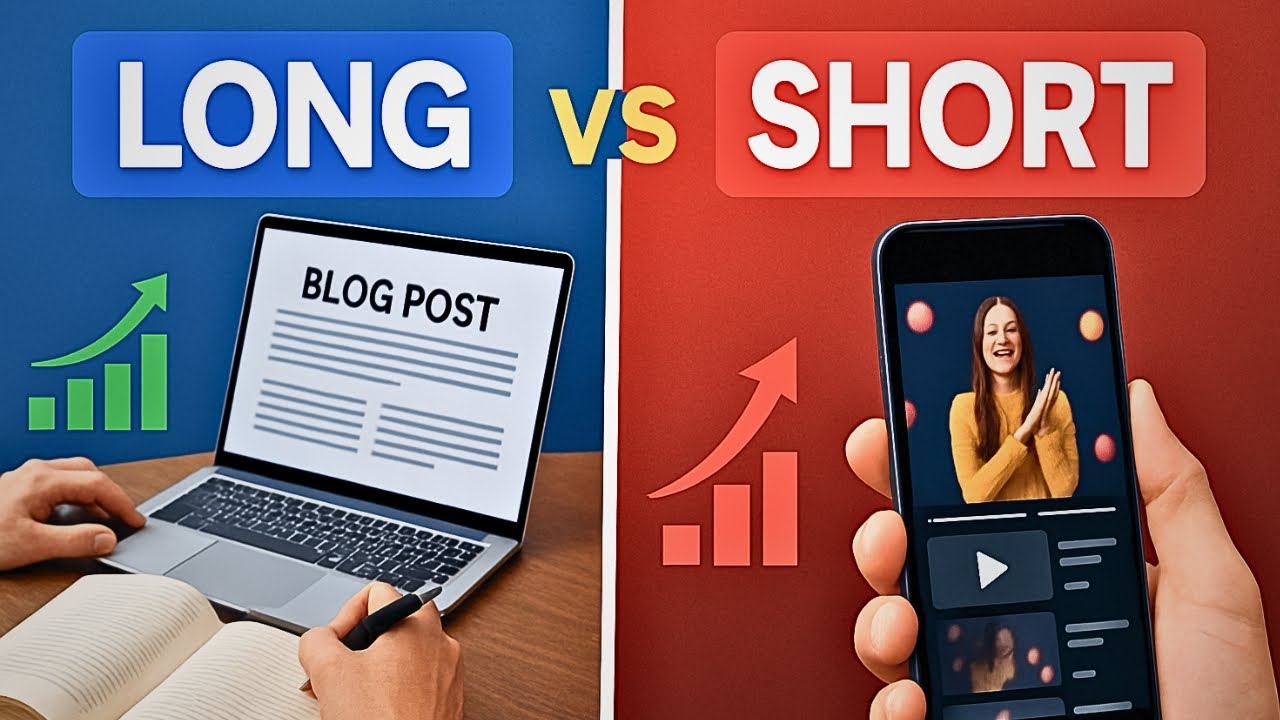
Depending on where you run your ads, you will generally write one of two styles:
1. Short-Form Ad Copy
This is what you use for pay-per-click (PPC) campaigns, search ads, and short social posts. You have strict character limits, often just a quick headline, a line or two of text, and a direct button. Writing short-form copy can actually be harder than writing long copy because you have to make an impact in very few words.
2. Long-Form Ad Copy
This includes sales pages, email sequences, and native articles. Here, you have the room to walk a reader through a complete story: explain the problem they are dealing with, show real customer testimonials, break down your pricing, and address common questions before asking them to purchase.
How to Write Ad Copy That Actually Works
If you are new to writing ad copy, you don’t need to overcomplicate the process. Focus on these straightforward rules:
1. Speak Directly to Customer Pain Points
People buy things to make a headache go away. If you run a local auto shop, your customers aren’t waking up excited about transmission fluid. They are stressed about strange noises under the hood and getting stranded on the way to work.
Your copy should acknowledge that stress right away and show them you can fix it.
2. Highlight Benefits, Not Just Features
Features explain what a product is; benefits explain what it does for the customer.
-
Feature: “Our software has 256-bit data encryption.”
-
Benefit: “Keep client records secure and stay fully compliant with zero manual setup.”
Always ask yourself: “Why does this matter to the person reading this?”
3. Use Clear Action Words and Specific Numbers
Vague promises make buyers skeptical. Specific details build credibility.
Instead of saying: “We have helped tons of local gyms grow,”
Say: “We helped 42 fitness studios add an average of 35 new members last quarter.”
And when you tell people what to do next, make it obvious. Phrases like “Download the Free Audit” or “Call for Same-Day Dispatch” perform far better than generic buttons like “Submit.”
Real Google Ad Copy Examples
To see how these principles work inside Google’s Responsive Search Ads guidelines (30 characters for headlines, 90 characters for descriptions), look at these three industry breakdowns:
Example 1: Local Emergency HVAC Service
-
Headline 1: Emergency AC Repair in Phoenix
-
Headline 2: Tech at Your Door in 1 Hour
-
Headline 3: No Extra Weekend Fees
-
Description 1: AC blowing warm air? Licensed technicians available 24/7 across the valley.
-
Description 2: Flat upfront rates before work starts. Call now for immediate priority service.
Example 2: B2B Project Management Tool
-
Headline 1: Missed Client Deadlines Again?
-
Headline 2: Keep Remote Teams On Track
-
Headline 3: Free 14-Day Full Trial
-
Description 1: Organize client tasks, automate status updates, and cut daily team meetings in half.
-
Description 2: Simple setup in under 5 minutes. No credit card required to get started today.
Example 3: E-Commerce Office Furniture
-
Headline 1: Stop Working With Back Pain
-
Headline 2: Ergonomic Mesh Desk Chairs
-
Headline 3: 60-Day Home Trial | Free Returns
-
Description 1: Adjustable lumbar support designed to keep you comfortable through long workdays.
-
Description 2: Delivered straight to your door with free shipping. Try it risk-free for two months.
5 Practical Formats for Writing Copy for Ads
How you write depends heavily on the format and channel:
-
Search Ads: These must match the search query almost word-for-word. Users want a fast, direct answer to their search. Make sure your landing pages follow a solid technical SEO checklist so bots crawl and index them cleanly.
-
Social Media Ads: People on social feeds are looking at updates from friends, not shopping. If you manage recurring campaigns, following a structured social media content calendar guide ensures your messaging stays consistent.
-
Display and Banner Ads: Ad placements on websites must comply with official Google Ads policies regarding clarity and deceptive text. Space is tiny, so pair clean imagery with a short, punchy guarantee.
-
Email Ads: Since subscribers already opted into your list, you can use a friendly, conversational tone and tell short stories that lead naturally to an offer.
-
Print Ads and Billboards: Readers only have 2 to 3 seconds as they drive or flip pages. Keep your headline bold, state your core offer, and give one simple way to contact you.
Test Everything and Keep It Simple
Nobody gets their ads 100% right on the very first try. The advertisers who see the highest returns are the ones who test constantly using A/B testing best practices.
Try running two ads against each other with the same budget. Keep the image the same, but test two totally different headlines—one focused on a clear price discount, and the other focused on fixing a common frustration. Let them run, look at the conversion numbers, and keep the winner.
Most importantly, keep your language clean and accessible. Clear words always win over clever words.

SNEHA PRAMAL
Sneha Pramal is a content writer focused on creating clear, engaging, and useful digital content.
Sneha Pramal is a content writer focused on creating clear, engaging, and useful digital content.