




Traditional search engine optimization has fundamentally changed. Today, your brand’s authority, traffic, and sales no longer rely solely on blue links on a traditional search results page. Instead, they live inside generative engines like ChatGPT, Claude, Gemini, and Microsoft Copilot, alongside Google AI Overviews.
If your brand is left out of an AI-generated answer, or if an LLM hallucinates incorrect details about your products, your digital reputation takes a direct hit. This shift has given rise to Generative Engine Optimization (GEO) and Answer Engine Optimization (AEO). To track, measure, and improve how your brand appears across these intelligent search layers, you need specialized monitoring platforms.
Below is an in-depth, human-written guide reviewing 10 of the best AI visibility tools available right now, complete with ideal use cases, pricing breakdowns, and actionable insights.
The 10 Best AI Visibility Tools at a Glance
-
OtterlyAI — Best for budget-friendly tracking and small teams
-
Peec AI — Best for smart recommendations and client reporting
-
ZipTie — Best for deep technical analysis and URL-level reporting
-
Similarweb — Best for side-by-side traditional SEO and GEO tracking
-
Petra Labs — Best for enterprise white-glove strategy and execution
-
Semrush AI Visibility Toolkit — Best for existing Semrush power users
-
Ahrefs Brand Radar — Best for benchmark-focused Ahrefs users
-
Clearscope — Best for content creators and organic content optimization
-
Yext Scout — Best for location-based and multi-branch local tracking
-
Scrunch — Best for AI-driven brand positioning and sentiment tracking
1. OtterlyAI: Best for Affordability & Freelancers
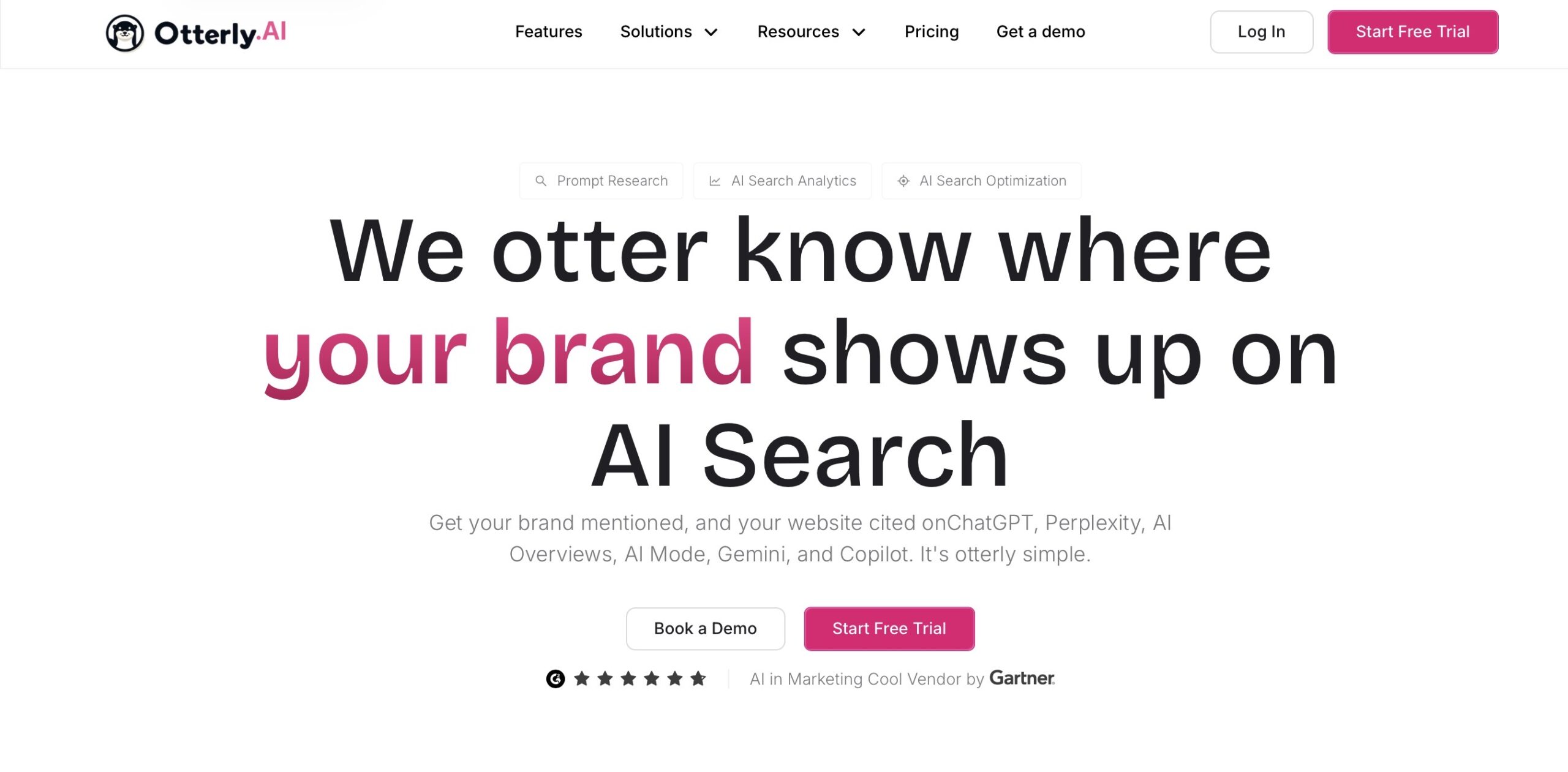
For small businesses, freelancers, and growing marketing teams looking to step into AI search optimization without breaking the bank, OtterlyAI is a top contender.
Key Advantages:
-
Cost-Effective Entry: The Lite plan provides an accessible price point for testing the waters of LLM monitoring.
-
Keyword-to-Prompt Mapping: It conveniently translates your existing target SEO keywords into corresponding LLM queries.
-
GEO Audits: Includes built-in content optimization checks to help restructure your web copy for generative engines.
Limitations:
-
Advanced engine support (like Claude or Gemini) or high prompt volumes require moving to higher-tier plans or purchasing add-ons.
-
Lacks the deep enterprise-grade granular filters found in heavier platforms.
Pricing: Starts at $29/month for the Lite plan.
2. Peec AI: Best for Smart Suggestions & Agency Pitching
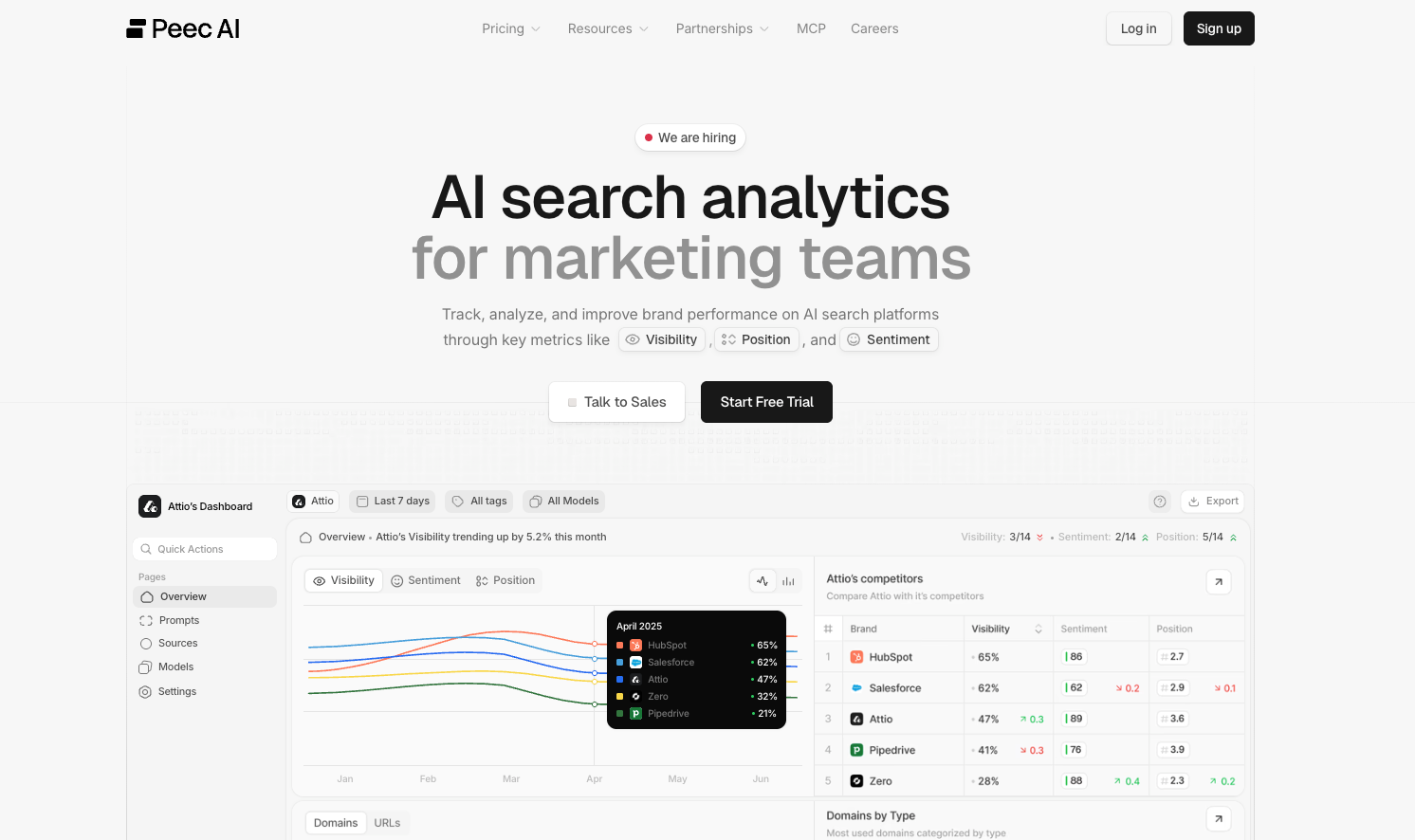
Peec AI stands out for its user-friendly interface and unique capabilities designed to help agencies showcase AI visibility metrics to prospective clients.
Key Advantages:
-
Pitch Projects: Specifically built to share clean, comprehensive AI visibility reports with clients or stakeholders.
-
Generous Data Volumes: Baseline tiers include daily tracking across multiple supported AI engines and unlimited country settings.
-
Ecosystem Connectors: Easily syncs performance metrics into custom reporting dashboards via data connectors.
Limitations:
-
Noticeably lacks historical trend tracking and granular AI crawler visibility diagnostics.
-
Starter plans restrict you to picking a subset of available models unless you upgrade.
Pricing: Free trial available; paid plans start at $95/month.
3. ZipTie: Best for Deep Analysis & Reporting
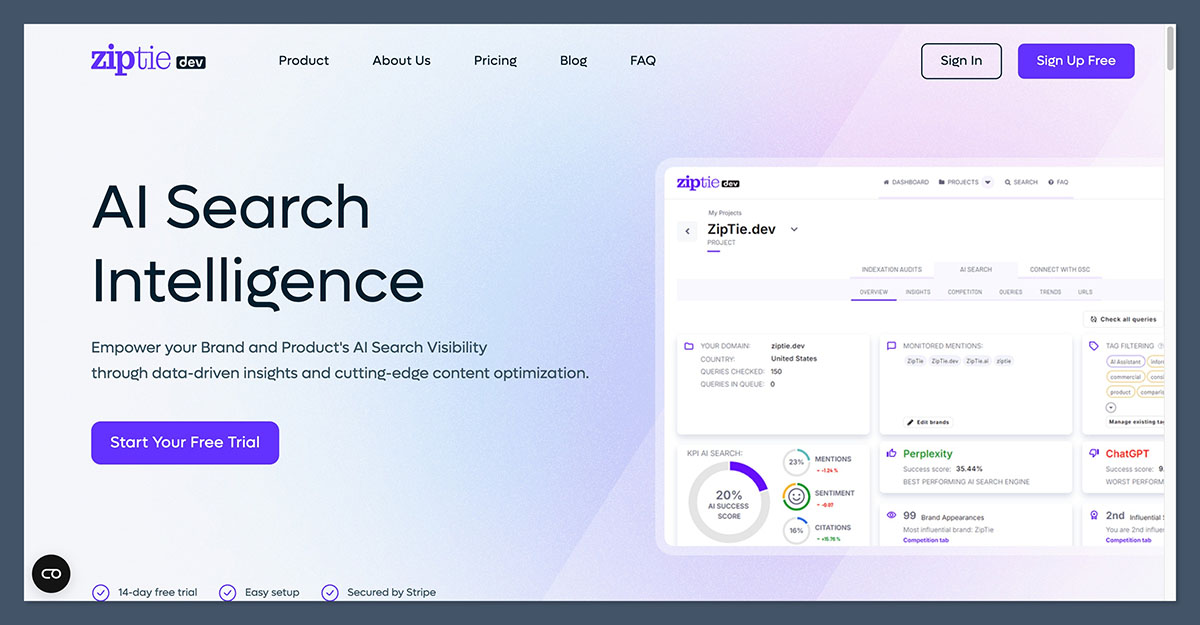
If your workflow relies on data-heavy decision-making, ZipTie offers some of the most granular filtering and technical insights in the GEO software space.
Key Advantages:
-
URL-Level Granularity: Analyzes performance not just at the domain level, but down to individual URLs and specific query parameters.
-
Proprietary AI Success Score: Gives you an instant snapshot of your brand’s share of voice, sentiment, and citation frequency.
-
Indexation Audits: Technical checks that evaluate whether LLM bots can crawl and index your pages effectively. For technical site optimizations, pairing these insights with a solid technical SEO checklist ensures your pages remain fully accessible.
Limitations:
-
Does not capture raw conversational multi-turn data flows.
-
Pricing structures can scale up depending on how many distinct AI engines you choose to track.
Pricing: Starter preset begins around $35.63/month.
4. Similarweb: Side-by-Side SEO & GEO Tracking
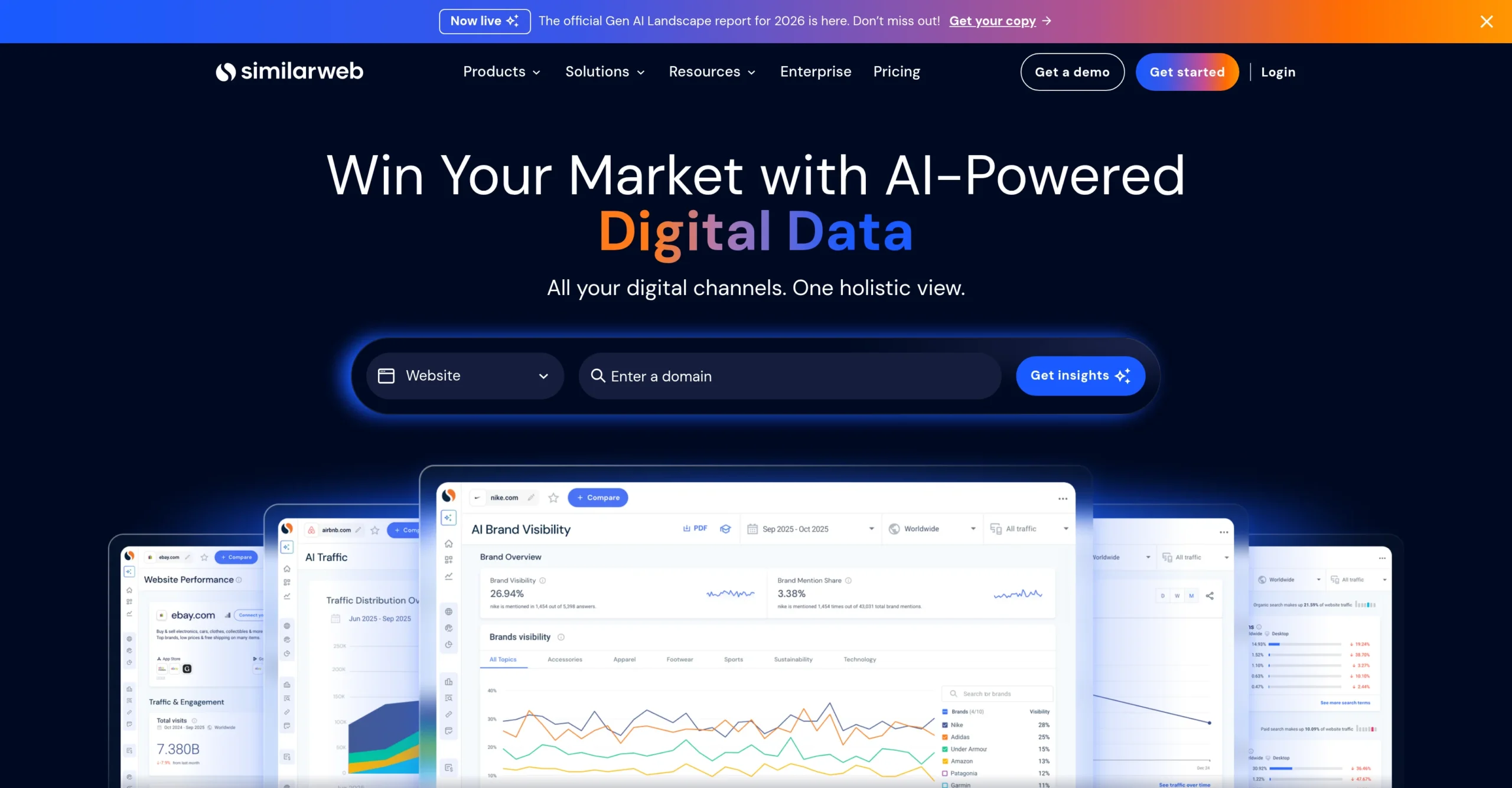
Known globally for web traffic intelligence, Similarweb bridges the gap between traditional search analytics and modern generative engine metrics.
Key Advantages:
-
Unified Visibility: Combines classic organic search data with AI brand visibility metrics in one ecosystem.
-
AI Referral Traffic Reports: Provides GA4-style reporting on referral traffic originating from chat assistants and conversational bots.
-
Topic Distribution: Identifies broad thematic categories driving your brand’s presence in AI answers.
Limitations:
-
Traffic estimation accuracy can vary when applied to smaller, niche local businesses.
-
Public pricing is unavailable; requires booking a custom demo.
Pricing: Available upon request.
5. Petra Labs: Best for Enterprise Needs & White-Glove Service

Enterprise organizations operating in hyper-competitive markets face complex data structures and aggressive competitors. Petra Labs blends proprietary software with expert human consultation.
Key Advantages:
-
Precise Citation Filtering: Pinpoints exact third-party sources and competitor links referenced in AI outputs.
-
Sub-Brand Differentiation: Separates parent corporate mentions from distinct product lines and sub-brands.
-
Done-For-You Strategy: Unlike self-serve software, Petra provides a dedicated team to build and execute digital PR and content strategies. For broader marketing alignment, reviewing B2B content marketing strategies can help optimize your brand positioning further.
Limitations:
-
High financial investment makes it inaccessible for small or mid-market operations.
Pricing: Custom enterprise pricing starting from $15,000/month.
6. Semrush AI Visibility Toolkit: Best for Existing Semrush Users
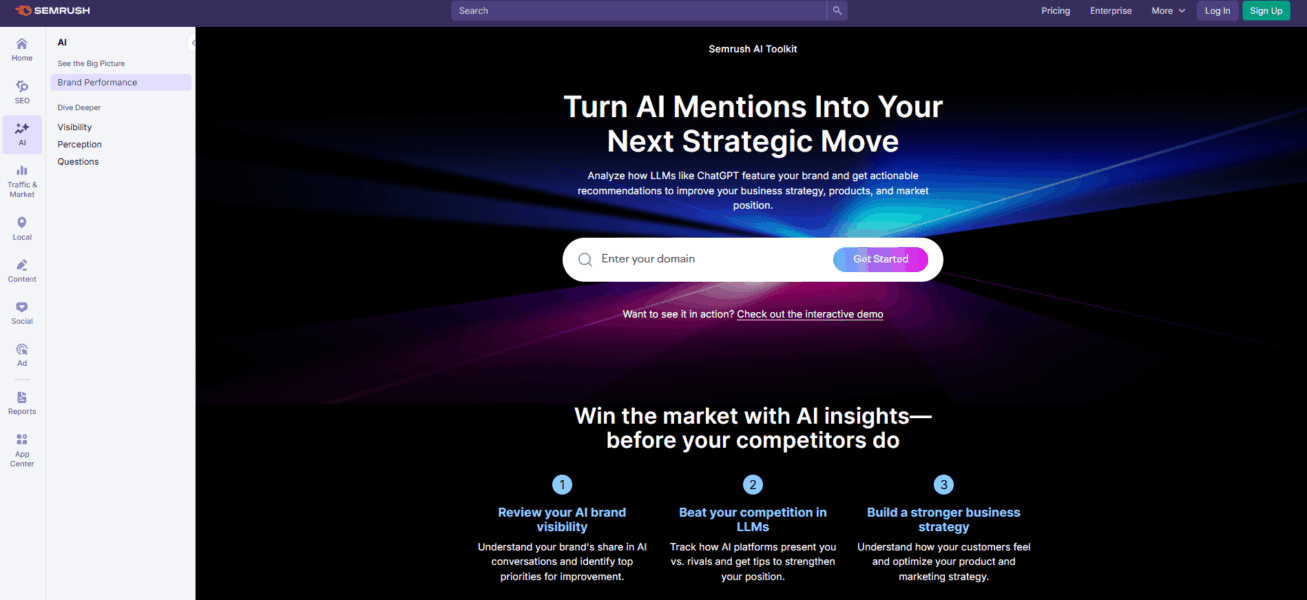
For teams already embedded in the Semrush ecosystem, the AI Visibility Toolkit integrates conversational tracking directly alongside traditional keyword research and site audits.
Key Advantages:
-
Massive Prompt Database: Taps into hundreds of millions of tracked conversational prompts across ChatGPT, Gemini, Perplexity, and Google AI.
-
Immediate Actionability: Seamlessly transitions from identifying an AI visibility gap into classic SEO workflows like backlink analysis, site health audits, and keyword gap research.
-
Automation Ready: Integrates cleanly with workflow automation apps, allowing teams to set up alerts and operational tasks based on audit results. Learn more about workflow automation through guides like Make vs Zapier.
Limitations:
-
Charges per user seat, which can drive up costs for larger multi-person teams.
Pricing: Offered as an add-on for existing users, starting at $99/month per domain.
7. Ahrefs Brand Radar: Best for Ahrefs Power Users
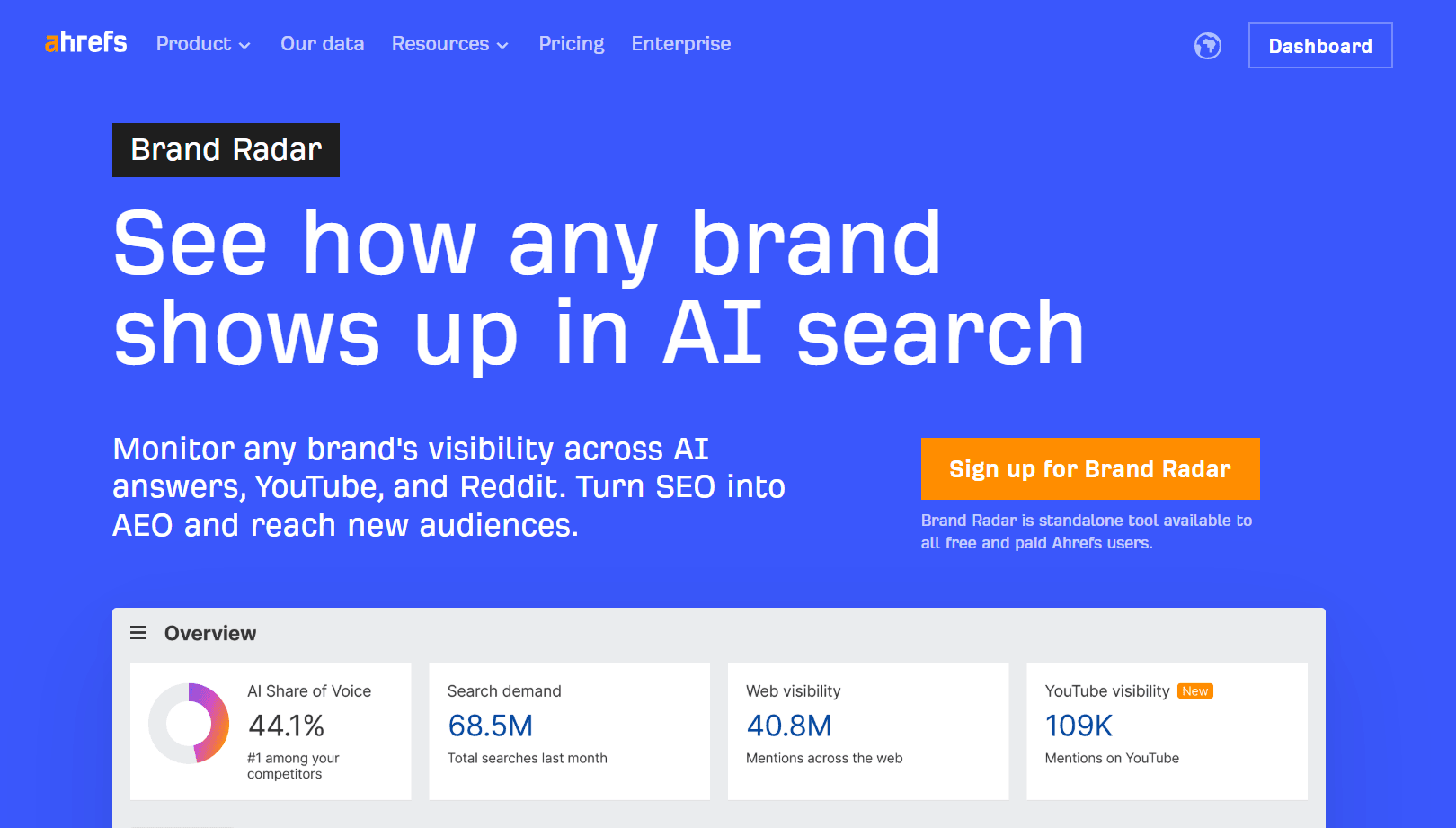
Similar to Semrush, Ahrefs offers Brand Radar as a focused tracking add-on designed to measure how your brand stands up against competitors in AI-driven search environments.
Key Advantages:
-
Streamlined Interface: Clean, focused reporting dashboard that avoids unnecessary bloat.
-
Strong Competitor Benchmarking: Makes it simple to see which rivals are capturing conversational market share in your niche.
-
Workflow Continuity: Fits naturally into existing Ahrefs-based technical workflows and SEO content audits.
Limitations:
-
Premium add-on pricing is relatively high if you are not already utilizing the core SEO platform.
Pricing: Available as an add-on to existing Ahrefs plans for $199/month.
8. Clearscope: Best for Content Creators & Organic Optimization
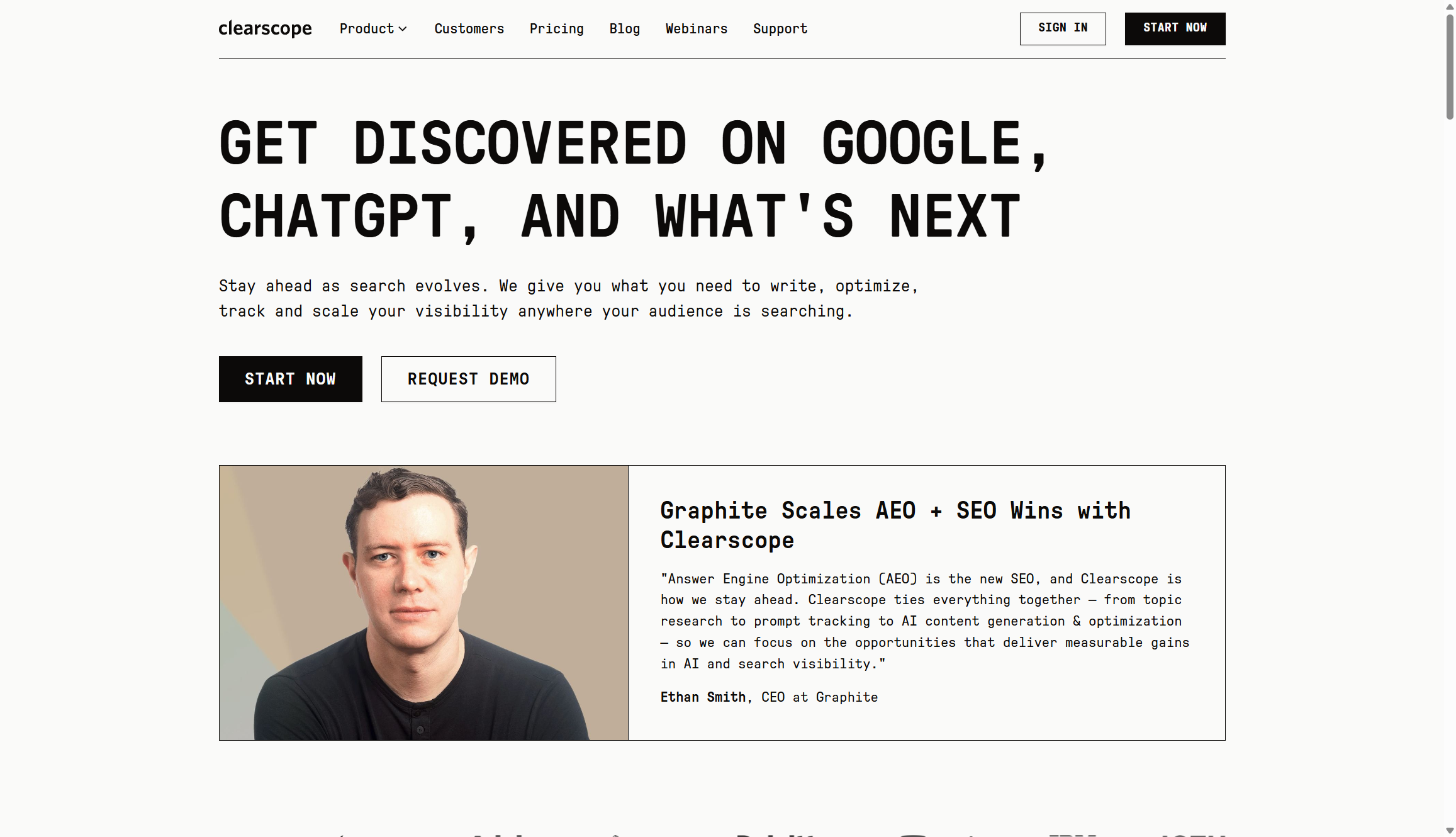
Originating as an elite content optimization platform, Clearscope has evolved its tooling to bridge the gap between traditional organic content creation and modern GEO requirements.
Key Advantages:
-
Content Inventory Mapping: Connects the articles and landing pages you build with real-time AI citation tracking.
-
Advanced Content Generation: Offers AI drafting tools capable of maintaining consistent brand voice and custom outlines.
-
Topic Clustering Approach: Moves beyond single-keyword targeting to address comprehensive topic fan-outs relevant to user search intent.
Limitations:
-
Custom prompt tracking is metered.
-
LLM engine monitoring is currently restricted to ChatGPT, Gemini, and Perplexity.
Pricing: Starts at $129/month for the Essentials plan.
9. Yext Scout: Best for Multi-Location & Local Tracking
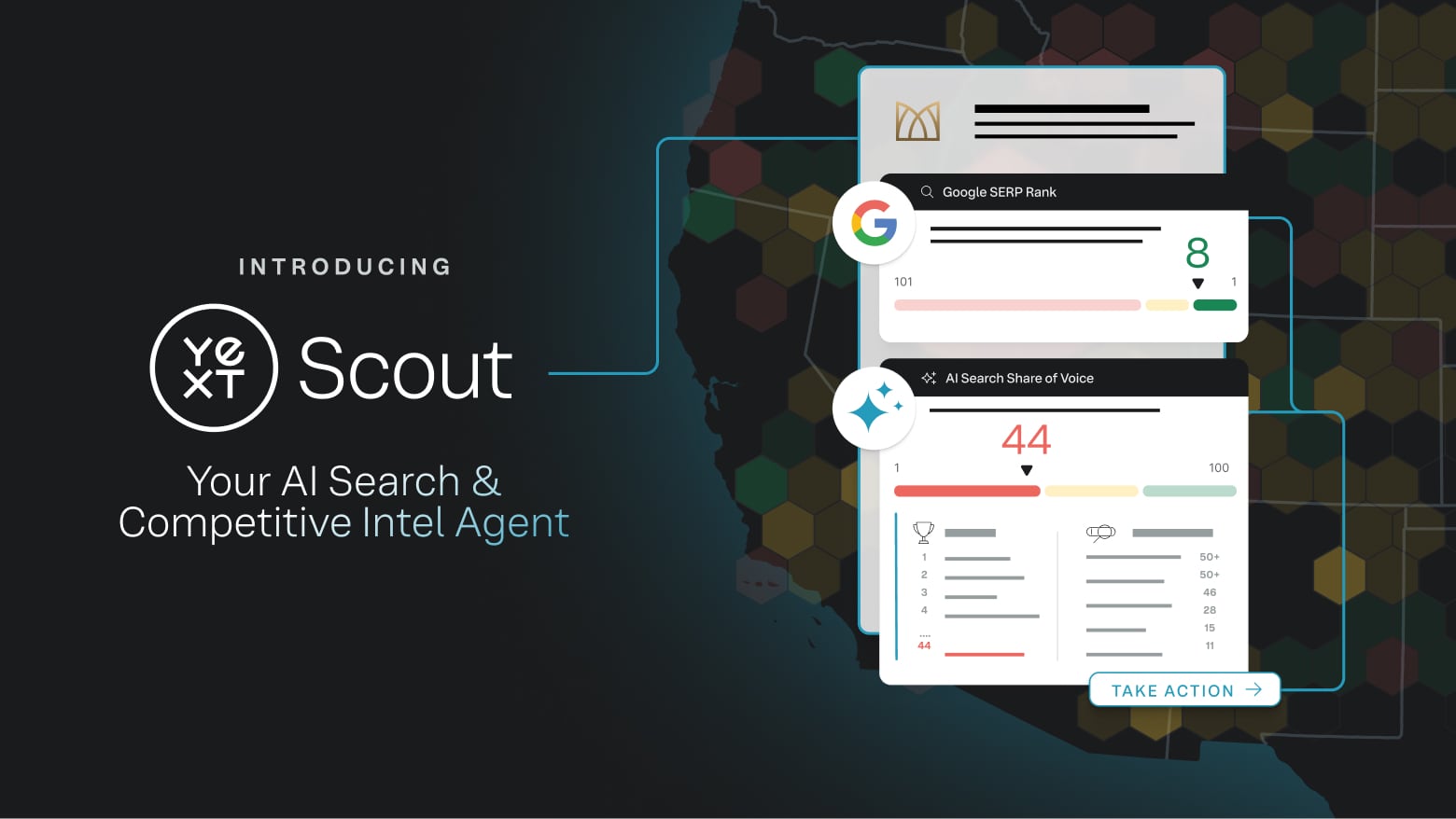
National and international brand visibility tools often fall short for businesses with physical brick-and-mortar storefronts spread across multiple regions. Yext Scout solves this exact problem.
Key Advantages:
-
Location-Specific Insights: Breaks down AI search performance and visibility scorecards by individual store location or branch.
-
Visual Map Overviews: Uses intuitive grid systems to show how well your business ranks in high-intent local queries across different neighborhoods.
-
Automated Local Actions: Integrates with Yext’s wider ecosystem to execute localized updates and citation cleanup.
Limitations:
-
Works best when fully integrated into the broader Yext platform ecosystem.
-
Geared heavily toward multi-location enterprises rather than single-location small businesses.
Pricing: Available upon request (industry estimates suggest starting around $199/month).
10. Scrunch: Best for Brand Sentiment & AI Positioning

Rounding out our top ten, Scrunch focuses heavily on how generative engines perceive your brand’s overall authority, emotional sentiment, and category positioning.
Key Advantages:
-
Sentiment Tracking: Diffs positive, neutral, and negative mentions across AI recommendations to catch reputation risks early.
-
Message Alignment Audits: Analyzes whether conversational models accurately describe your core value propositions and product features.
-
Streamlined Interface: Built for marketing managers who need quick, executive-ready overviews of AI share of voice.
Limitations:
-
Focuses more heavily on brand perception than deep technical crawler diagnostics.
Pricing: Available via custom demo and request.
How to Choose the Right Tool for Your Business
Because generative engine optimization is still evolving rapidly, no single software solution checks every single box out of the box. When selecting your tool, consider the following checklist:
-
Your Budget: If you are a freelancer or small agency, affordable entry points like OtterlyAI or ZipTie provide solid baselines. Enterprise teams with dedicated budgets may lean toward Petra Labs or Similarweb.
-
Your Existing Tech Stack: If your team lives inside Semrush or Ahrefs daily, adding their respective AI visibility toolkits minimizes tool fatigue.
-
Your Geographic Strategy: If you manage physical stores or local service areas across regions, location-focused platforms like Yext Scout are essential.
Waiting for AI search metrics to become “perfect” means risking your brand’s visibility in the meantime. Start testing a platform that fits your workflow today, and take control of how AI engines portray your brand.

SURBHI THAPA
Surbhi Thapa is an SEO specialist focused on SEO strategy and content optimization.
Surbhi Thapa is an SEO specialist focused on SEO strategy and content optimization.