









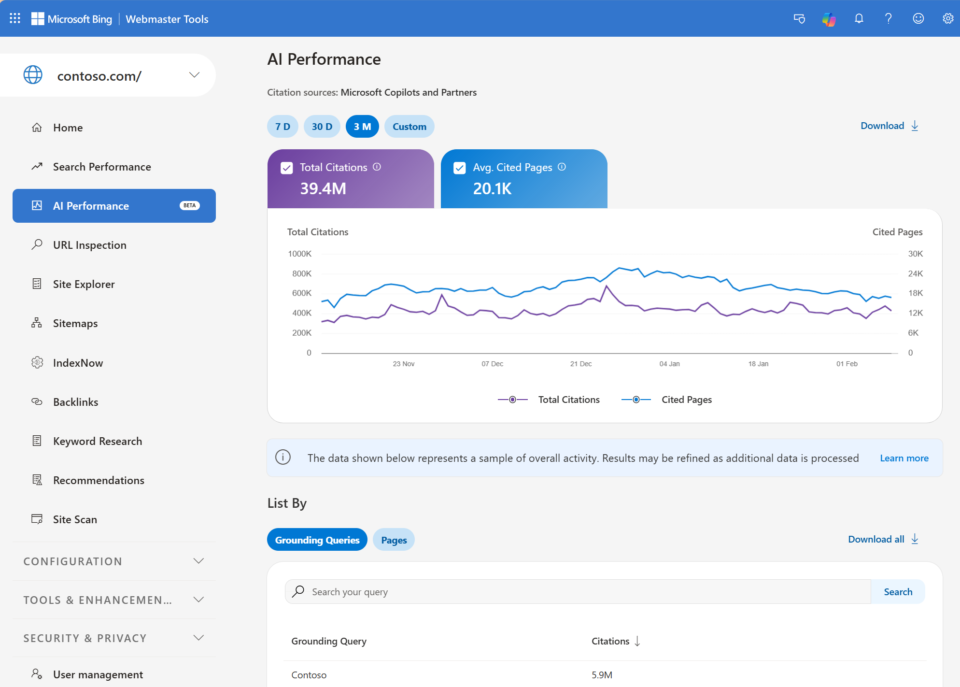
Microsoft has officially expanded the Bing Webmaster Tools AI Performance dashboard, giving publishers direct insight into how their site content gets surfaced, cited, and referenced across Microsoft Copilot and Bing AI search experiences.
Instead of relying on basic citation counts or guessing how generative engines crawl your pages, these new features break down user intent, cluster queries into thematic topics, measure relative citation share, and compare performance over time.
If you are optimizing for generative search engines, understanding these new reporting capabilities is essential for building a forward-looking Generative Engine Optimization strategy.
Here is a complete breakdown of the new preview features inside Bing Webmaster Tools, how they work, and how to use them to uncover untapped Bing AI Citation Opportunities.
4 New Preview Features in Bing Webmaster Tools AI Performance Dashboard
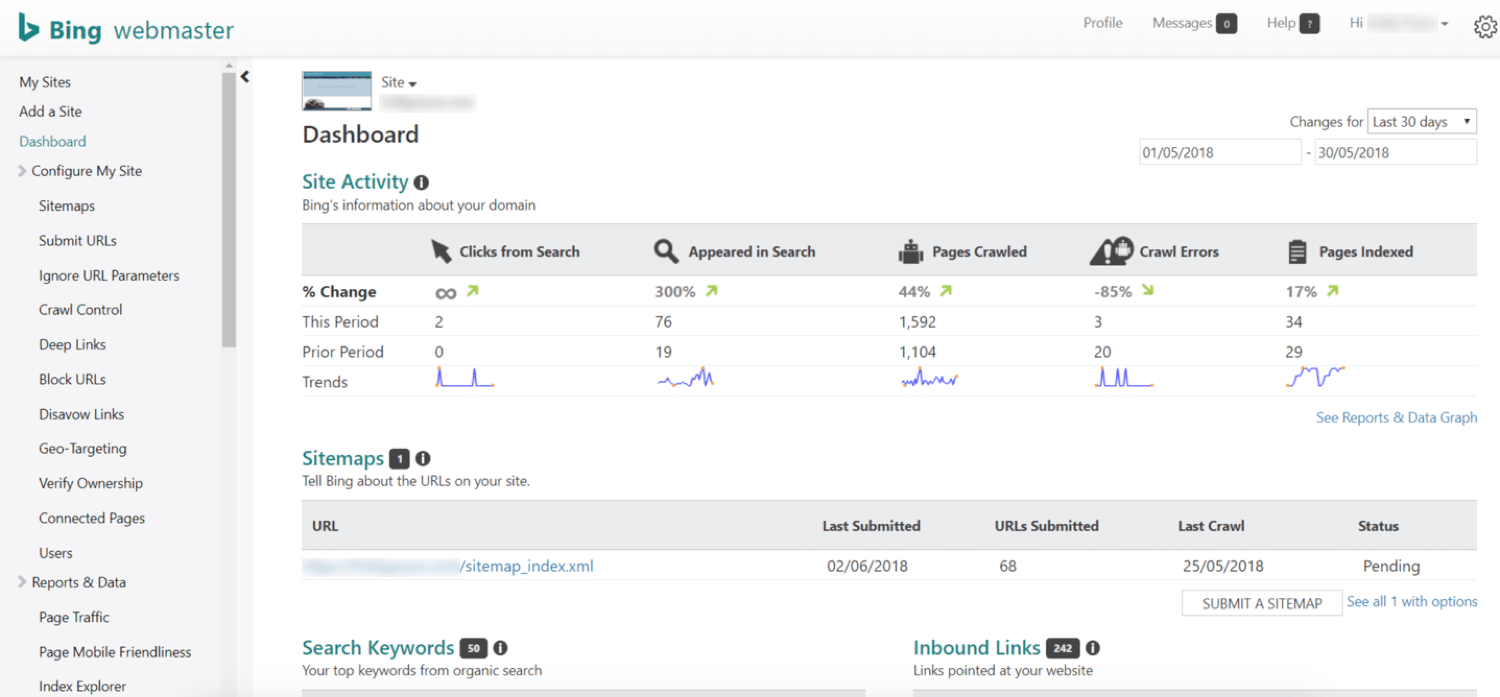
The original AI Performance dashboard answered one key question: Where is my content being cited in AI-generated answers?
These new additions shift the focus to why and how your content gets chosen as a primary source.
-
Intents: Categorizes AI grounding queries by user intent (Informational, Commercial, Navigational, Learn & Solve, Research, Local). Use it to match page formats to user query intent to increase AI pick-up rates.
-
Topics: Groups grounding queries into thematic clusters rather than individual keywords. Use it to spot content gaps across broad subject areas and build topical authority.
-
Citation Share: Measures your site’s percentage of citations relative to all citations shown for a query. Use it to track brand visibility share within AI answers without competitor domain leaks.
-
Compare: Overlays historical date ranges to analyze trends over time. Use it to evaluate the impact of site updates, algorithm shifts, or seasonal demand.
1. Intents: Understanding Why AI Answers Grounding Queries with Your Content

When Copilot or Bing AI generates a synthesized response, it uses web sources for “grounding” the process of backing up facts with live web evidence.
The new Intents feature automatically classifies those underlying grounding queries into categories:
-
Informational (Quick facts, direct explanations)
-
Commercial (Product reviews, feature comparisons, buy guides)
-
Navigational (Brand-specific searches)
-
Learn and Solve (Step-by-step guides, troubleshooting)
-
Research (Deep dives, industry reports, academic queries)
-
Creation (Prompt-based content assistance, drafting, ideation)
-
Local (Location-based queries, regional service providers)
Why Intent Classification Matters for GEO
If your e-commerce site gets citations primarily under “Research” or “Learn and Solve” rather than “Commercial,” your content might be helping users evaluate options without positioning your products at the point of decision.
By analyzing intent buckets, you can adjust your page structure. For example, adding structured comparison tables, direct answer summaries, or bulleted product takeaways makes it easier for AI engines to cite your brand during commercial research queries.
For a deeper look into structuring content for AI engines versus traditional search, check out our guide on GEO vs SEO key differences.
2. Topics: Analyzing AI Visibility via Clusters (Bing Topics Portfolio)
Traditional SEO relies heavily on individual keyword tracking. However, Large Language Models (LLMs) process concepts, context, and semantic relationships rather than isolated keywords.
The Topics feature aggregates individual grounding queries into broader thematic clusters (a Bing Topics Portfolio view).
Example of Topic Clustering
Instead of tracking separate entries for queries like “best solar panels for home”, “solar energy efficiency tips”, and “residential solar installation cost”, Bing Webmaster Tools clusters all of these into a single thematic group: Solar Energy.
Strategic Benefits of Topic-Level Tracking
-
Uncover Content Gaps: Identify broad subjects where your site lacks citation presence despite having individual ranking pages.
-
Measure Topical Authority: Track overall brand authority across an entire subject cluster instead of chasing fluctuating single-keyword positions.
-
Align Editorial Planning: Give content teams clear data on which broad themes perform best inside generative answers.
To get a full comparison of how Bing’s reporting matches up against Google’s metrics, read our detailed breakdown on Google Search Console vs Bing Webmaster Tools.
3. Citation Share: Measuring Relative Presence in AI Answers
Total citation counts can be misleading. Seeing 500 citations this month sounds great, but if total user queries in your niche doubled, your overall market visibility actually shrank.
Citation Share solves this problem by showing the percentage of total citations your domain earned for a given grounding query out of all sources cited for that prompt.
Formula: Citation Share (%) = (Citations Earned by Your Site / Total Citations Across All Sites for the Query) × 100
Key Aspects of Citation Share
-
Observational Metric: It measures visibility density within generative answers it is not a direct traffic metric or a standard search ranking score.
-
Privacy-Safe: It shows your share percentage without exposing specific competitor URLs or domain names.
-
Visibility Shift Tracking: Helps you spot whether your content is a primary source or if your brand is getting diluted across multiple cited sites.
4. Compare: Tracking AI Search Volatility Over Time
AI search ecosystems fluctuate constantly. Model updates, freshness algorithms, index refreshes, and changing user prompts all impact performance.
The new Compare tool lets you overlay past time frames (such as current 30 days vs. prior 30 days or custom ranges) to evaluate changes clearly.
What to Look For When Comparing Dates
-
Post-Optimization Tracking: Did updating your structured data or adding clear FAQ sections improve your Citation Share over the past month?
-
Content Freshness Decay: Are citations dropping on older articles? This signals a need to refresh statistics, dates, and core insights.
-
Algorithmic Adjustments: Measure how AI visibility shifts after broader updates, similar to how site owners track performance after a Google core update or search volatility event.
Step-by-Step Action Plan: Turn Bing AI Insights into Rankings
To make the most of these new Bing Webmaster Tools updates, follow this 4-step workflow:
-
Audit Intent Distributions: Identify pages triggering “Informational” vs. “Commercial” citations.
-
Group Queries into Topic Clusters: Pinpoint topics with high query volume but low overall Citation Share.
-
Optimize Content Structure: Add clean Schema markup, direct answer blocks, and clear H2/H3 headers.
-
Monitor Trends with Compare: Run 30-day performance comparisons to track growth across topic buckets.
Action 1: Align Page Structure with Intent
-
For Informational & Research Intents: Lead with concise summary paragraphs (40–60 words) that directly answer the core question before diving into details.
-
For Commercial & Learn Intents: Use formatted tables, bullet points, and clean product spec lists. AI engines extract clean HTML structures far more effectively than unstructured prose.
Action 2: Strengthen Technical SEO for AI Crawlers
AI engines prioritize fast, easily readable pages with clear technical markup. Ensure your site fulfills core technical requirements by reviewing our Technical SEO Checklist.
Action 3: Build Topic Clusters, Not Single Articles
Since Bing groups queries into thematic Topics, your publishing strategy should mirror this approach. Instead of publishing one-off posts, create comprehensive topic hubs linked cleanly to supporting articles. For a full breakdown on structuring multi-layered search strategies, read our guide on AIO, GEO, AEO, and SXO framework integration.
Final Thoughts: The Shift Toward AI Search Visibility
The introduction of Intents, Topics, Citation Share, and Compare in Bing Webmaster Tools confirms that search visibility is evolving beyond blue links and traditional keyword rankings.
By leveraging topic-level reporting and monitoring your relative citation presence, you can identify Bing AI Citation Opportunities long before competitors spot them. Focus on creating authoritative, well-structured content that directly serves user intent across both traditional and generative search engines.

SURBHI THAPA
Surbhi Thapa is an SEO specialist focused on SEO strategy and content optimization.
Surbhi Thapa is an SEO specialist focused on SEO strategy and content optimization.