








Running a successful online store today means navigating constant search algorithm updates, rising ad costs, and changing consumer habits. Relying solely on paid ads quickly drains margins, while outdated tactics like keyword stuffing can harm your store’s visibility.
Sustainable revenue growth requires a long-term strategy: Ecommerce Search Engine Optimization (SEO).
A well-optimized store does two things at once:
-
It builds a clear, fast, and secure structure that search crawlers and AI answer engines can easily index.
-
It delivers a smooth, intuitive browsing experience that turns visitors into repeat customers.
Whether managing a small boutique or a multi-category store, this guide covers the core strategies needed to outrank competitors and capture high-intent search traffic.
1. Analytics & Technical Foundations
Before optimizing product copy or launching link campaigns, ensure your store’s tracking setup and technical health are built on a solid foundation.
Essential Tracking Setup
-
Google Analytics 4 (GA4): Enable Enhanced Ecommerce Tracking to monitor key metrics, including product detail views, cart additions, checkout drop-offs, and organic revenue attribution.
-
Google Search Console (GSC): Submit your primary domain XML sitemap. Use GSC regularly to audit indexing status, review search queries, and fix crawl errors.
Security & Crawl Management
-
Enforce HTTPS Across All Pages: Secure sockets layer (SSL) encryption is vital for customer trust and checkout safety.
-
Streamline
robots.txtDirectives: Prevent search engine bots from crawling internal search result pages (/search?q=), dynamic filter strings, admin panels, and user cart pages. This preserves your crawl budget for valuable category and product pages. -
XML Sitemap Organization: Break down large sitemaps into focused index files (e.g.,
product-sitemap.xml,category-sitemap.xml). Exclude non-indexable, out-of-stock, or 301-redirected URLs.
2. Store Architecture & Navigation
A clean site architecture helps users navigate your catalog easily while allowing search engines to pass internal link authority efficiently across your store.
The 3-Click Architecture Rule
Keep your site layout shallow. A customer or search crawler should reach any item on your site within three clicks from the homepage.
For deeper insights into organizing technical hierarchies for both traditional crawlers and AI-based engines, read our guide on Technical SEO Checklist.
Clean, Keyword-Rich URLs
Avoid complex URLs with excessive numbers or dynamic parameters.
-
Poor URL:
example.com/index.php?cat=84&item=99381 -
Clean URL:
example.com/mens-shoes/leather-running-shoes
Breadcrumb Navigation & Canonicalization
-
Implement Breadcrumb Trail Markup: Breadcrumbs show users their location within your site hierarchy while helping search engines map product relationships.
-
Faceted Navigation &
rel="canonical": E-commerce filters (like sorting by color, size, or price) create thousands of duplicate URL combinations. Set strictrel="canonical"tags pointing back to the core collection URL to avoid duplicate content flags.
3. High-Intent Keyword Research & Buyer Psychology
E-commerce keyword research focuses primarily on commercial and transactional intent. Ranking for general terms brings traffic, but targeting specific commercial terms drives revenue.
Mapping Search Intent to Store Pages
| Intent Type | User Motivation | Target Page Type | Example Search Query |
| Informational | Researching solutions or learning | Blog post / Buying Guide | “How to choose running shoes for flat feet” |
| Commercial | Comparing options before buying | Category Page | “Best lightweight trail running shoes” |
| Transactional | Ready to make an immediate purchase | Product Page | “Buy Nike Air Zoom size 10 black” |
To analyze tools for keyword research, read our comparison of Ubersuggest vs Ahrefs.
Target Specific Long-Tail Keywords
Broad keywords like “dog food” carry high competition and mixed search intent. Focusing on specific long-tail keywords brings in ready-to-buy traffic with lower competition:
-
“Grain-free dry dog food for senior dogs”
-
“Hypoallergenic puppy food for sensitive stomachs”
4. On-Page Optimization for Collections & Products
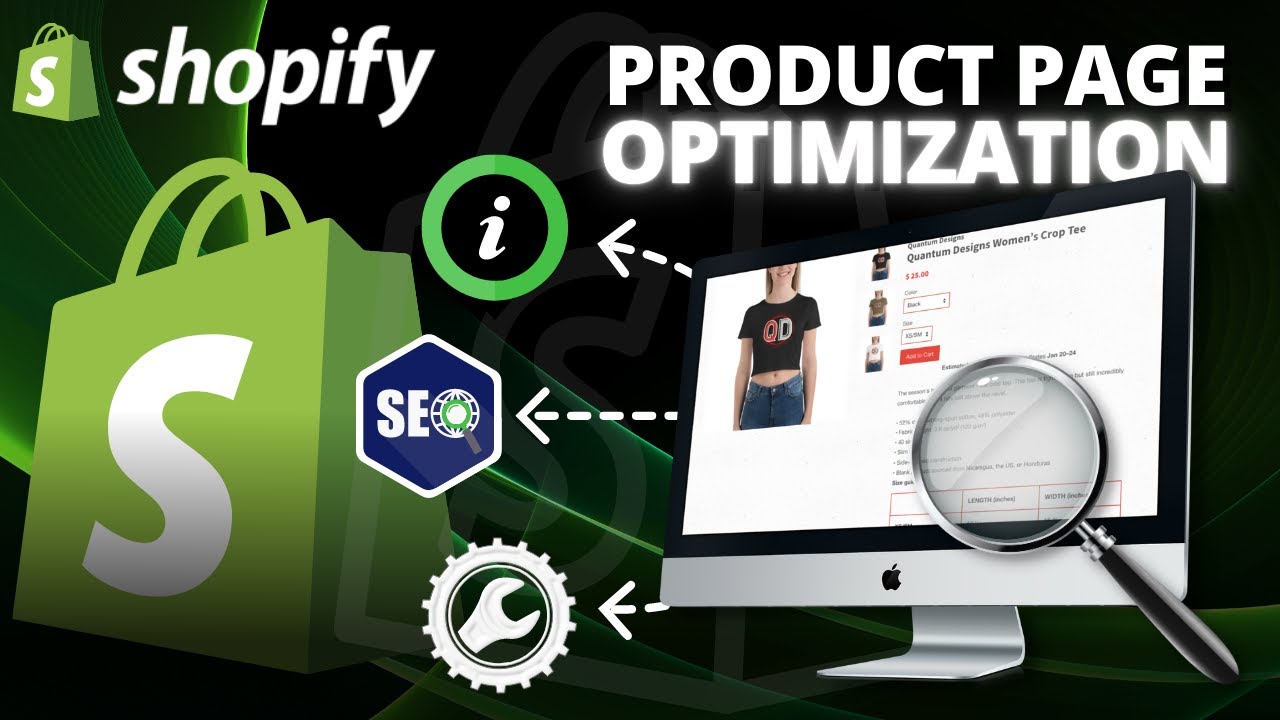
Category pages capture broad search demand, while product pages convert specific, high-intent traffic.
Title Tags & Meta Descriptions
-
Title Tag Pattern:
Product Name - Key Property/Model | Brand Name(Keep under 60 characters) -
Meta Description Pattern: Include primary keywords, value highlights (e.g., “Free Delivery,” “In Stock,” “Warranty Included”), and a clear Call To Action. (Keep under 155 characters)
Hand-Crafted Descriptions & Logical Headings
Avoid using standard manufacturer descriptions. Writing original product copy helps prevent duplicate content flags across search engines. Structure your descriptions using clear H2 and H3 subheadings to organize details like dimensions, care instructions, and sizing charts.
If you use AI tools to help generate product descriptions, maintain strict human editing and tone checks. Learn more in our guide on AI Content & On-Page SEO.
Structured Data & Rich Snippets
Implement Product, AggregateRating, and Offer Schema markup via JSON-LD across all product templates. This helps search engines pull rich snippet information such as price, availability, and customer ratings directly into Google Search results and AI Overviews.
To learn how structured schema helps your products appear in generative AI engine summaries, check out our guide on Generative Engine Optimization (GEO).
5. Site Performance & Mobile Experience
With most online shopping occurring on mobile devices, fast loading speeds and responsive layouts directly affect your search rankings and sales conversions.
Core Web Vitals Focus Areas
-
Largest Contentful Paint (LCP): Optimize main image load times by compressing images and delivering assets via CDNs.
-
Interaction to Next Paint (INP): Minify JavaScript and CSS execution to ensure instant user response on inputs and clicks.
-
Cumulative Layout Shift (CLS): Set explicit width and height attributes on media and images to prevent visual jumps during rendering.
Media Optimization
-
Convert traditional JPEG or PNG product images into modern WebP or AVIF formats.
-
Add descriptive
alttags to every image using clear keywords to boost image search rankings and support screen reader accessibility. -
Use Lazy Loading for below-the-fold images and product thumbnails so core page content renders faster.
Code & Server Optimization
-
Minify unused CSS, HTML, and JavaScript files.
-
Use a Content Delivery Network (CDN) to serve site assets quickly to global visitors.
-
Set browser caching headers for static resources to speed up return visits.
6. Internal Linking & Off-Page Authority
Building contextual internal links helps guide shoppers through your catalog, while authoritative external links build your site’s overall trust.
Strategic Internal Linking
-
In-Content Links: Link to relevant product category pages directly within educational blog guides.
-
Cross-Selling Sections: Add “Frequently Bought Together” or “Related Products” sections to increase average order value (AOV) and expand internal crawling paths.
-
Contextual Anchor Text: Use natural, descriptive anchor text for links rather than generic phrases like “click here”.
Off-Page Backlink Acquisition
High-authority backlinks signal trust and credibility to search engines. Key methods for earning quality backlinks include:
-
Digital PR & Product Reviews: Send featured products to niche journalists and creators for honest reviews.
-
Supplier & Brand Partnerships: Get listed on manufacturer brand directories as an authorized retailer.
-
Broken Link Building: Find broken links on industry blogs or resource pages and offer your product guides as updated replacements.
To evaluate link strategies for online stores, read our analysis: Do Backlinks Still Matter for SEO?.
Frequently Asked Questions
What is an e-commerce SEO checklist?
An e-commerce SEO checklist is an operational guide that outlines the technical, structural, on-page, and off-page optimizations needed to improve an online store’s search engine visibility, user experience, and sales conversions.
How often should an online store perform an SEO audit?
Conduct a full technical and content audit quarterly. Additionally, perform mini-audits after site redesigns, platform migrations, or major product catalog updates.
How does site speed affect e-commerce conversion rates?
Slower page load times lead directly to higher bounce rates and abandoned carts. Research shows that even a one-second improvement in page loading speed can noticeably increase mobile conversion rates.

SURBHI THAPA
Surbhi Thapa is an SEO specialist focused on SEO strategy and content optimization.
Surbhi Thapa is an SEO specialist focused on SEO strategy and content optimization.